






Alla auktioner / Mynt & Sedlar / 1878-S Liberty Seated Half Dollar. WB-1. Rarity-5. VG Details--Scratch (PCGS).
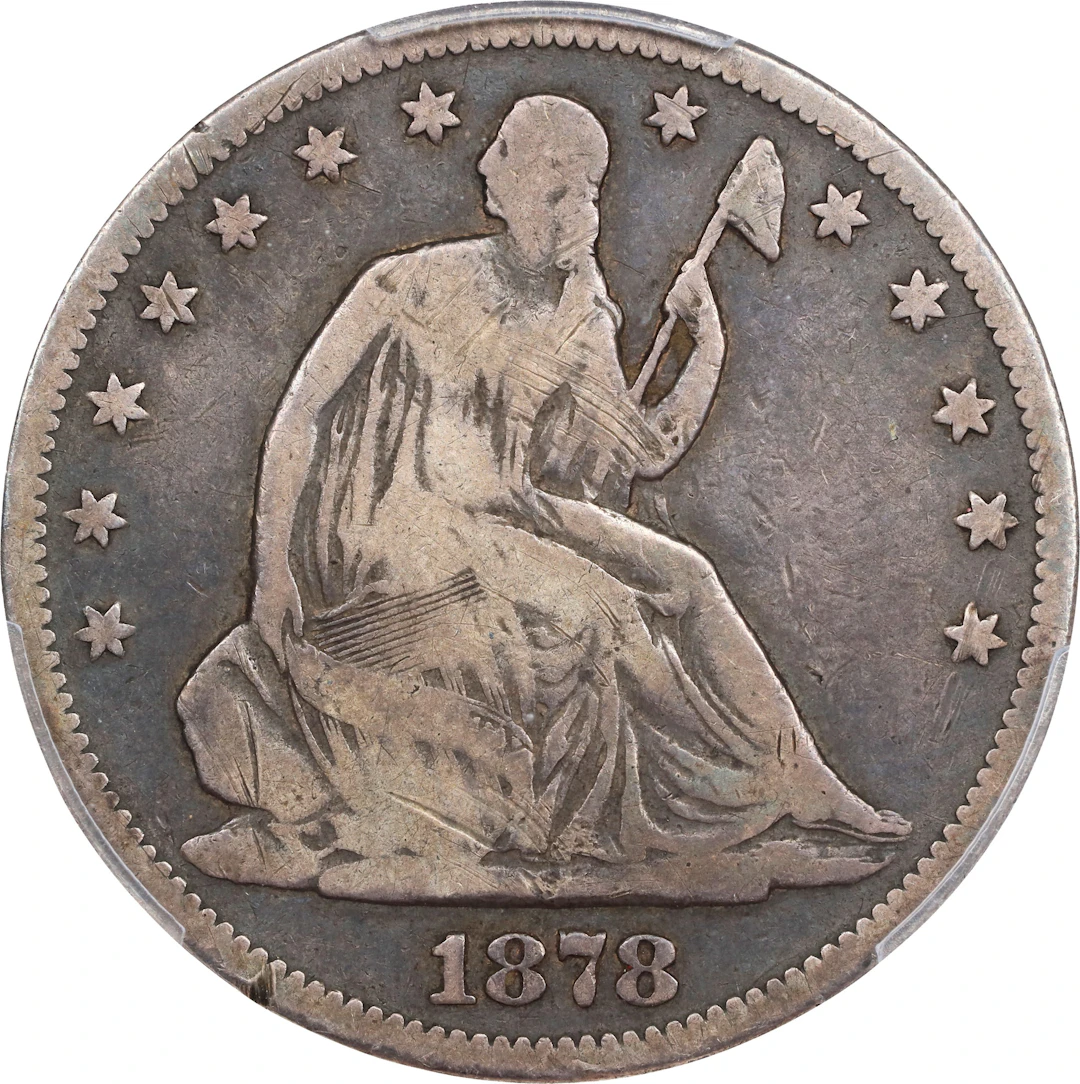
Key Date 1878-S Half Dollar 1878-S Liberty Seated Half Dollar. WB-1. Rarity-5. VG Details--Scratch (PCGS). We are thrilled to be offering this key date Liberty Seated half dollar, a coin that will appeal to collectors working with a more limited numismatic budget. Of course, all survivors from a mintage of 12,000 coins for the 1878-S are rare and enjoy strong demand in today's highly competitive market. This is a boldly and originally toned piece, the fields in deep charcoal-olive gray, design elements in lighter dove gray, the interplay between the two providing a pleasing circulated cameo appearance. The obverse is generally quite smooth, but carries a concentration of light scrapes at Liberty's pole arm. The reverse is more noticeably impaired with several prominent scrapes over and above the eagle. All major design elements are boldly outlined, and the rims are distinct from the peripheral devices. A significant offering that is sure to find many willing buyers. In the early 1870s, great quantities of silver continued to flow eastward from the vast riches of the Comstock Lode, this process made easier with the rapid expansion of the railroads. This and certain international factors caused a plummeting of the price of silver, which had the effect of prompting some previously hoarded silver to come out of the woodwork. As silver became even cheaper in relation to gold, a drive to eliminate bimetallism and move to a strict gold standard grew. In February 1873 the Coinage Act was passed, which had the principal effect of demonetizing silver coin and eliminating a silver dollar for domestic use. With the end of bimetallism came the elimination of the strictly regulated issuance of silver coins, leading to the "Free Silver" movement, allowing the government to inject even more silver into circulation to combat the effects of the Panic of 1873. Consequently, large quantities of subsidiary minor silver coins were produced throughout the mid-1870s, resulting in a sharp decrease in the need for new coinage by 1877. The silver barons of the Western states were now burdened with large amounts of a precious metal that was becoming not so precious. They banded together and convinced several senators to pass the Bland-Allison Act of February 28, 1878, which re-established the domestic silver dollar (and eliminated the trade dollar except in Proof format), and required the Treasury to purchase between $2 and $4 million worth of new domestically mined silver bullion every month to coin specifically into silver dollars. Importantly, the silver could not be of foreign origin nor could it be recycled. The effect of the Bland-Allison Act on the half dollar was swift and dramatic. While 1,377,600 were minted in Philadelphia in 1878, at the Western branches almost all production switched immediately to the Morgan dollar. Carson City managed 62,000 half dollars but at San Francisco only 12,000 were struck. A single pair of dies was all that was required to coin the 1878-S half dollar and all bear the same diagnostic raised lump at the top left of the first open stripe on the reverse shield. This feature is found on all genuine specimens and can be seen even on low grade examples, as here. For those patient enough to count them, all 1878-S half dollars have 147 reeds on the edge, different from the edge reeding used at the other mints that year. The 1878-S half dollar is one of the legendary key dates of the entire Liberty Seated series and was recognized as a true rarity not long after it was issued. In the West, silver coins were popular, heavily used and tended to enter circulation largely unnoticed. However, fairly early on the rarity of the 1878-S half dollar became apparent especially when collecting by mintmark became popular in the 1890s. According to P. Scott Rubin, the earliest record of an 1878-S half dollar appearing at auction was in 1882. Nineteenth century numismatist Augustus G. Heaton remarked in 1893 in his highly influential treatise, Mint Marks, that with the "1878 we have the great rarity of the San Francisco half dollar coinage." Today, the estimated number of survivors in all grades is 50 and 60 pieces. PCGS# 6360. NGC ID: 24KR. Click here for certification details from PCGS. Image with the PCGS TrueView logo is obtained from and is subject to a license agreement with Collectors Universe, Inc. and its divisions PCGS and PSA.
Utropspris:SEK 9.93
Till auktionenVisa alla föremål frånStack's BowersellerMynt & Sedlar
Utropspris:
SEK 9.93
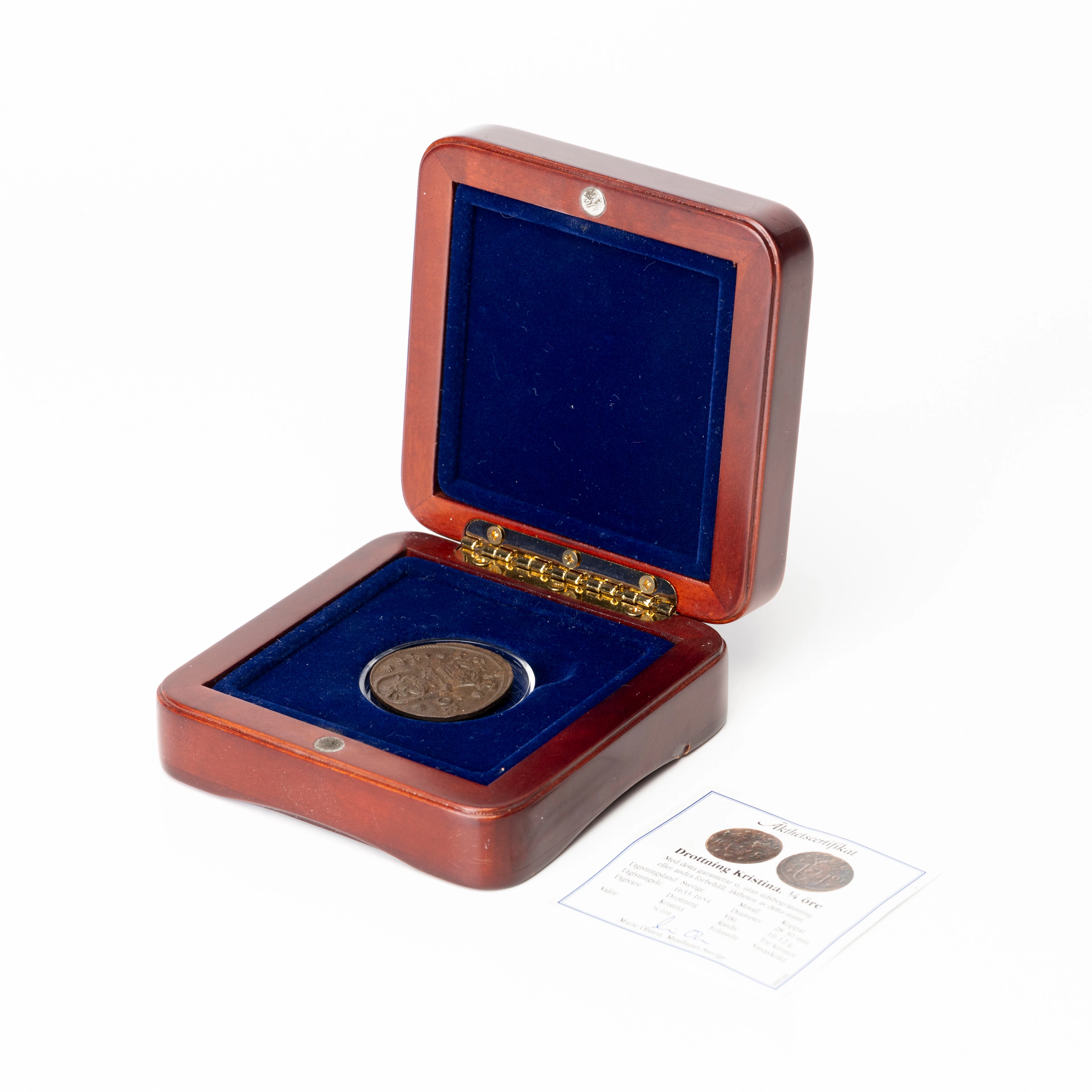
MYNT, koppar, Drottning Kristina, 1/4 öre, 1636.
10/22/2026
SEK 350
Uppsk.: SEK 800
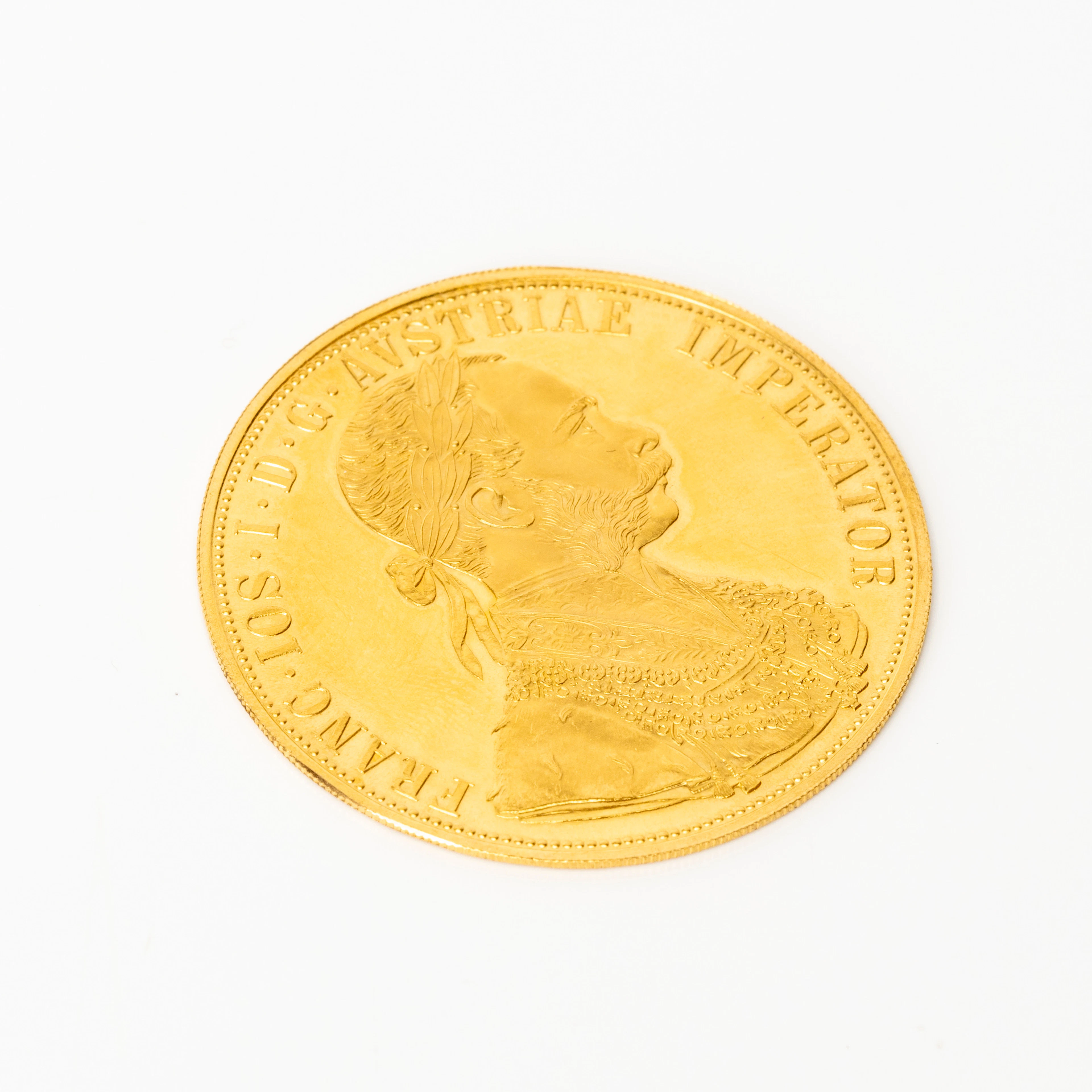
GULDMYNT, 4 dukat, Frans-Josef I, Österrike-Ungern, 1915, 21,6K guld, restrike.
10/22/2026
SEK 17,103
Uppsk.: SEK 15,000
Nå samlare över hela världen med din auktion!
Lista er auktionGenom att prenumerera godkänner du integritetspolicyn. Avprenumerera när som helst.
Barnebys HQ
Brahegatan 10
BOX 5038
114 37 Stockholm
