

OCT 8 | 3:00 PM

Nå samlare över hela världen med din auktion!
Lista er auktionGenom att prenumerera godkänner du integritetspolicyn. Avprenumerera när som helst.
Barnebys HQ
Brahegatan 10
BOX 5038
114 37 Stockholm
Alla auktioner / Förhistorisk Konst / Akkadian to Early Neo-Sumerian Period Stone Akkadian to...

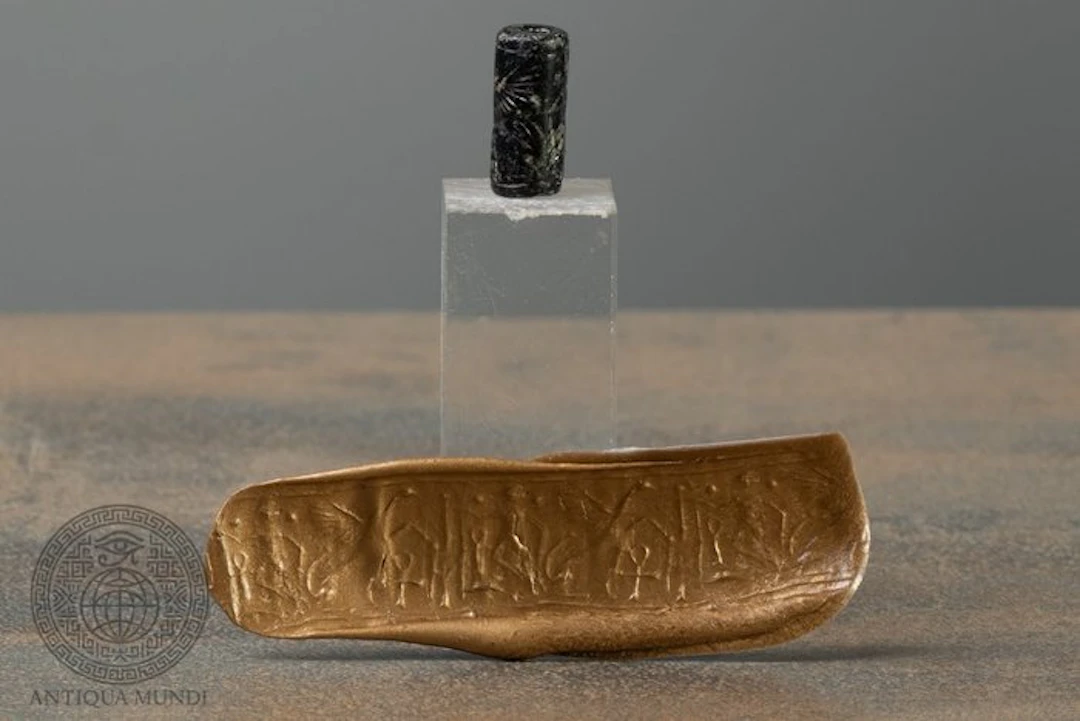
An impressive ancient Mesopotamian cylinder seal carved from dark grey to almost black stone, attributed to the Akkadian to early Neo-Sumerian period, circa 2300–2100 BC. The tall cylindrical seal is pierced longitudinally by a continuous axial perforation, originally allowing it to be suspended, carried or mounted. The upper and lower edges are defined by horizontal grooves or profiled bands which frame the principal engraved register. The entire cylindrical surface is covered with a remarkably complex and densely arranged figural composition. When rolled, the engraved surface produces a continuous narrative frieze extending across the complete circumference of the seal. A modern impression accompanying the seal allows the complete composition to be viewed in its unrolled form. Iconography The engraved register presents an elaborate mythological or cultic scene involving several anthropomorphic figures. A number of larger figures dominate the composition. They appear in different poses and several seem to wear distinctive headgear, including forms resembling the horned crowns associated with divine figures in Mesopotamian iconography. Smaller human figures appear between the principal figures, some with bent or raised arms, suggesting participation in the action or ritual represented in the scene. The composition also incorporates animal figures and stylised vegetal motifs, including tree- or plant-like elements. Additional smaller symbols and objects are positioned between the figures, creating an unusually dense visual programme. The figures and motifs continue around the complete circumference of the cylinder. When the seal is rolled, the individual elements combine to form a continuous narrative scene. Cultural Context and Dating Cylinder seals were among the most characteristic objects of ancient Mesopotamian administrative and visual culture. Their engraved surfaces could be rolled across wet clay to create a continuous impression. During the Akkadian period, cylinder seal engraving developed increasingly sophisticated figural and narrative compositions, particularly scenes involving deities, heroes, worshippers, animals and mythological encounters. The present seal displays several characteristics associated with this artistic tradition, including the multi-figure composition, differentiated scale of the figures and the apparent use of horned divine headgear. The object is attributed to the: Akkadian to Early Neo-Sumerian Period, circa 2300–2100 BC. This dating places the seal within the later 3rd millennium BC and the transition between Akkadian and subsequent Mesopotamian glyptic traditions. Several of the prominent figures can plausibly be interpreted as divine figures, particularly where horned headgear appears to be represented. In the absence of an inscription or sufficiently distinctive individual attributes, however, the identification of specific Mesopotamian deities should remain open. Function Cylinder seals served both a practical administrative function and an important personal or symbolic role. The engraved cylinder could be rolled over wet clay to create a continuous impression, for example on tablets, sealings, containers or closures. The axial perforation allowed the seal to be carried or worn, making such objects highly personal possessions that could function as identifiers of their owners as well as miniature works of glyptic art. Condition Good condition considering its considerable age. The cylinder seal is preserved in complete form and retains its continuous axial perforation. The stone surface displays age-related wear, minor chips and irregularities, together with areas of mineral deposition. The engraved decoration shows some wear but remains clearly recognisable across substantial portions of the surface. The accompanying impression makes the complex continuous figural composition particularly easy to examine. Please examine all photographs carefully, as they form an integral part of the condition description. Modern Impression The gold-coloured impression shown in the photographs is a modern impression made from the ancient cylinder seal and is included for the purpose of illustrating the complete continuous engraved scene. It is not an ancient object. Provenance Formerly in the Madeleine & Erich Dammann Collection, Germany. Acquired during the collectors’ extensive travels between 1950 and 1970. The collection is documented in Germany by 1970 through historical photographs of the family residence and subsequently remained in continuous family ownership. The objects were acquired privately during the collectors’ travels. As was customary for private purchases made at local markets during the 1950s and 1960s, purchase receipts or invoices were generally neither issued nor requested. Historical photographs and biographical documentation relating to the Dammann Collection are available and support the long-standing provenance of the collection.
Utropspris:SEK 12,377.22
Till auktionenVisa alla föremål frånCatawikiellerFörhistorisk Konst
Utropspris:
SEK 12,377.22
OCT 8 | 3:00 PM
Nå samlare över hela världen med din auktion!
Lista er auktionSEK 3,094.3
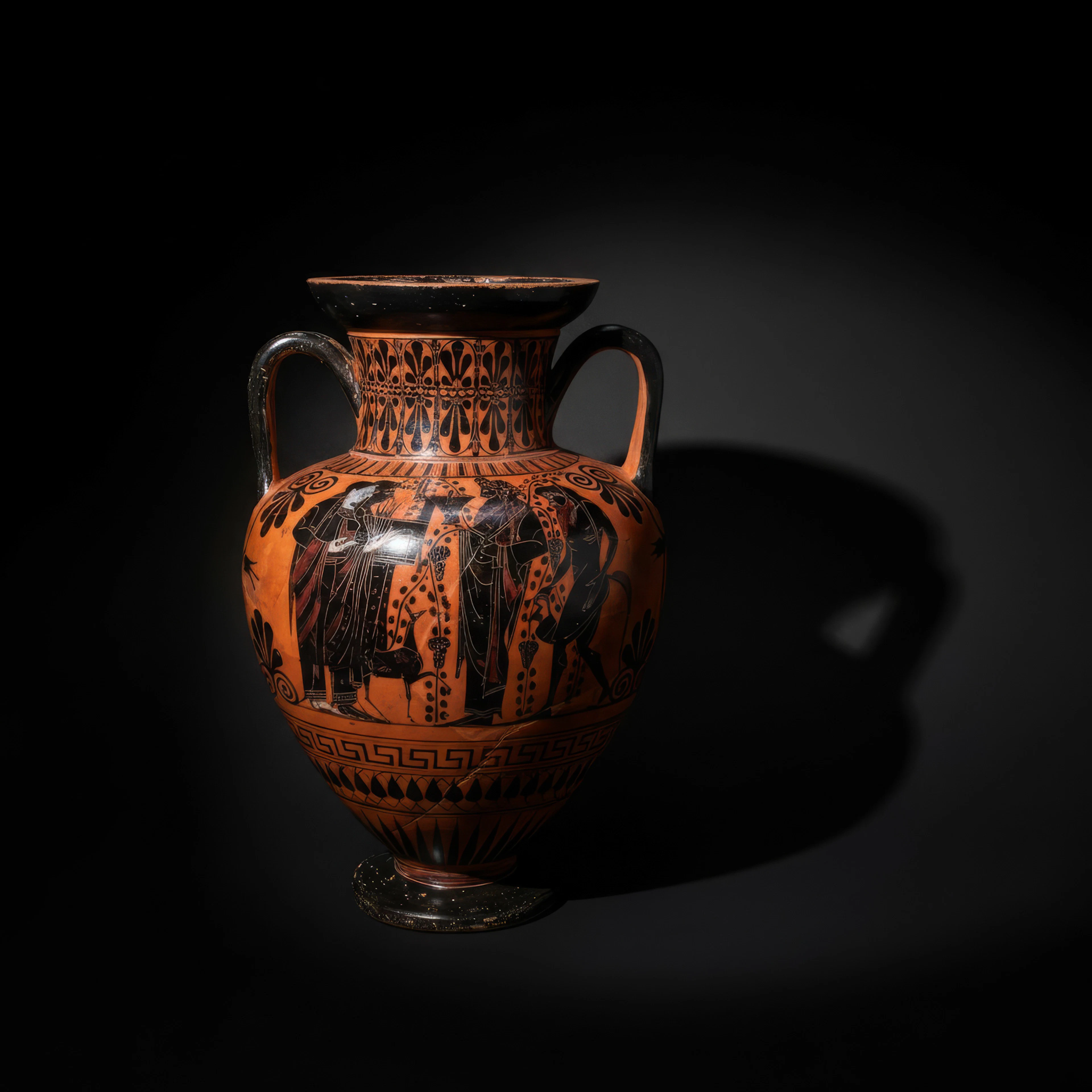
RARE ATTIC BLACK-FIGURE NECK AMPHORA ATTRIBUTED TO THE LYSIPPIDES
06/21/2026

SEK 509,981.44
Uppsk.: SEK 177,500.05
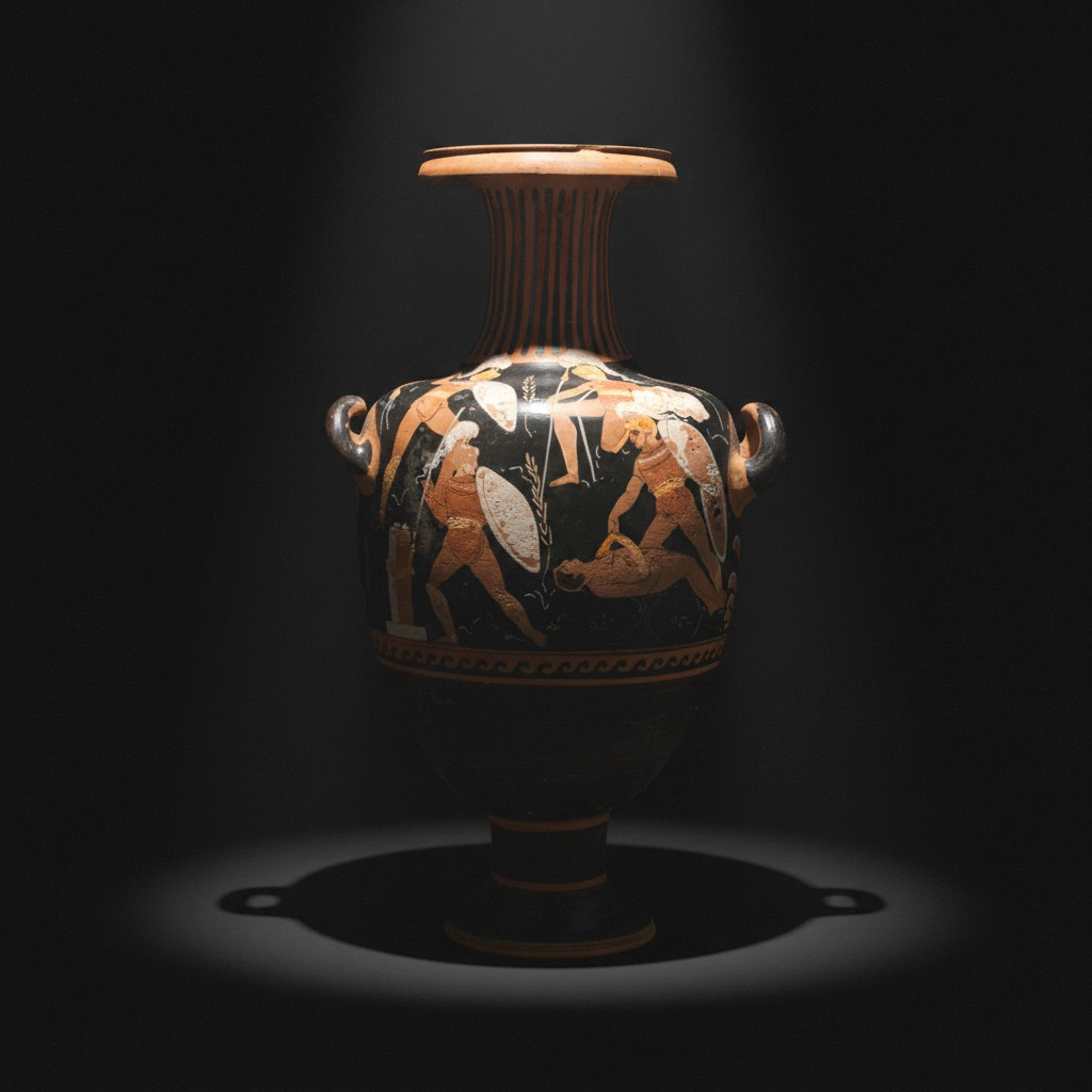
TL TESTED - LARGE GREEK APULIAN RED-FIGURE HYDRIA WITH HOPLITES COMBAT SCENE
06/21/2026
SEK 114,745.82
Uppsk.: SEK 76,071.45