



Alla auktioner / Etnografica / Albert van Zonneveld

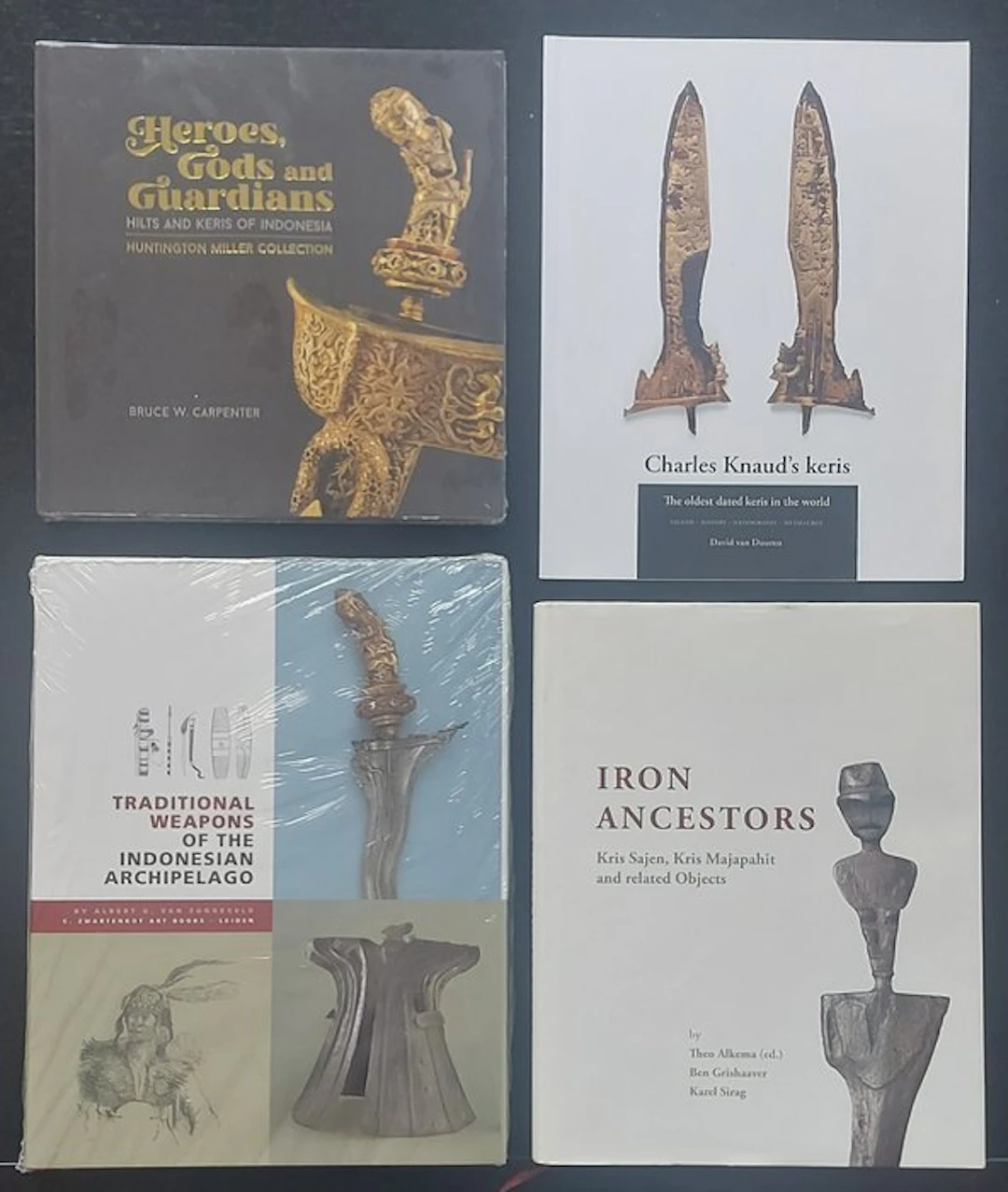
1 Zonneveld, Albert G. van. ‘Traditional Weapons of the Indonesian Archipelago’. 160 pp.; c.650 illus., indices, drawings, maps, hundreds of cross-references throughout, biblio.. Text: English. Leiden, 2001. Hbk. ¶ Reference work on Indonesian edged weapons (andar, badek, balato, baluse, barong, bayu, buko, golok, jimpul, kalasan, kampilan, keris/kris, kudi, ladieng, mandau, niabor, palitai, pandat, parang, pedang, sewar, sumpitan, tumbok lada, wedung, etc). In addition, shields, spears, war hats and war dresses are illustrated and described. The unicity of this book is that an edged weapon can be determined by the shape of its blade using a scheme and without knowing its Indonesian name. The illustrated pieces have been drawn from the National Museum of Ethnology at Leiden (the Netherlands) as well as from several private collections. Among them some 65 keris and keris hilts in part collected during the 19th century and now regarded as masterpieces held at the above-mentioned museum. 2 Alkema, Theo (Text).; Grishaaver, Ben (Photography).; Sirag, Karel (Line drawings).. ‘Iron Ancestors. Kris Sajen, Kris Majapahit and related Objects’. 222 pp.; 288 colour photographs, 27 b/w drawings, glossary, bibliography. Text: English. Leiden, 2010. Hbk. Standard work on the subject. ¶ This important monography focusses on the all-iron kris with an ancestor as its hilt, amulets rather than weapons. This first ever publication on the subject entirely devoted to these time-honoured heirlooms is based on the collection of the National Museum of Ethnology (Leiden, the Netherlands) and on a private collection of great quality and quantity. Theo Alkema's 'Iron Ancestors' is enhanced with 288 illustrations by top photographer Ben Grishaaver and with 27 exquisite drawings by the artist Karel Sirag. 3 Carpenter, Bruce W. ‘Heroes, Gods and Guardians. Hilts and Keris of Indonesia’. 164 pp.; 130 colour plates of (mainly) Keris hilts and Keris, 12 text illustrations, map, bibliography. Leiden/Singapore, 2021. Hbk. ¶ Put together over a period of twenty years, the Huntington Miller Collection of Keris and Keris Hilts is a tour de force. The emphasis here is on the sculptural aesthetic and historical importance of this unique art form from throughout Indonesia – Java, Sumatra, Borneo, Bali, Lombok, Sulawesi and beyond. It is a story that spans centuries and the rise and fall of countless kingdoms and polities. The hilts range from minimalistic forms to the abstract to opulent royal weapons beautifully crafted to project prestige and wealth. So, too, they carry with them the aura of mystery and magic of the islands of Southeast Asia, which captured the imaginations of foreigners even before the beginning of the Age of Spices, when the perilous journey from Europe to Indonesia took a year to complete. With a terse and informative text written by Indonesian art expert, Bruce W. Carpenter, this is a cultural and artistic voyage that delights the eye and stimulates the mind. 4 Duuren, David van. ‘Charles Knaud's Keris. The oldest dated Keris in the World’. Legend-History-Iconography-Metallurgy. 39 pp.; 15 illustrations. Leiden, 2022. Pbk. ¶ After more than 100 years, a long-lost keris resurfaced in the Netherlands: th legendary "Knaud kris". In literature, this item was named after Charles Knaud, who acquired it at the end of the 19th century as a gift from a Javanese ruler. This extra-ordinary keris won an award during an art and craft exhibition held at Batavia (1884), was cast in plaster by the museum of the Batavian Society of Arts and Sciences and discussed by the renowned Indologist dr. N.J. Krom, Head of the Archaeological Service in the Dutch East Indies, in his standard work (1920) on the art of ancient Java. The Knaud keris is now on display at the Amsterdam Tropenmuseum, where it is kept on a long-term loan. This publication is the first to present the historico-cultural uniqueness of this keris along with its adornments and date. It is comprehensively dealt with beginning with its anecdotal acquisition by C. Knaud on Java up to its discovery in the vault of a Dutch bank. The rich symbolism and mythological scenes are discussed in detail, as is the laboratory research into the metal and metal alloy utilised when forging the blade. An analysis confirms N.J. Krom's presumption it is not only a very special artefact created in East Java during the 14th century but also that, considering its history and style, it must be linked to the temple site of Panataran which dates from the Majapahit era.
Utropspris:SEK 11.13
Till auktionenVisa alla föremål frånCatawikiellerEtnografica
Utropspris:
SEK 11.13
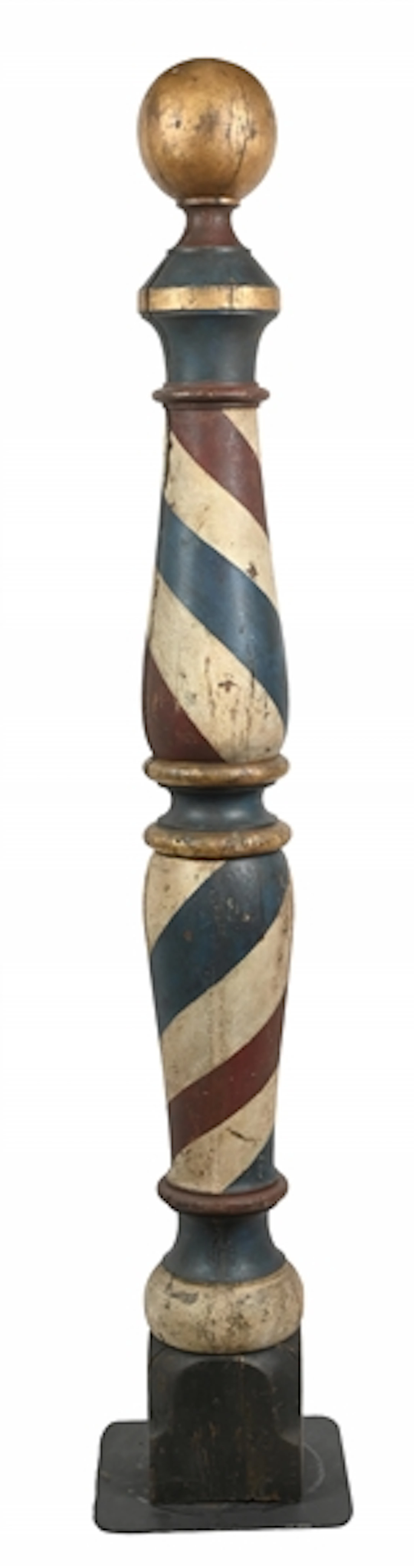
LATE 19TH CENTURY WOODEN BARBER SHOP POLE TRADE SIGN
10/16/2026

SEK 58,364.23
Uppsk.: SEK 50,221.95
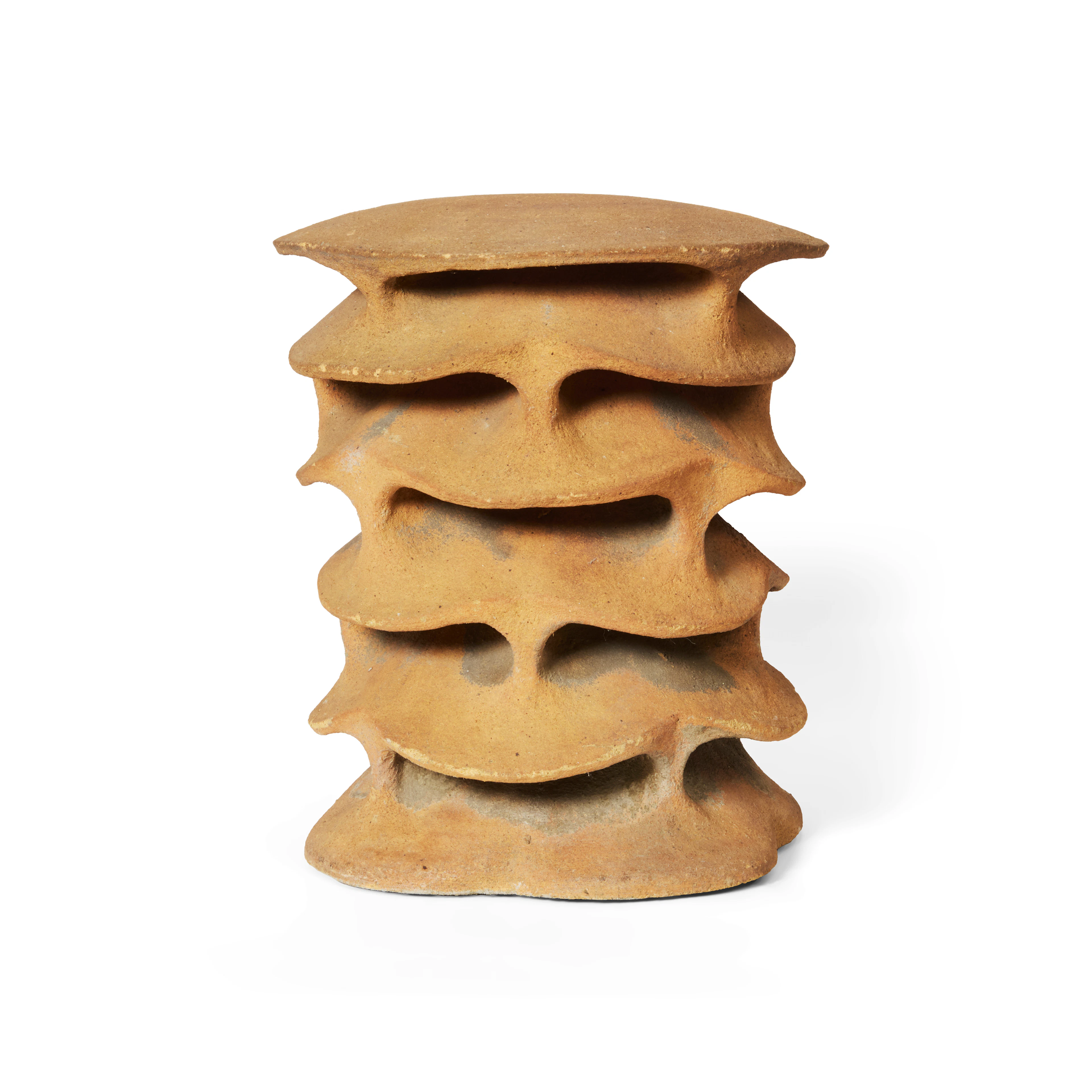
Guy BAREFF Né en 1942 Lampe "Pagode" - circa 1975
10/16/2026

SEK 19,904.91
Uppsk.: SEK 16,766.68
Nå samlare över hela världen med din auktion!
Lista er auktionGenom att prenumerera godkänner du integritetspolicyn. Avprenumerera när som helst.
Barnebys HQ
Brahegatan 10
BOX 5038
114 37 Stockholm
