
Alla auktioner / Asiatisk keramik & konsthantverk / An Ottoman illuminated Qur'an dated 1282 AH (1865-66 CE), Ottoman Turkey

An Ottoman illuminated Qur'an dated 1282 AH (1865-66 CE), Ottoman Turkey
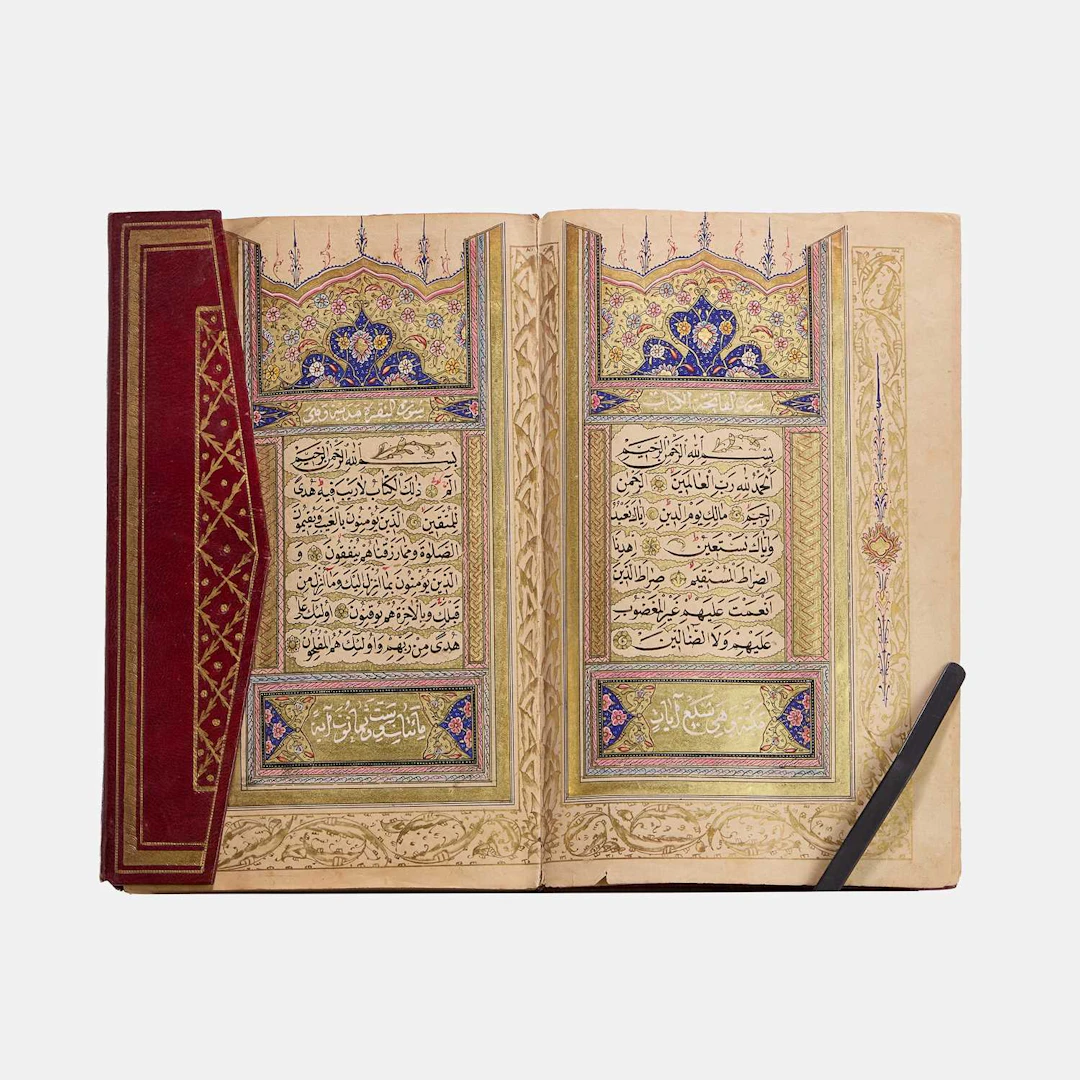
Arabic manuscript on paper, in the style of the renowned 17th-century Ottoman calligrapher Hâfiz Osman, copied by Hafiz Osman al-Fauzi Kamilzadeh with 15ll. of black naskh script, the opening bifolio with gold and polychrome illumination, with diacritics in black, corrections in red, gold wheel-shaped verse (aya) markers and chapter headings in white on burnished gold cartouches, catchwords and floral embellishments in gold, blue and pink in the margins, set within gold, blue and red rules, the colophon inscribed Hafiz Osman al-Fauzi Kamilzadeh, and dated 1282 AH, in a gilt-tooled red leather binding, naskh, aya, text panel 17.5 x 10cm; folio 14.5 x 15.5cm, Formerly in the collection of Hermann Frederick Eilts (1922-2006), American diplomat and United States Ambassador to Saudi Arabia (1965-1970) and Egypt (1974-1979); thence by descent. Born in Weißenfels, Germany, Eilts immigrated to the United States as a child and entered the US Foreign Service in 1947. During a diplomatic career spanning 32 years, he served extensively throughout the Middle East, including postings in Saudi Arabia, Iran, Iraq, Yemen, Libya, and the United Kingdom. He subsequently served as Deputy Commandant and Diplomatic Adviser at the US Army War College. As Ambassador to Saudi Arabia, Eilts served during the 1967 Arab-Israeli Six-Day War. As Ambassador to Egypt, he played a significant role in Henry Kissinger's Middle East shuttle diplomacy following the 1973 Yom Kippur War, was closely involved in the negotiations surrounding the 1978 Camp David Accord, and survived a Libyan assassination attempt. During his diplomatic career and travels, he collected maps, manuscripts and other works of art relating to the region. A later Ottoman copy after a manuscript by, A later Ottoman copy after a manuscript by Hâfiz Osman (1642-1698), one of the most celebrated Ottoman calligraphers of the 17th century. Renowned for his mastery of nesih (naskh) script, Hâfiz Osman established a highly influential model for Qur'anic calligraphy that continued to be emulated by Ottoman scribes for generations. , one of the most celebrated Ottoman calligraphers of the 17th century. Renowned for his mastery of, nesih, (naskh) script, Hâfiz Osman established a highly influential model for Qur'anic calligraphy that continued to be emulated by Ottoman scribes for generations. Condition Report, Condition Report, This lot does not have a condition report, if you would like further information, please click the 'Request A Condition Report’ button below. Request A Condition Report, Request A Condition Report
Utropspris:-
Till auktionenVisa alla föremål frånSwordersellerAsiatisk keramik & konsthantverk
Utropspris:
-
Liknande föremål

Auktionsresultat för liknande föremål
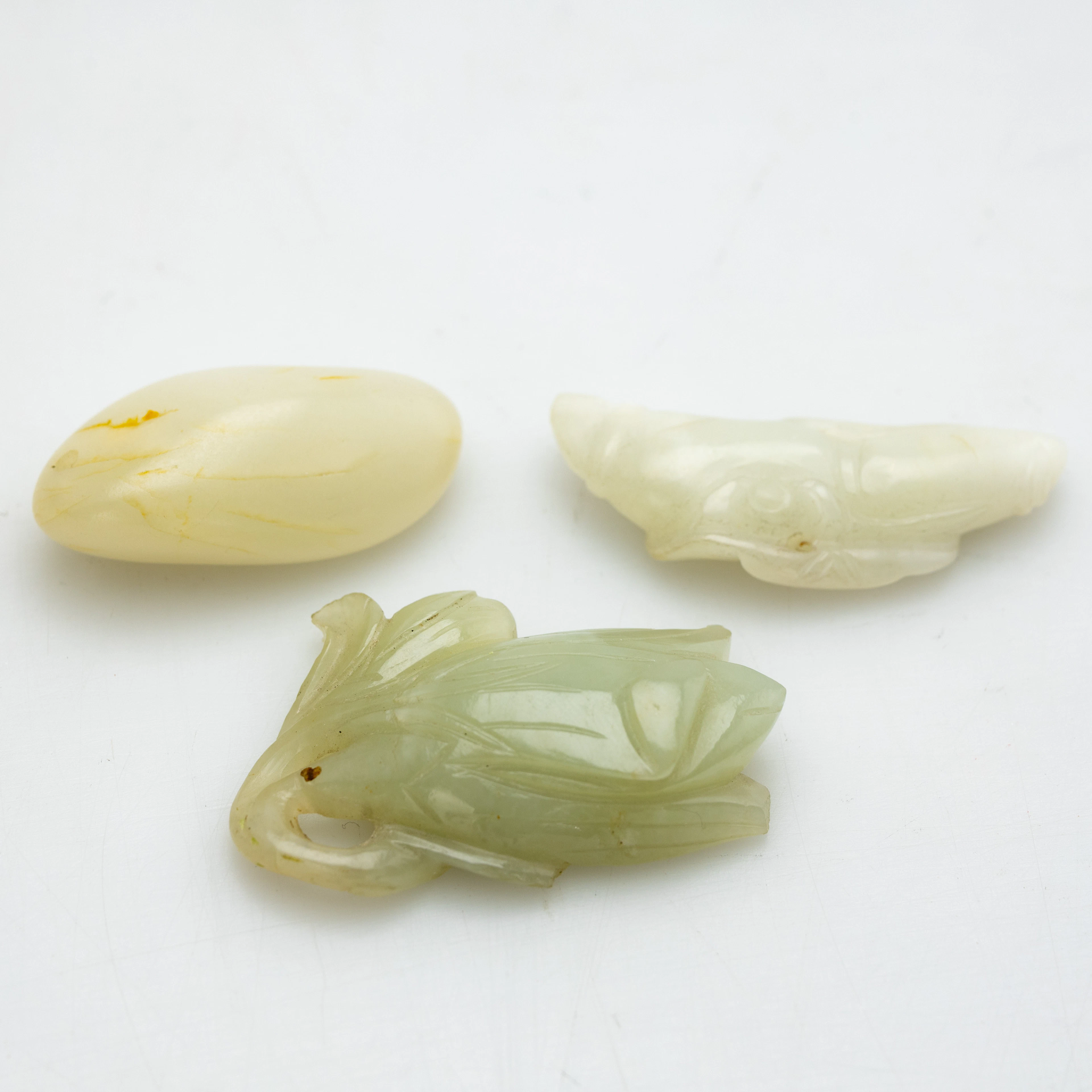
Drei Jade-Anhänger, China, späte Qing-Dynastie (3).
10/10/2026
SEK 459.33
Uppsk.: SEK 1,120.35
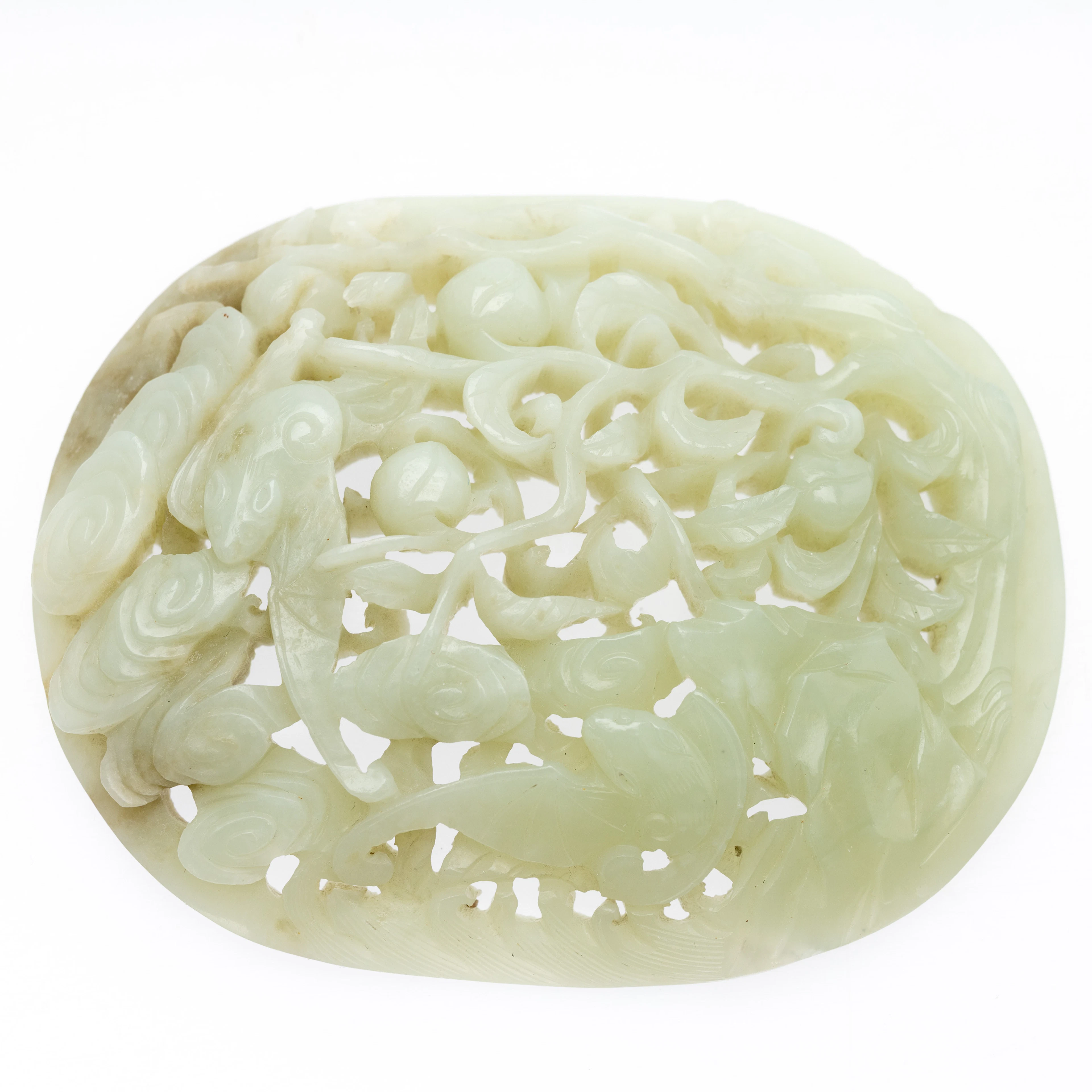
Gürtelbeschlag, Jade, China, späte Qing-Dynastie.
10/10/2026
SEK 784.22
Uppsk.: SEK 2,794.44
Nå samlare över hela världen med din auktion!
Lista er auktion