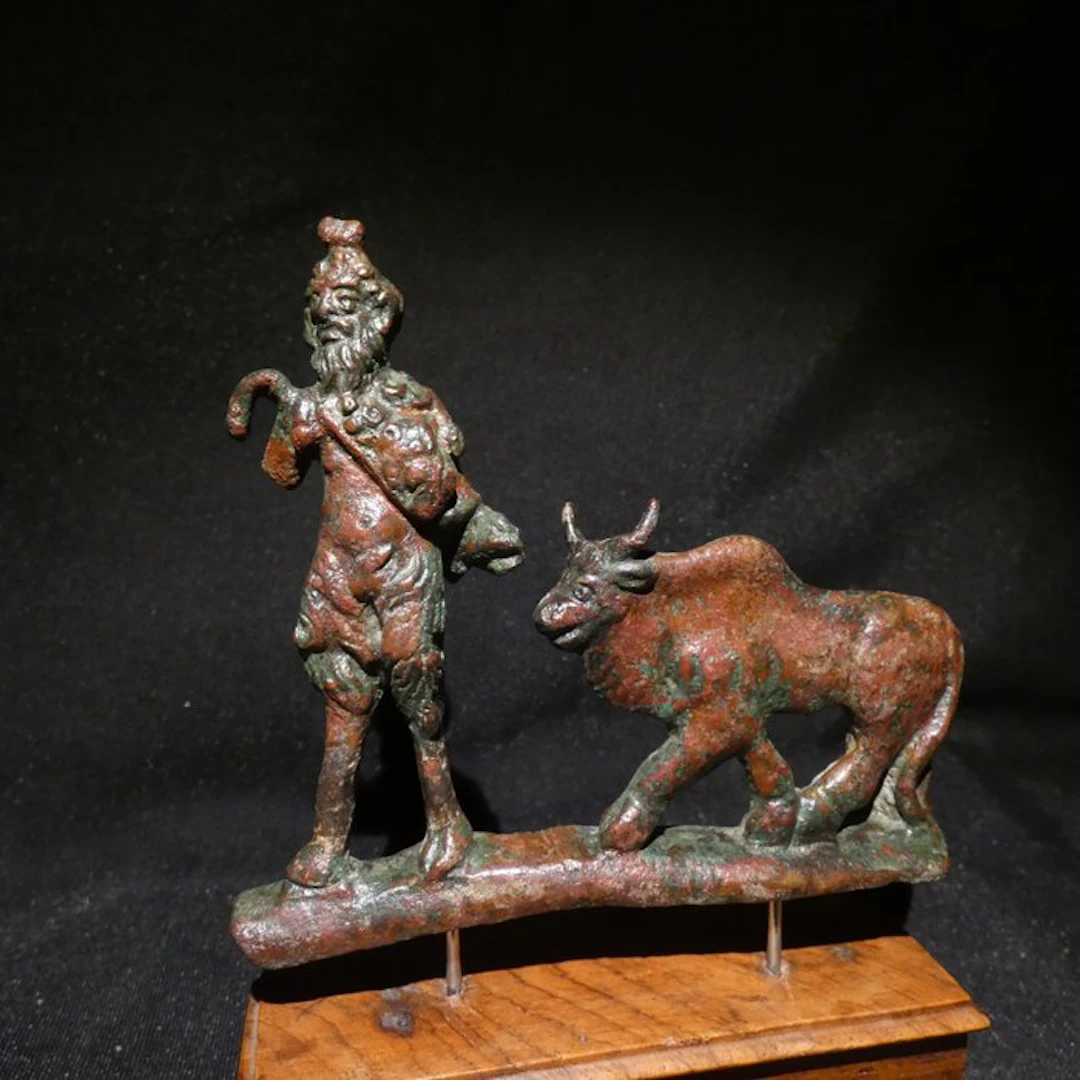
Ancient Roman Bronze Figure god Pan/Faunus with Bull
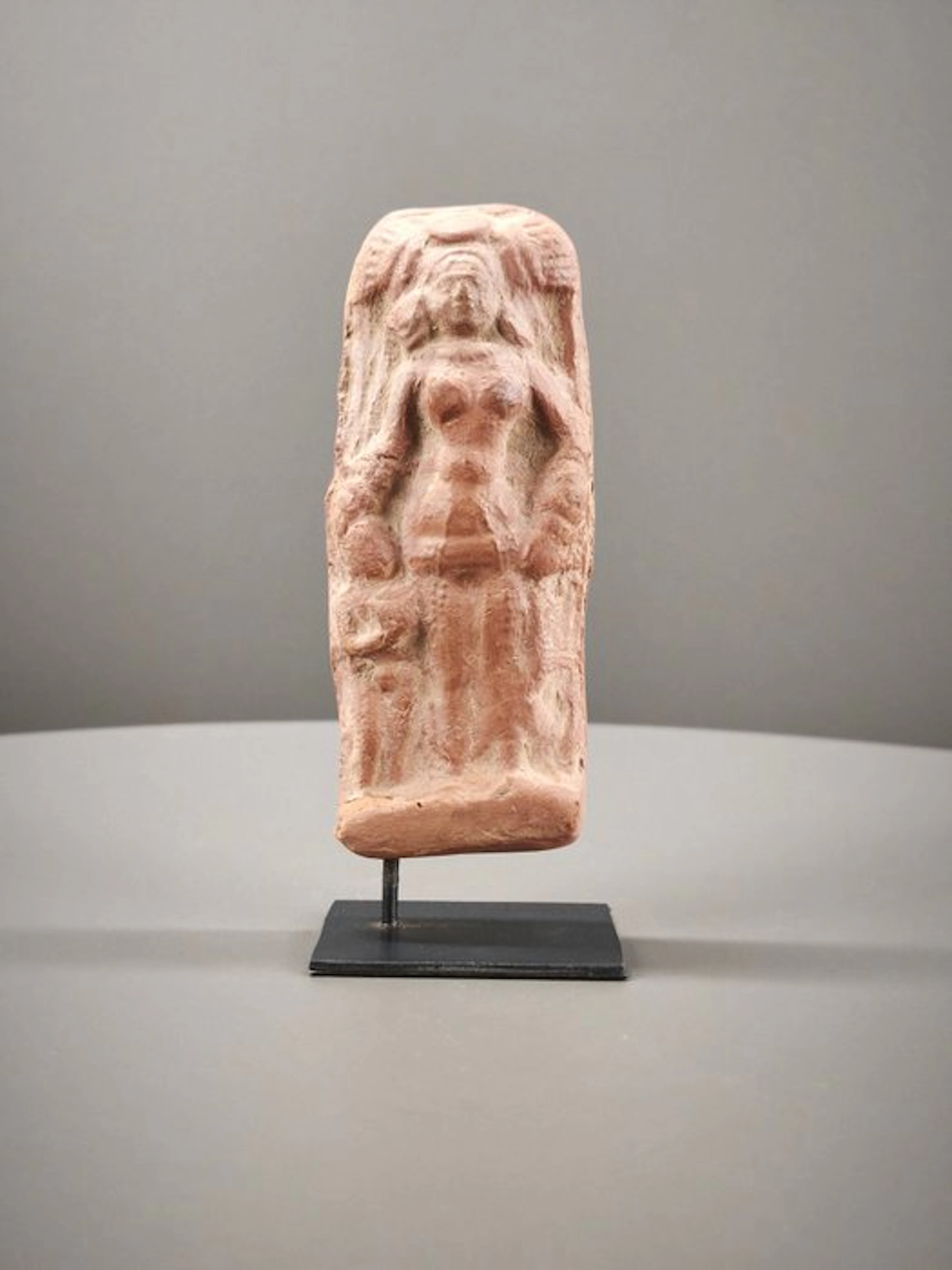
Decoration of carriage or furniture with a Pan (Faunus) and a Bull. Roman Empire, 1st - 2nd Century AD Bronze 13 cm height and 11 cm width with stand. 9,5 cm height and 10 cm width without stand. PROVENANCE: - Private collection, Amsterdan, Netherlands, 1960 - 1980. - Thence by descendent. Condition: Good, not restoration, nice patina, see photos. In ancient Roman art, a figure of Pan with a bull carries deep symbolic meaning rooted in religion, nature, and fertility. Although Pan was originally a Greek god, the Romans adopted him and closely associated him with Faunus, a rustic deity connected to forests, fields, livestock, and fertility. Pan is typically represented as a hybrid being, half man and half goat, with horns, a beard, and goat legs. He was the god of wild nature, shepherds, flocks, and untamed landscapes. Unlike the more orderly Olympian gods, Pan embodied the raw, instinctive forces of the natural world. He was also linked to music, particularly the pan flute (syrinx), and to sudden fear—indeed, the word “panic” derives from his name, reflecting the sudden terror people believed he could inspire in lonely wilderness places. The bull, on the other hand, was a powerful symbol in Roman and Mediterranean culture. It represented strength, virility, fertility, and physical power. Bulls were valuable animals in agricultural societies, essential for plowing fields and sustaining rural life. They were also frequently used in religious sacrifices, symbolizing vitality and divine energy offered to the gods. When Pan is depicted with a bull in ancient art, the combination usually emphasizes themes of fertility and natural power. Pan represents untamed nature and sexual energy, while the bull embodies masculine strength and reproductive force. Together, they form a strong symbol of abundance, life force, and agricultural prosperity. Such imagery would have resonated deeply in rural Roman society, where survival depended on successful harvests and healthy livestock. It is also important to understand the role of satyrs in this context. Satyrs were mythological beings associated with Dionysus, the god of wine and ecstasy. Like Pan, satyrs were part human and part goat, and they symbolized instinct, sexuality, revelry, and the uninhibited aspects of nature. However, while Pan was a specific god with cult worship and divine status, satyrs were lesser nature spirits—companions of Dionysus—often depicted as playful, lustful, and mischievous. In summary, an ancient Roman figure of Pan with a bull likely represents the powerful union of natural forces: fertility, virility, wilderness, and agricultural abundance. It reflects a worldview in which nature was alive, sacred, and driven by primal energy—both creative and unpredictable. #sicillianpalazzo
Utropspris:SEK 65,757.41
Till auktionenVisa alla föremål frånCatawikiellerFörhistorisk Konst