


OCT 8 | 3:00 PM

Nå samlare över hela världen med din auktion!
Lista er auktionGenom att prenumerera godkänner du integritetspolicyn. Avprenumerera när som helst.
Barnebys HQ
Brahegatan 10
BOX 5038
114 37 Stockholm
Alla auktioner / Etnografica / Dan - Côte d'Ivoire

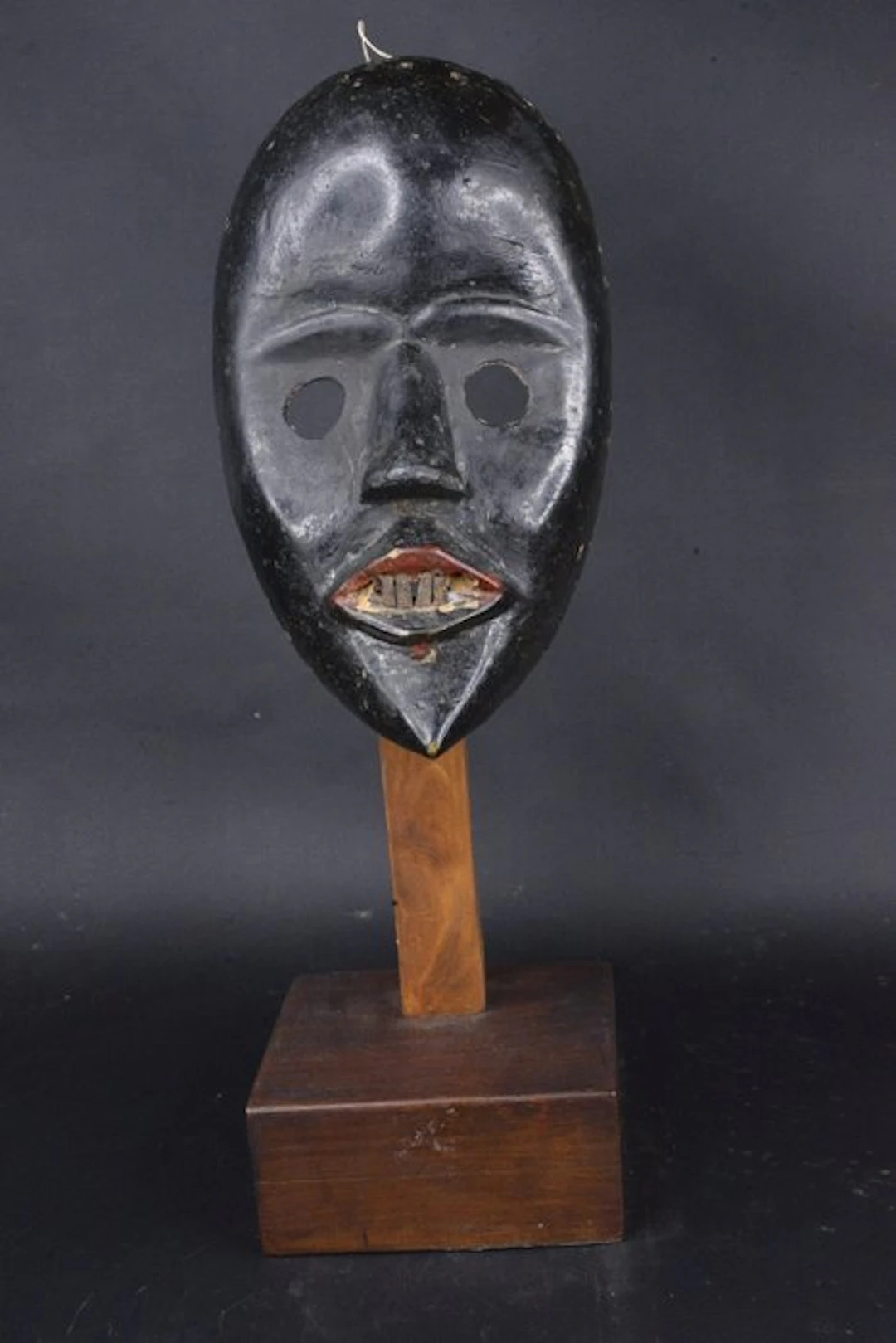
Côte d'Ivoire Dan Bois et tissus Height: 220mm Width: 130mm Depth: 65mm Dan — Gunyege race mask Côte d’Ivoire / Liberia — Dan culture The examination of the sculpture supports attributing it to the Dan, more precisely to the Gunyege mask corpus, notably characterized by their large circular eye openings. The morphology closely matches the criteria documented by the Metropolitan Museum of Art: oval face, high and swollen forehead, strongly modeled nose and mouth, and especially large circular eye openings, which the museum uses as the Gunyege identification criterion. Geographic origin Dan region, straddling the western Côte d’Ivoire and northeastern Liberia. The Musée du Quai Branly situates the Dan world to the northwest of Côte d’Ivoire and the northeast of Liberia. This cross-border zone also explains the numerous stylistic affinities between Dan productions and those of neighboring populations. Ethnicity / culture Dan The sculpture belongs to the classic vocabulary of Dan facial masks: oval form, pursuit of a stylized human representation, pronounced eyebrow relief, nose and lips, and a very dark surface treatment. The Musée du Quai Branly notes that Dan masks can show very different degrees of naturalism or stylization while preserving a characteristic facial structure. Type of object Gunyege race mask The Gunyege is one of the major categories of Dan masks. The Metropolitan Museum explains that this mask was associated with races held during the dry season: the masked wearer pursued an unmasked runner in a ritual competition. Identification by circular eyes is particularly relevant here. The Cleveland Museum of Art also preserves a Dan mask of very similar morphology, with large circular openings, a high forehead, an open mouth and visible teeth; the museum links it to the northern Dan style and the Gunyege corpus. Artistic and stylistic description The mask features an oval, elongated human face treated with strong plastic sobriety. The forehead is wide, convex and slightly inclined toward the brows. The brows form two long horizontal arches that frame the eye openings. The circular, widely open eyes are the most characteristic morphological element. They allow the dancer to maintain relatively good vision while wearing the mask. The nose is constructed in relief, with a strong ridge and a flared base. The mouth, distinctly protruding, is widely open and reveals a row of attached teeth, giving the face a particularly assertive expression. The chin ends in a point beneath a strongly drawn mouth, while the cheeks are relatively smooth and underdeveloped. The overall design favors a geometric, balanced, frontal construction typical of many Dan facial masks. Materials and technique Carved wood, pigments, and attached dental elements. The face is carved from a single piece of wood and then carefully modeled. The volumes of the forehead, nose, lips and chin are achieved directly by carving. The black, glossy surface is an important element of the Dan aesthetic vocabulary. The Musée du quai Branly thus describes Dan masks as frequently covered with a black plant-based coloration after carving. Symbolism Among the Dan, the mask is not considered mere human representation: it is the material manifestation of a spiritual power associated with the forest world. The Musée du quai Branly specifies that each mask is seen as an individuality with its own name, embodying a particular spirit. Its identity is thus linked to its performance context, its name and its costume as much as to its sculpture. In the Gunyege case, this spiritual dimension is linked to competition, speed and the prestige of the winner. Function / ritual use The Gunyege was worn by runners taking part in competitions organized in the Dan country. The Metropolitan Museum documents this function precisely, noting that Gunyege masks were worn by champions or contenders during ritual races of the dry season. However, one must distinguish the traditional function from the specific history of the present exemplar: the sculpture alone does not allow one to demonstrate the exact context in which a given mask was used. Cultural context Masks occupy a central place in Dan society. They are involved in initiation, entertainment, competition, community protection, and certain social and political regulation functions. The Musée du quai Branly highlights their role in educating boys, in sports competitions, in entertainment, as well as in political and judicial decisions. Gunyege is distinguished within this set by its association with sport competition and the recognition of the prestige of the best runner. Comparisons with museum pieces and documented collections Musée du quai Branly – Jacques Chirac, Paris Anthropomorphic Dan mask, Côte d’Ivoire / Liberia, inv. 70.2017.66.25. This work constitutes an important European reference for the Dan corpus. Its oval shape, naturalistic facial treatment and modeled nose and mouth allow for direct comparison with the present sculpture. The museum also dedicates a detailed study to the different types of Dan masks and their functions. Museum Rietberg, Zurich The Museum Rietberg notably preserves a deangle mask from Liberia, illustrated in Quai Branly Museum documentation. Rietberg is also the institution associated with the fundamental study by Eberhard Fischer and Hans Himmelheber, Die Kunst der Dan / The Arts of the Dan in West Africa, a reference work for the typology of Dan masks. British Museum, London The British Museum preserves a Dan mask from Liberia, inv. Af1954,+23.670, carved in wood, with circular eye openings and perforations intended to fix costume elements. This piece offers a particularly useful comparison for facial construction and the characteristic openings of Dan masks. Royal Museum for Central Africa – AfricaMuseum, Tervuren The collections of the Royal Museum for Central Africa include several Dan masks from Côte d’Ivoire and Liberia, notably inventories EO.1973.86.12, EO.1974.13.2, EO.1974.13.3 and EO.1974.13.4. This institutional documentation confirms the Dan corpus in both countries. Metropolitan Museum of Art, New York The Met houses a Gunyege face mask, inv. 1985.418.3, attributed to the Dan of Côte d’Ivoire/Liberia. The museum explicitly identifies the Gunyege type by its large circular eye openings, which provides the most directly relevant comparison for the present mask. Cleveland Museum of Art The Cleveland Museum of Art, inv. 1972.331, preserves a Dan-style mask with a particularly close configuration: oval face, high, convex forehead, large circular eye openings, relief nose, open mouth and visible teeth. The museum notes that such treatment corresponds to the northern Dan style and to the Gunyege race mask corpus. Bibliography / sources • Eberhard Fischer & Hans Himmelheber, The Arts of the Dan in West Africa, Museum Rietberg, Zurich, 1984. • Eberhard Fischer, “Dan Forest Spirits: Masks in Dan Villages”, African Arts, 1978. • Marie-Noël Verger-Fèvre, “Masques en pays dan de Côte d’Ivoire”, in Arts de la Côte d’Ivoire, Musée Barbier-Mueller, Geneva, 1993. • Musée du quai Branly – Jacques Chirac, Dan anthropomorphic mask, Côte d’Ivoire/Liberia, inv. 70.2017.66.25. • Museum Rietberg, Zurich, Dan collections. • British Museum, Dan mask, Liberia, inv. Af1954,+23.670. • Royal Museum for Central Africa / AfricaMuseum, Dan collections. • Metropolitan Museum of Art, Gunyege face mask, inv. 1985.418.3. • Cleveland Museum of Art, Face Mask, inv. 1972.331. Traces of wood-boring insects on the back, and a small loss at the rear near the chin; see photos. Provenance: Collection Alfons Bermel Millon sale of 07/04/2022 Private individual collection Objects are shipped with tracking number. Delivery in France by Chronopost in 1 to 2 days. Delivery within the European Union by Chronopost International in 3 to 5 days. Delivery by Colissimo International for the rest of Europe and for the whole world. We speak english. mask african art Afrikanische Maskenkunst arte de máscaras africanas arte delle maschere africane statue african art Arte de estatuas africanas arte delle statue africane Afrikanische Maskenkunst
Utropspris:SEK 18,003.24
Till auktionenVisa alla föremål frånCatawikiellerEtnografica
Utropspris:
SEK 18,003.24
OCT 8 | 3:00 PM
Nå samlare över hela världen med din auktion!
Lista er auktionSEK 100
An Indonesian carved wooden ancestor sculpture, Adu Zatua, O...
10/06/2026

SEK 1,849.79
Uppsk.: SEK 2,630.83
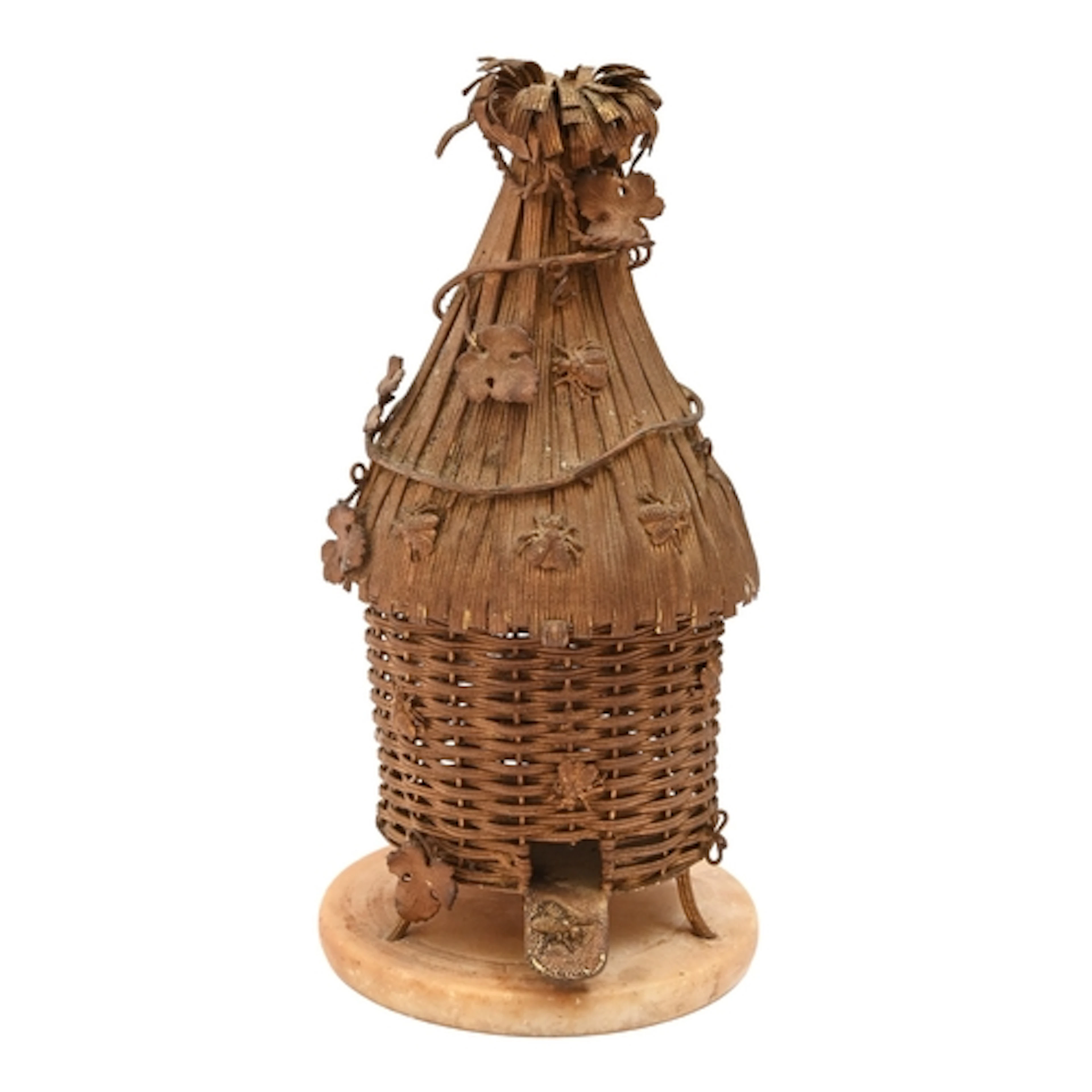
A French gilt wirework box in the form of a bee skep, second...
10/06/2026
SEK 1,585.54
Uppsk.: SEK 1,973.12
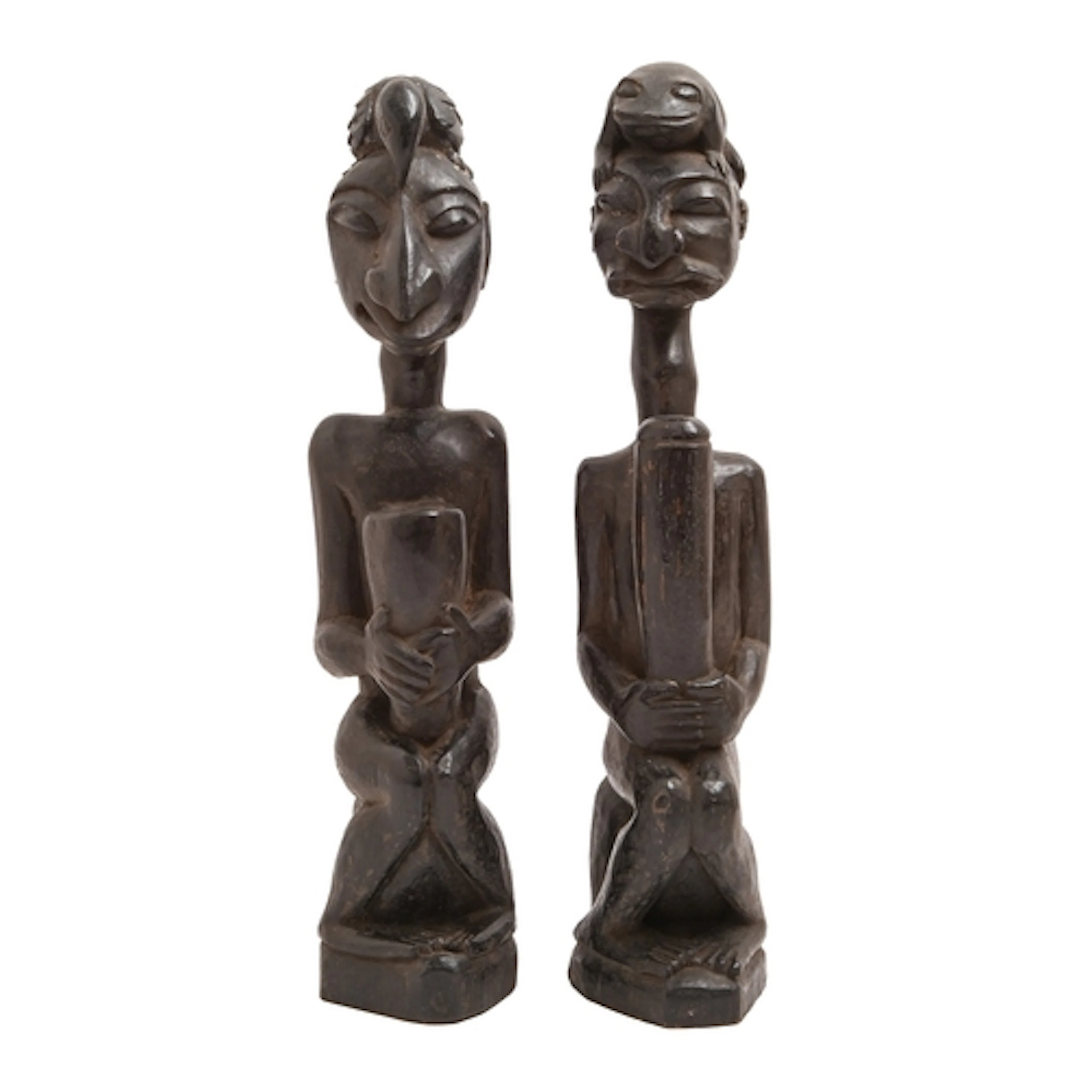
Tribal Art. Two carved blackwood figures, East Africa, 20th ...
10/06/2026
SEK 924.89
Uppsk.: SEK 1,315.41