





Alla auktioner / Böcker, Kartor och Texter / [Demetrio Degni] - Raguaglio historico di quanto e'...

![[Demetrio Degni] - Raguaglio historico di quanto e'...](https://bbys.imgix.net/34/d351bf8d002f647394e0a2ac829ee661ddf929a556928b1dc1f5f9c760b46607.jpg?auto=format&w=1080&q=75)
Presentazione dell’opera The depicted work is the Ragvaglio historico of what followed after the Peace of Nijmegen in the wars undertaken by the Most Christian King Louis XIV with allied Princes up to the conclusion of the General Peace, published in the Congress of Ryswick in the year 1697. And capitulations agreed by their plenipotentiaries. Divided into 10 campaigns. With copperplate maps of the main towns and fortresses restored by His Majesty to the aforementioned Powers, published in Venice in 1699 by Giacomo Bertan. It is a historical and political-military chronicle that recounts the wars fought in Europe from the late seventeenth century up to 1697, with particular attention to the military campaigns of Louis XIV of France and to the European powers’ coalition that opposed him. The 1699 Venetian edition is considered a second edition of the work that appeared the previous year in Modena. 1. The historical context To understand the meaning of the book one must start from the Peace of Nijmegen, concluded in 1678–1679. That peace had ended a previous phase of European wars, but had not eliminated the tensions between Louis XIV’s France and the other great powers. In the following years Louis XIV sought to further strengthen the French position in Europe. His ambitions provoked a reaction from numerous States and led to the War of the Grand Alliance, fought mainly between 1688 and 1697. On one side was France; on the other a broad coalition including, among others, the Habsburg Empire, England, the United Provinces, Spain, and the Duchy of Savoy. The conflict ended with the Treaty of Ryswick (Rijswijk) of 1697, precisely the event to which the work’s title gives particular attention. 2. The content of the work The book is organized, as the frontispiece itself states, into ten military campaigns. It is therefore not merely a political narrative: it is above all a reconstruction of military events, sieges, conquests and territorial restitutions. A particularly interesting element is the presence of 20 engraved plates dedicated to the cities and fortresses involved in the war. The plates generally combine a plan of the fortified city with a perspective view of the place. Among the represented locations are Strasbourg, Philippsburg, Luxembourg, Nancy, Susa, Roses, Nice, Mons, Montmédian, Namur, Freiburg, Charleroi, Pinerolo, Girona, Casale Monferrato, Breisach, Courtrai, Dinant, Ath and Barcelona. These images are very important because they help convey how war was understood from the point of view of military geography. A fortress is not represented merely as a city, but as a defensive system made of walls, bastions, gates, moats and strategic positions. The volume also contains, in the final part, the five diplomatic treaties through which the Peace of Ryswick was formalized. Consequently, the work shifts from a description of military operations to the diplomacy that ended the conflict. 3. The historical significance The significance of the work is particularly interesting because the book sits at the crossroads of chronicle, political information and military documentation. We are not faced with a history written several decades after the events: it is a publication contemporary to the events narrated. A reader of the late seventeenth century could thus use it to learn about wars that had involved directly many European regions. The term ragguaglio (ragguaglio) means in this context a kind of report or detailed account. The author does not merely want to recount a succession of events, but to provide information on the campaigns, the besieged cities, the military operations and the diplomatic agreements. The importance of the work lies also in its function as a means of circulating information. In an era before modern newspapers and instant communication, books of this kind helped build knowledge of international events. 4. The historical figures connected Louis XIV The main protagonist is Louis XIV, the so-called Sun King, whom the frontispiece significantly defines as “Rè Christianissimo” (Most Christian King). The designation is not accidental: the book was born within the political culture of the Ancien Régime, in which the grandeur of the sovereign, dynastic prestige and military power were fundamental elements. Louis XIV had built one of the most powerful European monarchies and had made France the leading continental power. Yet, France’s growing strength provoked the formation of international coalitions against him. William III of Orange Another fundamental figure is William III of Orange, king of England and an important opponent of Louis XIV. His role shows that the war was not only a Franco-Habsburg issue: European balance depended on the alliance of several powers. William III was indeed one of the principal actors in resisting French expansionist policy. Leopold I of Habsburg Also important is Leopold I, Emperor of the Holy Roman Empire. The Habsburgs were among France’s main adversaries and represented one of the great centers of power in Europe at the time. The rivalry between Bourbon and Habsburg constitutes one of the common threads of European politics in the seventeenth century. Vittorio Amedeo II of Savoy For a particularly meaningful link with Italian history we can recall Vittorio Amedeo II of Savoy. The Duchy of Savoy participated in the conflict and was directly involved in military operations. Some Piedmontese cities represented in the book, such as Susa and Pinerolo, allow connecting the work to Italian and Savoyard history. Antiquarian sources emphasize the presence in the volume of episodes relating to Piedmontese troops and the sieges of Susa, Montmélian and Pinerolo. Ferdinando Carlo Gonzaga An even more direct link with Italian history comes from the dedication on the frontispiece. The work is indeed dedicated to Ferdinando Carlo Gonzaga, Duke of Mantua and Montferrat. This is important because it shows that the publication had also a precise political and aristocratic dimension. The dedication to an Italian sovereign is not merely a tribute: in the cultural system of the time, dedicating a historical book to a prince meant placing the work within the network of prestige and protection of the European courts. The second Venetian edition of 1699 is documented as dedicated precisely to Ferdinando Carlo Gonzaga. 5. The iconographic apparatus One of the most interesting aspects of the work is the relationship between text and images. The plates do not have a purely decorative function. They represent the cities and fortresses that were the theatre of the war and allow the reader to understand the shape of the places. In this sense the book also belongs to the tradition of military cartography and the representation of fortified cities. A study on the culture of urban imagery of the Seventeenth Century uses the Barcelona plate contained in Ragvaglio Historico of 1699 as an example of the representation of a fortified city. The contemporary presence of both plan and view is significant: the reader can observe both the rational structure of the fortification and the visual appearance of the city. Conclusion Ragvaglio historico is an important work because it allows us to observe Europe at the end of the Seventeenth Century from three contemporaneous perspectives: war, politics and diplomacy. The protagonist is Louis XIV, the great French power, but around him an entire Europe emerges in precarious balance, in which the Habsburgs, England, the United Provinces, Spain, Savoy and other states seek to prevent France from attaining hegemonic status. The 20 engraved plates make the volume particularly significant also from an artistic and cartographic point of view: the fortified cities become real images of modern war. At the same time, the dedication to Ferdinando Carlo Gonzaga shows the link between culture, publishing and political power in seventeenth-century Italy. In short, this work is not only the account of a war now concluded: it is a testimony of the European political culture of the era of Louis XIV, when war was closely linked to diplomacy, to the representation of power and to the construction of the sovereigns’ image. Precisely for this reason the volume represents a valuable source for understanding the transition from Europe dominated by the great monarchies of the seventeenth century to the new international balance that would characterize the eighteenth century. Collation and state of preservation: In-8vo (mm 160x104). Pages 14 of 16, 148 (i.e. 248), [2] with [20] plates. The illustrated frontispiece is missing, slight foxing, missing with loss of text at C6 (pages 43–44). Contemporary full leather binding, with abrasions and stains on the boards and a crack on the front hinge due to the plate loosening, small losses to the corners. Shipping: 24-hour express delivery within Europe; 48 hours for non-EU countries.
Utropspris:SEK 6,683.23
Till auktionenVisa alla föremål frånCatawikiellerBöcker, Kartor och Texter
Utropspris:
SEK 6,683.23
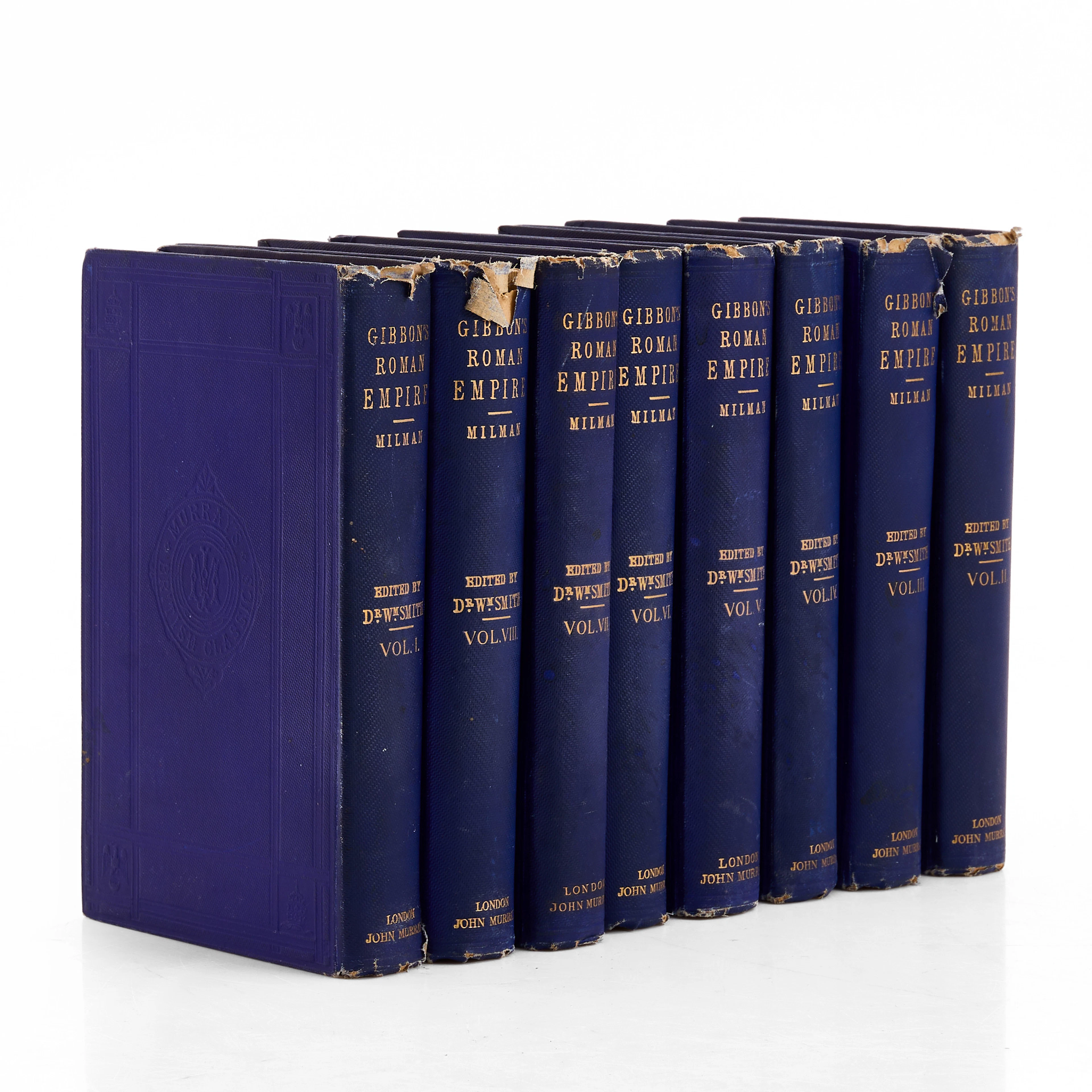
THE ROMAN EMPIRE, Edward Gibbon, 8 vol.
10/15/2026
SEK 2,000
Uppsk.: SEK 1,000
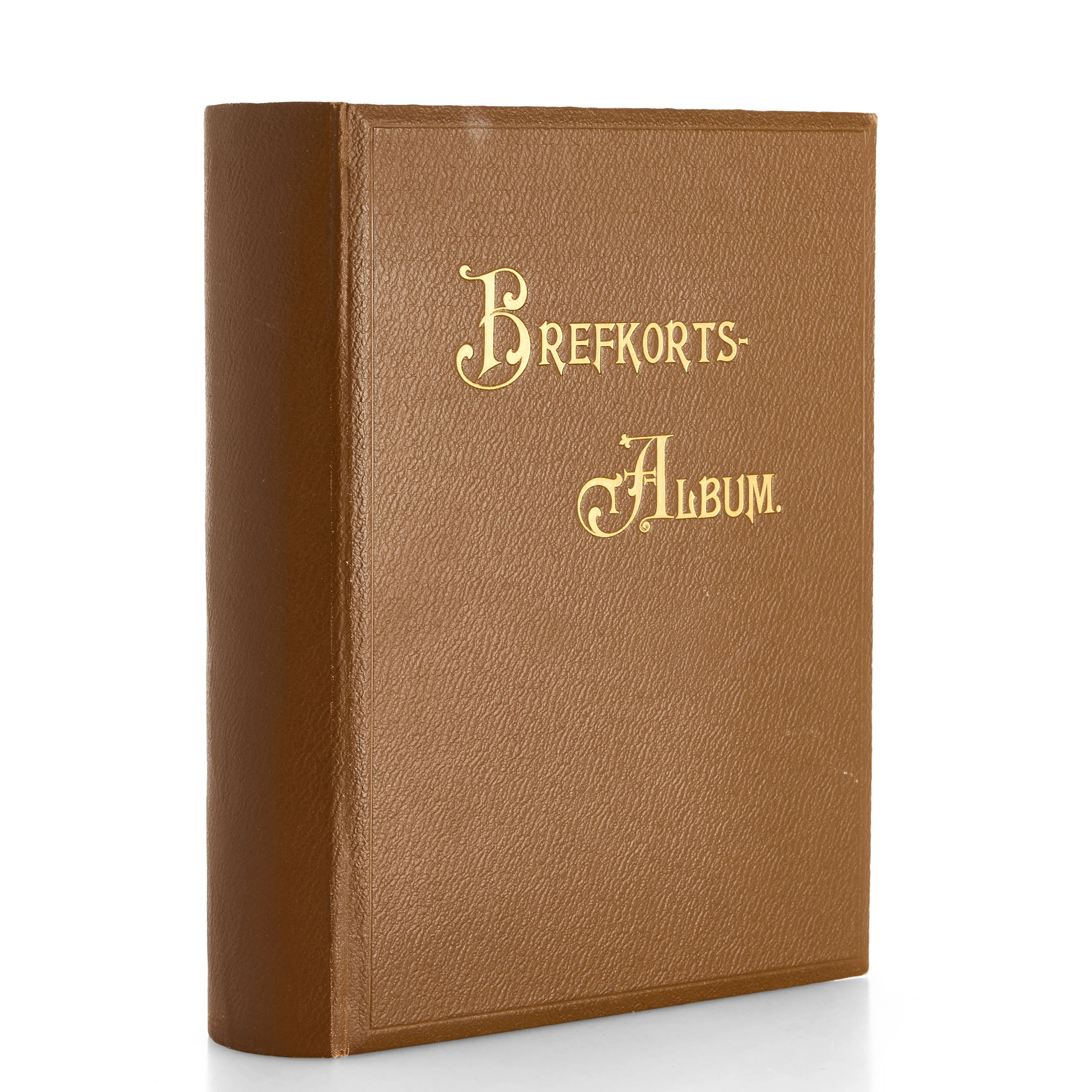
VYKORTSSAMLING - SVENSKA KUNGLIGHETER. GUSTAF V, OSCAR II M.FL. I
10/15/2026
SEK 600
Uppsk.: SEK 1,000
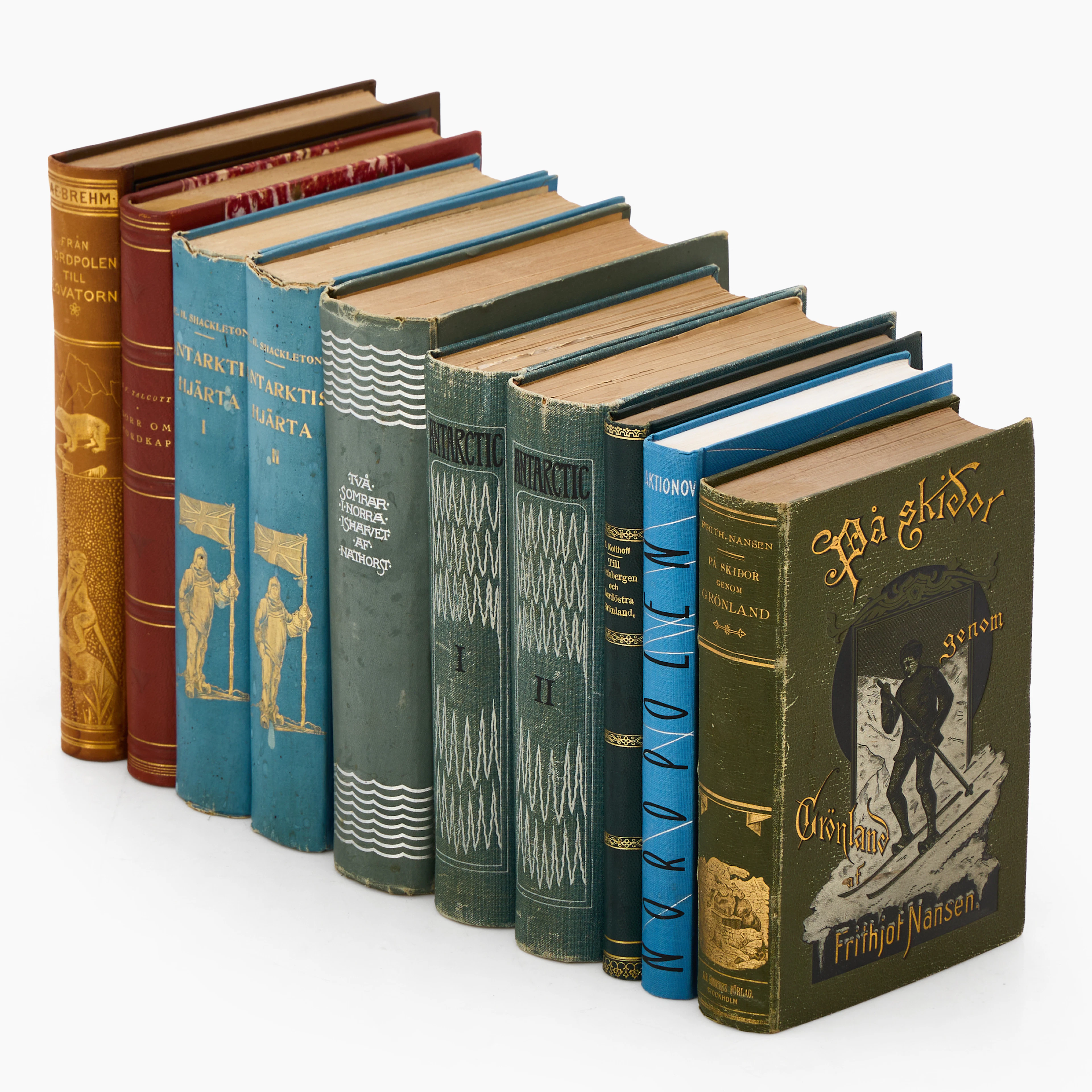
POLARLITTERATUR, 10 vol., 1800-1900-tal.
10/15/2026
SEK 2,211
Uppsk.: SEK 1,500
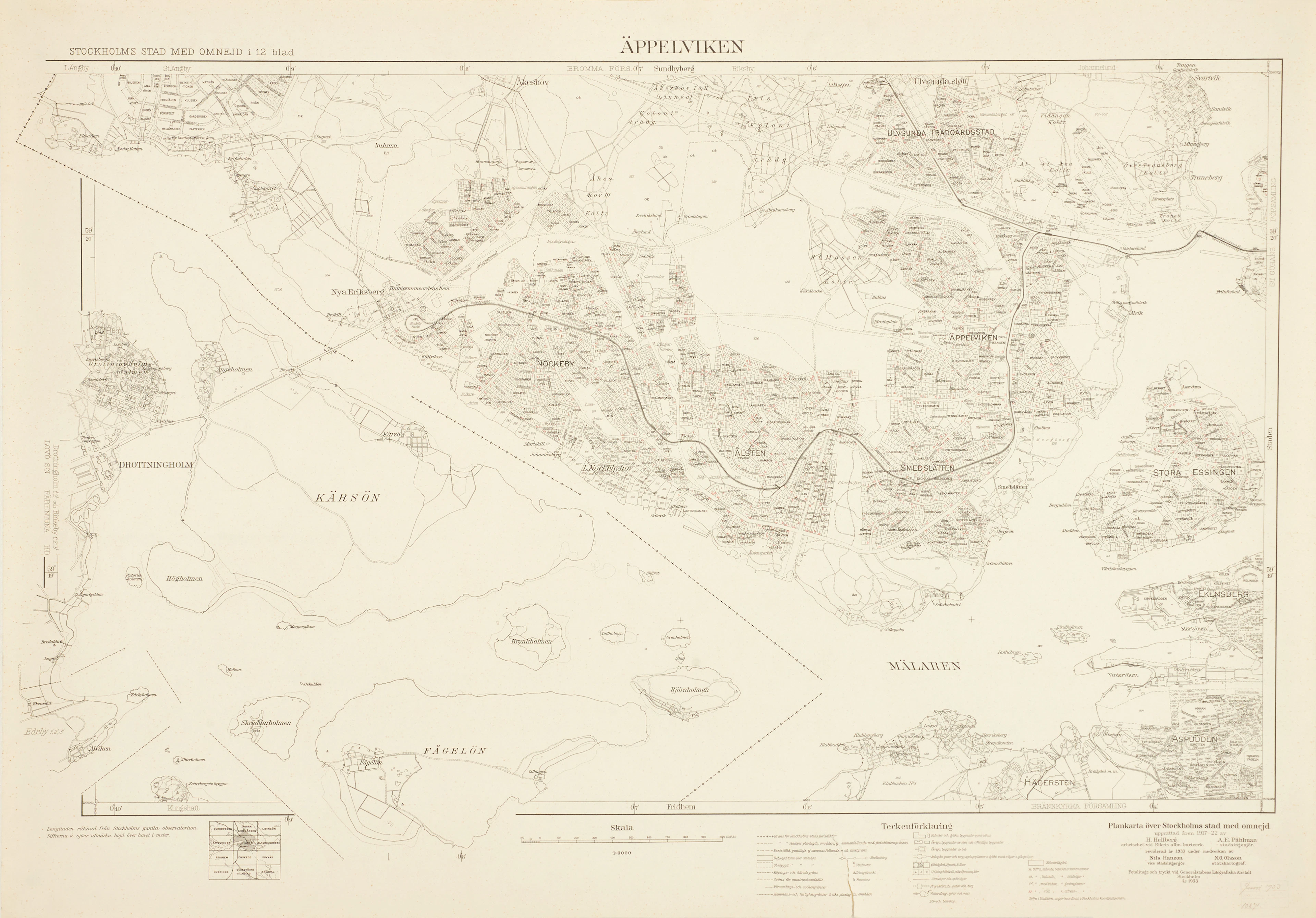
ÄPPELVIKEN, Plankarta över Stockholms Stad med omnejd, 1933, fotolitogr.
10/15/2026
SEK 1,100
Uppsk.: SEK 1,000
Nå samlare över hela världen med din auktion!
Lista er auktionGenom att prenumerera godkänner du integritetspolicyn. Avprenumerera när som helst.
Barnebys HQ
Brahegatan 10
BOX 5038
114 37 Stockholm
