







Alla auktioner / Böcker, Kartor och Texter / [Early Post Incunable 1501] - Guillaume Durand - Speculum Iudiciale - 1501

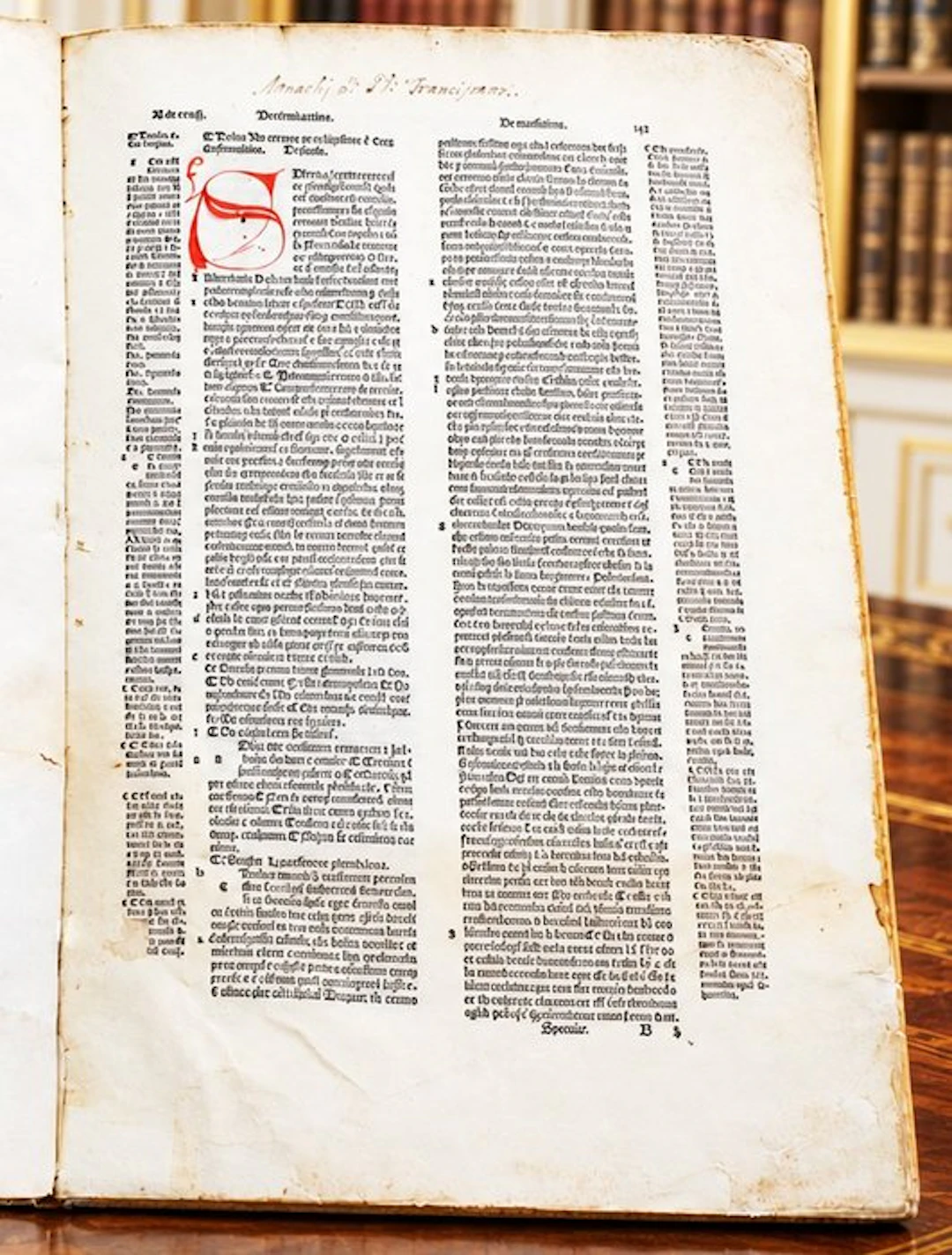
POST INCUNABLE 1501 - THE ORIGINS OF EUROPEAN JUSTICE: THE MONUMENTAL SPECULUM IUDICALE Beautiful initial rubricated by a later hand. A monumental legal treatise printed in Venice in 1501, at the dawn of the Renaissance. Guillaume Durand's Speculum iudiciale represents one of the most influential consolidations of medieval procedural law, fundamental for understanding the administration of justice in Europe. This impressive large-format exemplar preserves parts three and four of the work, with the Gothic text laid out in two columns and accompanied by legal commentaries. Particularly striking is the re-use of a fourteenth/fifteenth-century parchment manuscript in the binding, a tangible witness to the transition from manuscript culture to printing. ABSTRACT Rare post-incunabular Venetian edition of 1501 of the Speculum iudiciale, a masterpiece by the French canonist Guillaume Durand (c. 1230–1296), known as Speculator due to the immense fortune of his work. Attributed to the Battista de Tortis printing house, one of the major Venetian printers specialized in legal literature, this monumental volume gathers parts III–IV of the treatise, devoted to judicial procedures, procedural mechanisms, and the practice of Roman and canon law. The typographic composition, with main text and accompanying commentary apparatus, reproduces the structure of large medieval university manuscripts. Of particular interest is the presence of a fourteenth/fifteenth-century manuscript parchment reused in the binding, which adds historical and documentary value to the exemplar. WHY TO BUY A fundamental work in the history of European law, published at a crucial moment in the diffusion of legal printing. The date 1501 places this edition in the immediate post-incunabular period, when Venice was one of the main European centers of book production. The exceptionally large format, about 42.5 × 29 cm, underscores its intended use for professional, university, and institutional libraries. The prestigious typographic tradition of Battista de Tortis, the authority of Durand, and the presence of commentaries by eminent medieval jurists constitute important collecting elements. The fourteenth/fifteenth-century parchment re-used in the binding adds an element of charm for scholars of the material history of the book. An exemplar of considerable visual impact, particularly interesting for collectors of ancient law, Gothic books, and early Renaissance editions, albeit with limitations due to its incompleteness and conservation defects. Beautiful initial rubricated by a later hand. MARKET VALUE Large post-incunabular Venetian legal editions constitute a specialized sector of the antique market, particularly interesting for collectors of post-incunabula, legal history, and Renaissance typography. Value depends chiefly on completeness, bibliographic identification, integrity of the sheets, and binding quality. In this exemplar, the monumental format, antiquity, and prestige of the work are positive factors. A prudent indicative valuation could place it in the range of 1,500–2,000 euros. PHYSICAL DESCRIPTION AND CONDITION Large folio, approximately 42.5 × 30.1 × 4 cm, declared weight about 2.6 kg. Hardcover binding, with portions of fourteenth/fifteenth-century parchment manuscript fragments used in the binding. Beautiful initial rubricated by a later hand. Latin text in Gothic type, laid out in two columns with a commentary apparatus. Collation: 1 title leaf; 20 leaves numbered 341–360, corresponding to part three; 167 leaves numbered 361–527, corresponding to part four; 1 final unnumbered leaf, indicated as 528. Total: 189 leaves. Ex libris of jurist Dr. Joachim Haas. Leaf with good consistency and generally vigorous typographic impression. Evidence of wear along the lower margins; holes and worm traces on the first 12 and last 25 leaves, with occasional loss of text. About 20 leaves show more substantial lower-margin damage, sometimes restored and partly with textual loss. Leaves 514–515 show further small gaps due to burn marks. Overall condition good for a volume of over five centuries. In rare books with a centuries-long history, some imperfections may be present, not always noted in the description. This listing contains AI Visuals. Please refer to the original photographs to verify the object’s actual condition. The images form an integral part of the description. FULL TITLE AND AUTHOR Speculum iudiciale, with the additions and comments of Giovanni d'Andrea and Baldo degli Ubaldi. Parts III–IV. Venice, Baptista de Tortis (Battista de Tortis), 1501. Guillaume Durand (Guillelmus Durandus, c. 1230–1296). CONTEXT AND SIGNIFICANCE Composed in the 13th century and subsequently reworked, the Speculum iudiciale represents one of the most important syntheses of medieval judicial procedure. In an era when Roman law and canon law formed the foundations of European legal culture, Durand devised a work aimed at providing legal professionals with a coherent framework of procedural rules, tribunal competencies, evidence, judgments, and disputes. Its extraordinary diffusion in universities and judicial circles contributed to the formation of a common legal language beyond the borders of individual territories. The additions by later commentators further enhanced its authority, turning the treatise into a repository of doctrine and practice. The Venetian printing of 1501 testifies to the persistence of this tradition in the flourishing Renaissance book trade. BRIEF BIOGRAPHY Guillaume Durand, called the Speculatore, was one of the leading French canonists of the 13th century. Born around 1230 and died in Rome in 1296, he had a significant ecclesiastical and administrative career, culminating in his appointment as bishop of Mende. His work developed within the Roman-canonical legal framework, with deep knowledge of ecclesiastical institutions and the mechanisms of justice. In addition to the Speculum iudiciale, he composed liturgical works of exceptional influence, including the Rationale divinorum officiorum. The fame of his procedural treatise endured so long that he was remembered for centuries in European legal literature as the Speculator. PRINTING HISTORY The Speculum iudiciale circulated initially in manuscript form before numerous printed editions in the late 15th century. Its editorial fortune mirrors the importance of the treatise in university teaching and judicial practice. The Venetian editions by Battista de Tortis fit into the tradition of large folio legal books, characterized by complex layouts and extensive gloss apparatus. The 1501 printing belongs to the very early post-incunabular period, when printing techniques still retained many formal features of medieval manuscripts. Durand’s text continued to be published and consulted in subsequent centuries, confirming its status as a classic of European jurisprudence. RARITY The bibliographic interest of the exemplar derives from the combination of an early date, a monumental format, and a work of great historical importance. Ancient editions of the Speculum iudiciale are documented in major libraries, but the commercial availability of individual copies varies considerably. The presence of fourteenth/fifteenth-century manuscript parchment in the binding and the provenance from a private legal library constitute additional distinctive features. BIBLIOGRAPHY Jean Gaudemet, “Durand, Guillaume, called the Speculatore,” Dizionario Biografico degli Italiani, vol. 42, Istituto dell'Enciclopedia Italiana, 1993. Gesamtkatalog der Wiegendrucke, catalogue of the fourteenth/fifteenth-century editions of the Speculum iudiciale. Ludwig Hain, Repertorium bibliographicum, for the incunabula tradition of the work. Incunabula Short Title Catalogue, British Library, for editions prior to 1501. PERCHÉ ABBIAMO SCELTO QUESTO LIBRO We chose this work because it represents a true bridge between two eras of European civilization: the medieval era of the great university jurists and the Renaissance of printing. Its monumental format, the density of the Gothic layout, and the structure of the commentaries immediately convey the authority that a legal book possessed five hundred years ago. The fourteenth/fifteenth-century parchment manuscript re-used in the binding adds a fascinating testimony to the relationship between the old and the new world of the book.
Utropspris:SEK 18,899.9
Till auktionenVisa alla föremål frånCatawikiellerBöcker, Kartor och Texter
Utropspris:
SEK 18,899.9
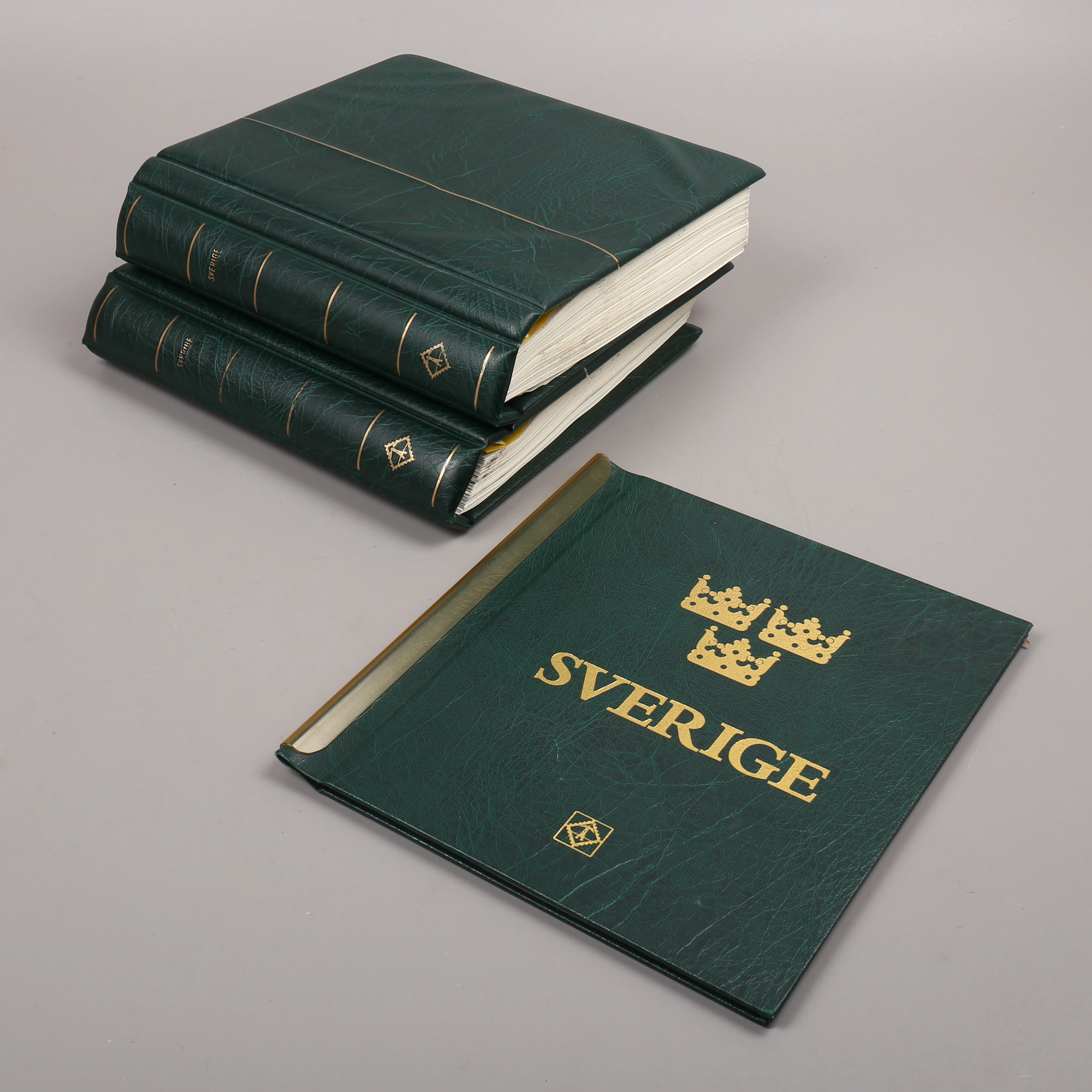
FRIMÄRKSSAMLING, 3 st album, Sverige, 1976-2010.
10/21/2026
SEK 1,015
Uppsk.: SEK 1,000

CARL CHRISTIAN ERHARD SCHMID. "Empirische Psychologie“, Erfter Theil
10/21/2026
SEK 500
Uppsk.: SEK 1,500
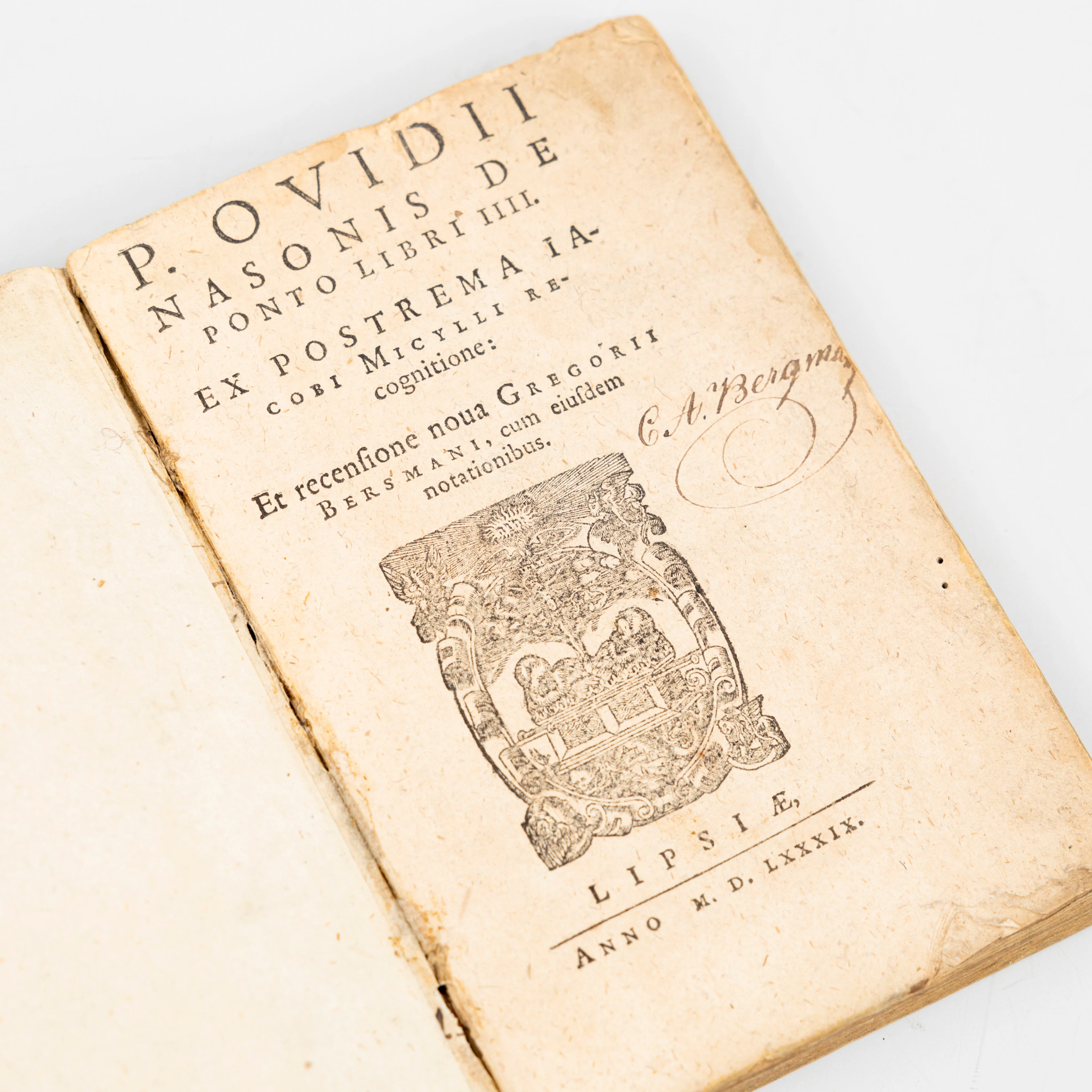
PUBLII OVIDII NASONIS. "De Ponto libri IIII", Ex postrema Iacobi Micylli
10/21/2026
SEK 800
Uppsk.: SEK 2,500
Nå samlare över hela världen med din auktion!
Lista er auktionGenom att prenumerera godkänner du integritetspolicyn. Avprenumerera när som helst.
Barnebys HQ
Brahegatan 10
BOX 5038
114 37 Stockholm
