



Alla auktioner / Konst & Grafik / École européenne (XX) - La Vierge en contemplation

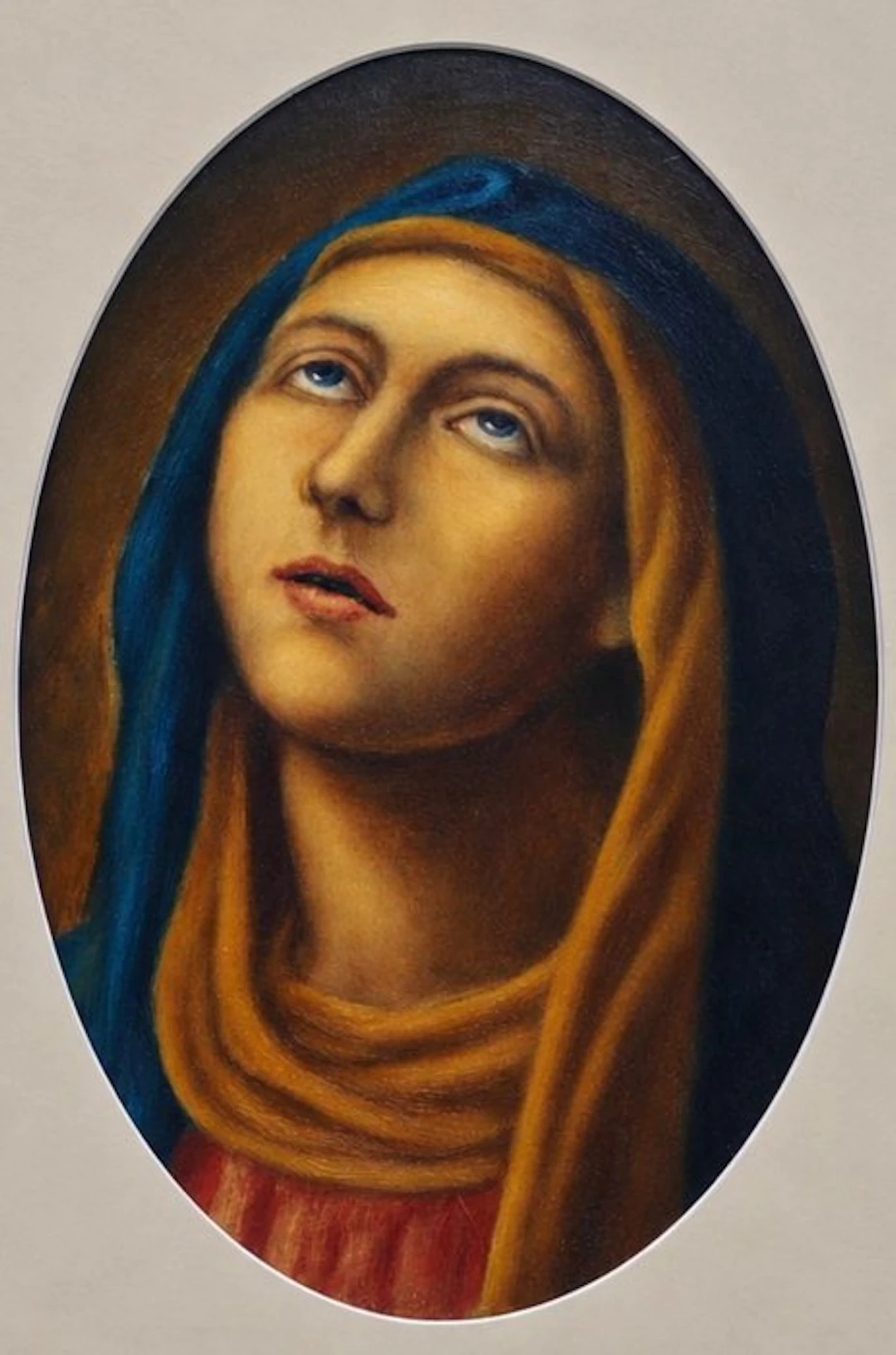
Elegant and delicate oil painting representing a bust of the Virgin Mary, created following the traditional models of European religious painting. The work stands out for the serenity of its composition, the delicacy of the facial treatment, the expressive depth of the gaze, and a carefully chromatic harmony, features that refer to the devotional painting tradition and to the great Marian representation models developed since the Renaissance. The Virgin is depicted in a bust portrait, with the face slightly raised and the gaze directed upward, in an attitude of spiritual recollection and deep contemplation. The painting shows notable attention to the modeling of the face, to the luminous transitions, and to the representation of the fabrics, combining an academic figurative technique with a traditional religious sensibility. The composition is bounded by an oval opening, surrounded by a wide white mat and presented in an elegant gold and brown finished frame, with classical ornamentation. The work is protected with glass, a circumstance that helps preserve the painted surface from dust and direct contact. Description and iconography The painting represents the Virgin Mary in a bust composition, following an iconographic type widely disseminated in the Christian tradition. The face appears slightly turned and elevated, with the eyes directed toward the upper part of the composition. The expression combines serenity, melancholy, and a deep spiritual intensity. The eyes, blue-toned and carefully modeled, constitute one of the painting’s main focal points. Her ascending gaze conveys a sense of contemplation and recollection, characteristic of numerous Marian devotional representations. The mouth appears slightly ajar, with the lips delicately defined through reddish tones. The nose has a classical and proportionate structure, while the cheeks are worked with soft transitions between lights and shadows. The face shows an idealization typical of traditional religious painting, which seeks to convey beauty, purity, and spirituality. The head is covered by a deep blue mantle, combined with a veil of golden and ochre tones that descends around the face and the neck. At the bottom there is a garment of red color, creating a chromatic combination traditionally associated with representations of the Virgin. The figure is set against a dark background, which concentrates attention on the face and accentuates the intimate, contemplative nature of the image. The Marian painting tradition The representation of the Virgin Mary constitutes one of the fundamental themes in the history of Western art. Since the Middle Ages, Marian iconography acquired extraordinary importance within European painting, both in large compositions intended for churches and convents and in small images conceived for private devotion. During the Renaissance, Italian artists and those from other European schools developed models characterized by idealization of features, compositional harmony, and the expression of spiritual feelings through restrained gestures. The figure of the Virgin was frequently represented with the head covered by a mantle and the face illuminated by soft light, capable of conveying serenity and recollection. These iconographic formulas continued to develop during the Baroque and in later centuries. In particular, representations of the Virgin with elevated gaze gained notable diffusion, as they allow expressing feelings of prayer, hope, contemplation, and spiritual surrender. This work takes up this tradition through a pictorial interpretation made in the 20th century, preserving the essential elements of the classic devotional models. Renaissance and Baroque influences Stylistically, the painting shows affinities with the figurative tradition developed during the Renaissance and the Baroque. The idealization of the face, the softness of the modeling, and the careful transition between illuminated areas and shadows recall certain procedures of classical religious painting. The elevated gaze and restrained emotional expression find iconographic parallels with numerous Marian representations disseminated by Italian and Spanish painting. The work can be generally related to the tradition of devotional images inspired by the great masters of the 16th and 17th centuries. However, it is an interpretation made in the 20th century, which recovers these models through an academic and traditional sensitivity. The artist gives special importance to the expression of the face, avoiding secondary narrative elements. This concentration on the figure allows conveying the spiritual content of the scene through essentially pictorial means. Expression and psychological treatment One of the main attractions of the painting lies in the expressiveness of the face. The Virgin is depicted in a moment of contemplation, with the gaze directed upward and the lips slightly parted. The tilt of the head introduces a subtle movement that breaks the rigidity of a strictly frontal representation. The artist succeeds in conveying a serene expression, though tinged with a sense of melancholy. The eyes acquire particular importance. Their upward direction and the delicate treatment of the eyelids help create a sense of deeper emotional depth. The eyebrows, softly arched, accompany the expression of the face. The modeling of the cheeks, the nose, and the chin allows building a figure with harmonious features. The absence of exaggerated gestures reinforces the restrained and spiritual character of the composition. Light treatment Lighting is one of the fundamental elements of the work. The face is bathed in warm, soft light, standing out against the dark background. The brightest areas are concentrated on the forehead, the bridge of the nose, the cheeks, and the chin. Shadows are distributed gradually, especially around the eyes, under the nose, and in the lower part of the face. This treatment allows building the volumes through delicate tonal transitions. The lighting also helps highlight the folds of the veil and mantle. The contrast between luminous flesh tones and the dark tones of the background provides depth to the image. The result is a balanced composition, in which light serves both descriptive and expressive purposes. Color and chromatic harmony The painting presents a warm and carefully balanced palette. The flesh tones are built with golden, ochre, pinkish, and soft brown hues. The face stands out for its luminosity and the delicacy of its chromatic transitions. The blue mantle introduces one of the main contrasts of the composition. Its deep hue frames the face and helps direct the viewer’s gaze toward the Virgin’s expression. The ochre-gold veil adds warmth to the whole. At the bottom appears a red garment, establishing a contrast with the blue mantle. The combination of blue and red constitutes one of the most characteristic color formulas of Western Marian iconography. The dark background allows these colors to stand out without distracting from the face. Drawing and painting technique The work presents careful drawing, especially perceptible in the construction of the face. The eyes, the nose, and the mouth show precise definition, while the transitions between lights and shadows help soften the contours. The artist combines an academic drawing structure with a painting technique of carefully modeled surfaces. The folds of the mantle and veil are represented through color variations that suggest the fall of the fabrics. The brushwork is relatively restrained, subordinated to the representation of volumes and the expression of the character. The result is a traditional figurative painting, conceived to convey idealized beauty and spirituality. The oval composition One of the most characteristic elements of the presentation is its oval visual format. The image is bounded by an oval opening that concentrates attention on the Virgin’s bust. This type of presentation has a long tradition in the history of portraiture and devotional painting. During the 18th and 19th centuries, oval formats were especially valued for portraits and religious representations intended for domestic spaces. Its use continued during the 20th century, particularly in works inspired by classical models. In the present painting, the oval contributes to reinforcing the sense of intimacy and recollection. The figure is isolated from any narratological element, allowing the face to take center stage. Frame, mat, and glass protection The work is presented in a classic-style frame, with a gilded and brown finished molding. The framing combines golden ornamental profiles with areas of dark tones and a veined decorative appearance. The overall aesthetic is traditional, harmonizing with the religious character of the painting. The image is surrounded by a wide, light-toned mat, whose oval opening enhances the composition. This feature provides a visual contrast between the painting and the frame, favoring the perception of the face. The work is protected by glass, which prevents direct contact with the painted surface and helps protect it from external agents. The frame is offered as a gift to the buyer, with no commercial value, and is not part of the painting’s appraisal. It is recommended to carefully examine the photographs to assess its condition and that of the framing. Condition report The painting is framed and protected with glass. The condition should be assessed from the photographs provided. The presence of glass may hinder direct observation of certain surface details. It is not possible to determine solely from the images whether there have been restorations, retouching, or previous interventions. The photographs are an integral part of the description. Artistic and collecting interest The work constitutes an attractive interpretation of traditional Marian iconography realized during the 20th century. Its main interest lies in the delicacy of the facial treatment, the expressiveness of the gaze, and the revival of classical models of European religious painting. Chromatic harmony, the softness of the modeling, and the contemplative character of the figure allow relating it to the academic and devotional tradition. The oval presentation, the wide mat, and the decorative frame reinforce its decorative appeal. This is a painting especially suitable for collectors of religious art, traditional figurative painting, Marian iconography, and works inspired by Renaissance and Baroque styles. Artwork characteristics School: European. Era: 20th century. Technique: Oil. Subject: Virgin Mary. Genre: Religious painting. Style: Academic figuration inspired by Renaissance and Baroque. Composition: Bust portrait with oval presentation. Presentation: Framed, with mat and protected by glass. Shipping The work will be carefully and professionally packaged, using appropriate protective materials to ensure its safety during transport. Special attention will be given to protecting the frame and glass during packaging. Shipments to destinations outside the European Union may be subject to taxes, duties, customs fees, clearance costs, and customs procedures. Any such costs will be the sole responsibility of the buyer and are not included in the hammer price or shipping costs. Likewise, shipments to islands, insular territories, or remote or hard-to-reach areas as considered by the transport companies may incur additional charges. Any surcharge applied by the transport company for this reason must be borne by the buyer. It is recommended to consult in advance the customs conditions and possible transportation surcharges applicable to the destination.
Utropspris:SEK 2,784.68
Till auktionenVisa alla föremål frånCatawikiellerKonst & Grafik
Utropspris:
SEK 2,784.68
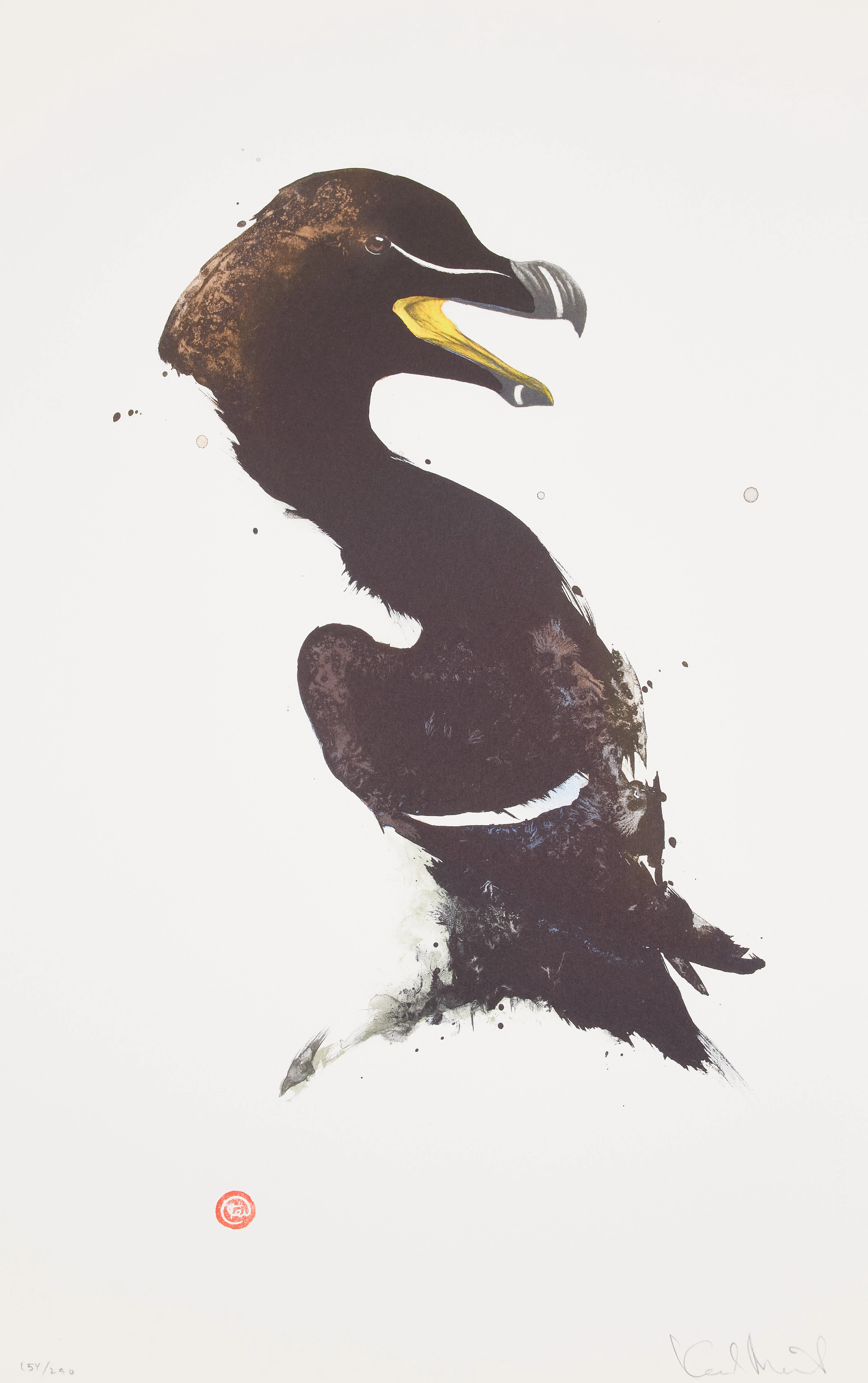
KARL MÅRTENS, "Tordmule", färglitografi, signerad och numrerad 154/290.
10/16/2026
SEK 700
Uppsk.: SEK 2,000
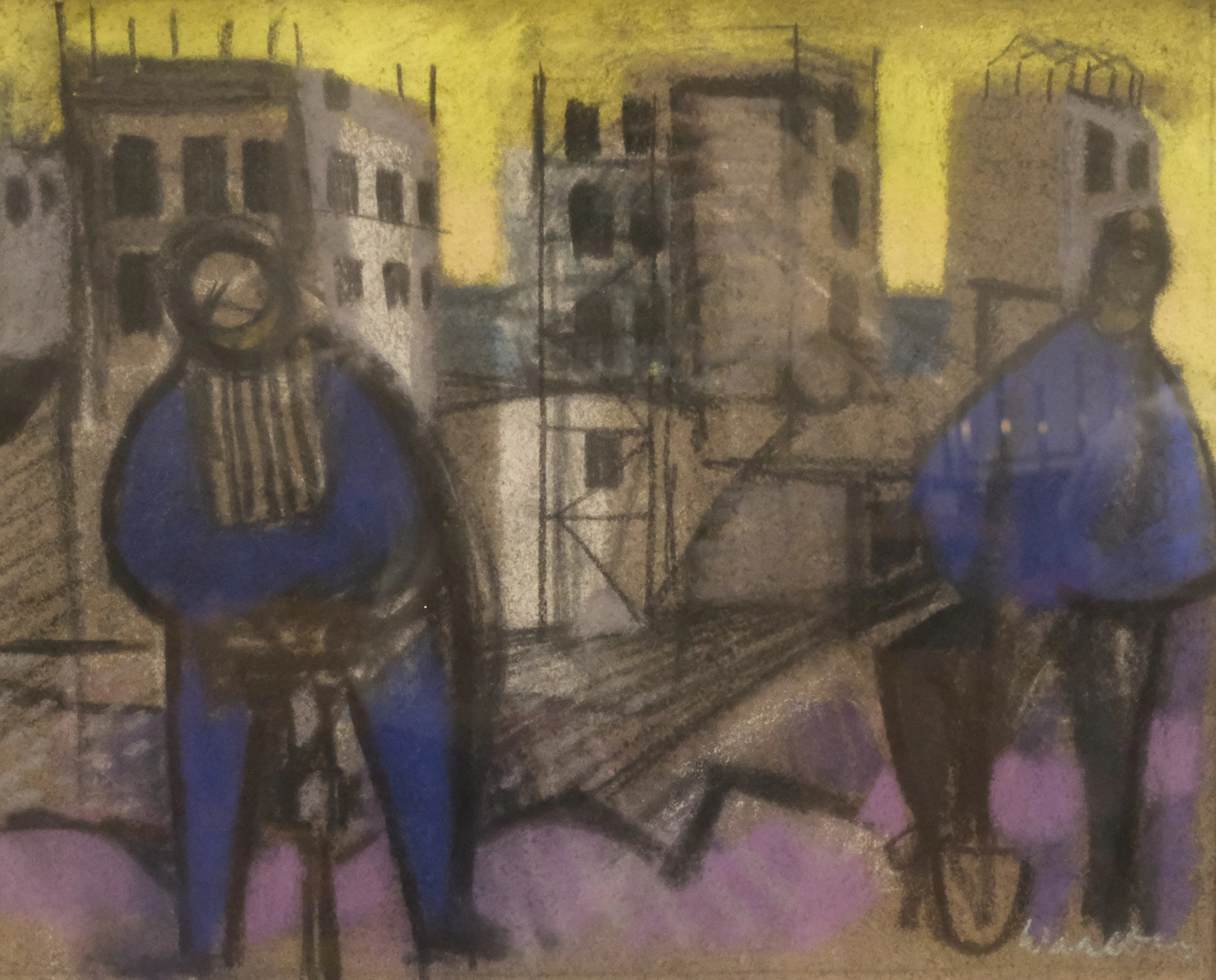
BERTIL WAHLBERG. PASTELL. ABSTRAKT KOMPOSITION, STADSMILJÖ MED ARBETANDE
10/16/2026

SEK 300
Uppsk.: SEK 500
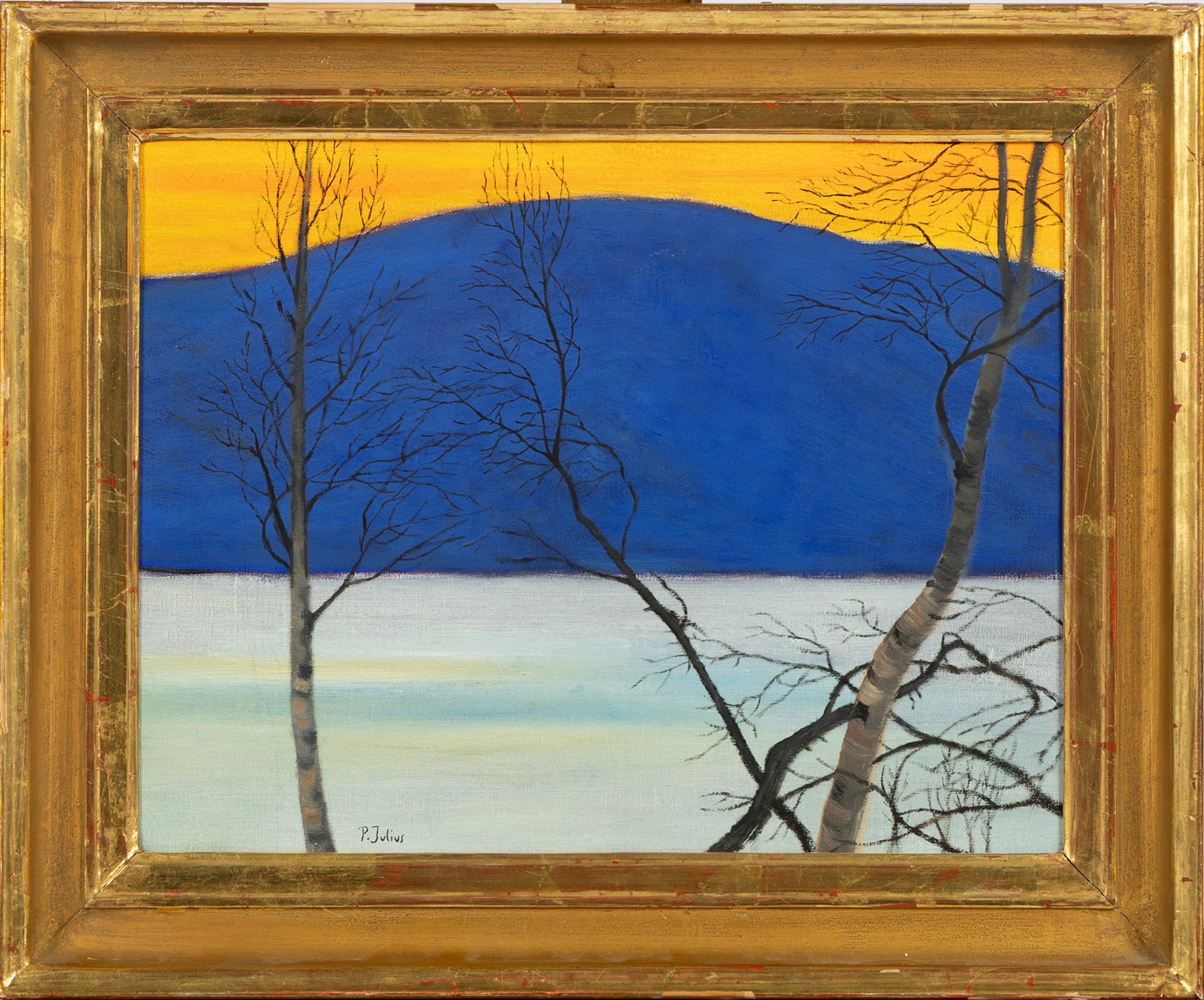
PER JULIUS. Oljemålning på duk. "Tängvattnet, Hemavan, Lappland".
10/16/2026
SEK 7,001
Uppsk.: SEK 3,000
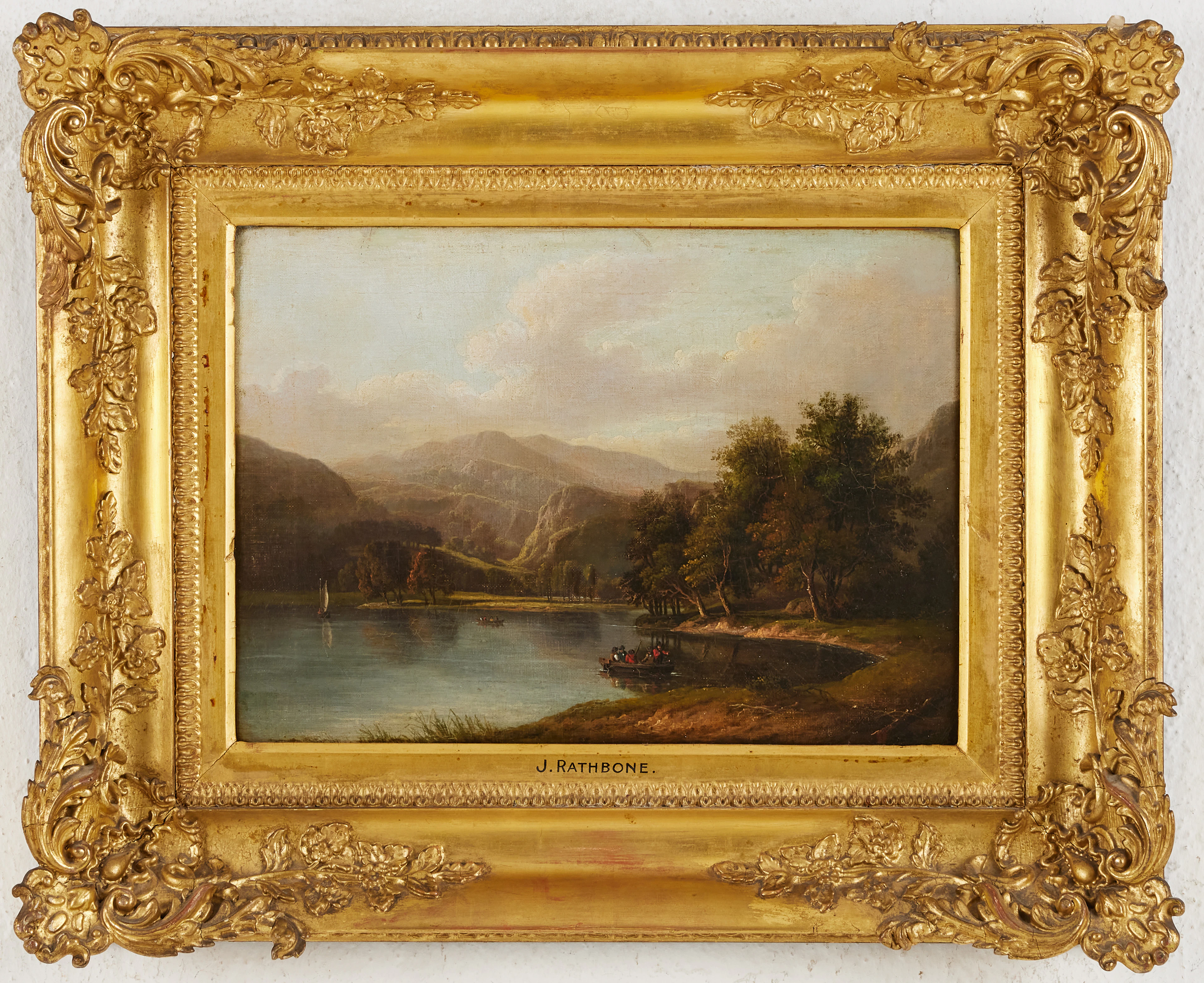
JOHN RATHBONE. (England, 1750-1807). Engelskt landskap, olja på duk.
10/16/2026
SEK 6,000
Uppsk.: SEK 8,000
Nå samlare över hela världen med din auktion!
Lista er auktionGenom att prenumerera godkänner du integritetspolicyn. Avprenumerera när som helst.
Barnebys HQ
Brahegatan 10
BOX 5038
114 37 Stockholm
