




Alla auktioner / Diverse / École postimpressionniste valencienne (XX) - Paysage méditerranéen


20th Century Valencian Impressionist School Mediterranean Landscape with Rural Architecture and Vegetation An attractive oil painting by the 20th century Valencian Impressionist School, depicting a luminous Mediterranean landscape dominated by a cluster of rural buildings surrounded by vegetation, fields and gentle mountain elevations. The work stands out for its chromatic richness, expressive brushwork, and special sensitivity to the effects of Mediterranean light, characteristic elements of the Valencian landscape tradition developed during the 20th century. The composition offers an elevated view over a landscape with a strong Mediterranean personality, in which traditional architecture integrates harmoniously among trees, paths, terraced plots, and expanses of vegetation. The artist builds the scene through a sequence of loose, vigorous brushstrokes, combining luminous yellows, intense greens, deep blues, warm ochres, and delicate pinkish and violet tones. The result is a composition of notable pictorial vitality, in which color takes on a fundamental role as a means to express the atmosphere and the intensity of the light. ## Description of the work The painting represents a broad rural Mediterranean landscape seen from an elevated position. In the central area there is a cluster of traditional architecture with light walls and warm-toned rooftops arranged on a small rise in the terrain. The buildings are surrounded by abundant vegetation, trees and cultivated surfaces, forming a balanced setting in which human presence naturally integrates into the landscape. A meandering road runs along the right side of the composition, introducing an interesting visual journey that guides the eye toward the buildings and toward the different planes of the landscape. In the foreground stand large masses of vegetation, represented by vertical and diagonal strokes of greens, yellows, and blues. These vegetative forms convey dynamism and depth to the scene, while creating an attractive contrast with the central-plane architecture. In the background, the landscape opens into a sequence of fields, groves and mountain elevations, constructed through patches of chromatic tones of greens, pinks, violets and bluish hues. Perspective develops through the layering of planes and the progressive softening of contrasts, generating a convincing sense of spatial depth. The composition conveys the tranquility of a rural Mediterranean environment, bathed in intense, warm light. ## Style and artistic influences From a stylistic standpoint, the work is related to the Valencian 20th-century Impressionist and Luminist tradition, especially to those painters who made the Mediterranean landscape and the representation of light the central protagonists of their work. The painting participates in the artistic sensibility developed in the Valencian sphere from the late 19th century onwards, when numerous artists began exploring a freer, more spontaneous interpretation of nature. The influence of Impressionism is evident in the use of visible brushwork, surface fragmentation, and the interest in capturing chromatic variations produced by natural illumination. The composition also shows affinities with certain Post-Impressionist trends, especially in constructing the landscape through patches of color and in the simplification of architectural and vegetal volumes. The use of intense greens, bright yellows, deep blues, and violet nuances reveals a conception of color that transcends strict naturalistic description to achieve greater expressiveness. Within the Valencian artistic context, the work can be stylistically related to the luminist tradition promoted by Joaquín Sorolla, as well as to the landscape research developed later by painters such as Ignacio Pinazo, José Benlliure, Francisco Lozano and other representatives of Valencian landscape painting of the 20th century. These references should be understood as stylistic relationships and not as authorial attributions. The painting reflects the interest in rural landscapes, traditional architectures and Mediterranean environments that characterized much of Valencian artistic production during the past century. ## Light and color treatment One of the most notable aspects of the work is its vibrant treatment of Mediterranean light. The artist uses a richly chromatic palette, dominated by greens, yellows, blues and ochres, enriched by small brushstrokes of pink and violet tones. The central-plane buildings appear illuminated by warm whites, creams and light ochres, contrasting with the greens and blues of the surrounding vegetation. Shadow areas are not resolved with blacks or dark browns, but with a combination of deep blues, cool greens and violet nuances. This chromatic procedure is characteristic of the Impressionist sensibility, where shadows acquire their own tonal richness and actively participate in the construction of the image. The foreground vegetation shows a remarkable variety of nuances, from golden yellows to emerald greens and intense blues. In the farther planes, colors progressively become softer and brighter, helping to create an atmosphere of depth and distance. The light seems to extend across the entire painted surface, unifying the different landscape elements and conveying a sense of ambient warmth. ## Technique and painting execution The work presents a loose, dynamic, expressive brushwork, especially noticeable in the vegetation, cultivated surfaces and land elevations. The artist builds volumes with small juxtaposed color patches, avoiding overly defined drawing and prioritizing the visual impression of the overall scene. Vegetation masses appear represented by short, vertical and diagonal strokes, suggesting the movement of branches, leaves and the various natural elements. In the buildings, greater definition of architectural planes can be observed, though always through a free execution that maintains the painting’s stylistic unity. The roofs, walls and paths are rendered with brushstrokes of warm tones, contrasting with the chromatic intensity of the vegetation. The background landscape shows a more synthetic execution, based on the superposition of patches and the alternation of cool and warm tones. The technique reveals a clear concern to capture the immediate impression of the landscape, its chromatic relations and the changing effects of illumination. Thus, the painting combines a balanced compositional structure with an spontaneous, lively execution. ## Composition and perspective The composition is organized through a succession of planes that progressively lead the eye from the foreground vegetation to the mountain elevations in the background. The central architectural ensemble constitutes the main visual point of interest, acting as a balance between the vegetative masses on either side. The road running along the right introduces a diagonal line that dynamizes the composition and reinforces the sense of depth. Vertical strokes of trees contrast with the horizontal lines of fields and the soft undulations of the terrain. This combination of directions creates an appealing visual rhythm, avoiding rigidity and adding movement to the scene. Chromatic perspective plays a fundamental role, as the intensity of colors gradually decreases toward the horizon. The result is a landscape of great spatial richness, in which architecture, nature and light are perfectly integrated. ## Artistic and decorative value The work constitutes an attractive example of the Mediterranean landscape sensibility developed by the Valencian school during the 20th century. Its main interest lies in the combination of a luminous palette, expressive brushwork and a balanced composition, elements that confer notable pictorial personality to the whole. The depiction of traditional buildings, cultivated fields and Mediterranean vegetation connects with a long artistic tradition devoted to interpreting the landscapes and rural environments of Levante. The richness of greens and yellows, contrasted with blues and violets, provides special chromatic intensity to the composition. This is a painting of great appeal for collectors of Valencian landscape painting, Spanish Impressionism, Mediterranean luminism and 20th-century figurative painting. ## Framing and presentation The work is presented framed by a wide ornamental dark-toned frame, enriched with gilded details and classical-inspired vegetal reliefs. The frame features elaborate decoration in the corners and along the central points of its sides, giving the overall presentation a notable decorative presence. A gilded inner moulding defines the painted surface and especially enhances the luminosity and chromatic richness of the landscape. The frame is offered as a complimentary gift to the buyer, with no commercial value, and is not an integral part of the artwork; therefore, any possible defect of the frame will not be grounds for complaint. Prospective buyers are advised to carefully examine all photographs, which are an integral part of the description, to properly assess the conservation state of the painting and its framing. ## Features Author: Valencian impressionist school. Chronology: 20th century. Technique: Oil. Genre: Landscape. Subject: Mediterranean landscape with rural architecture, cultivated fields and vegetation. Style: Valencian impressionism, with luminist and Post-Impressionist influences. Presentation: Framed. ## Shipping The artwork will be carefully and professionally packaged, using suitable protective materials to ensure its safety during transport. Shipping destinations outside the European Union may be subject to taxes, duties, import fees, clearance charges and/or customs procedures. Any such costs will be the exclusive responsibility of the buyer and are not included in the hammer price or shipping costs. Moreover, shipments to islands, insular territories or remote or hard-to-reach areas may incur additional charges. Any surcharge applied by the transport company for this reason must be borne by the buyer. Buyers are advised to consult in advance the customs conditions and any applicable transport surcharges for their destination.
Utropspris:SEK 4,453.57
Till auktionenUtropspris:
SEK 4,453.57

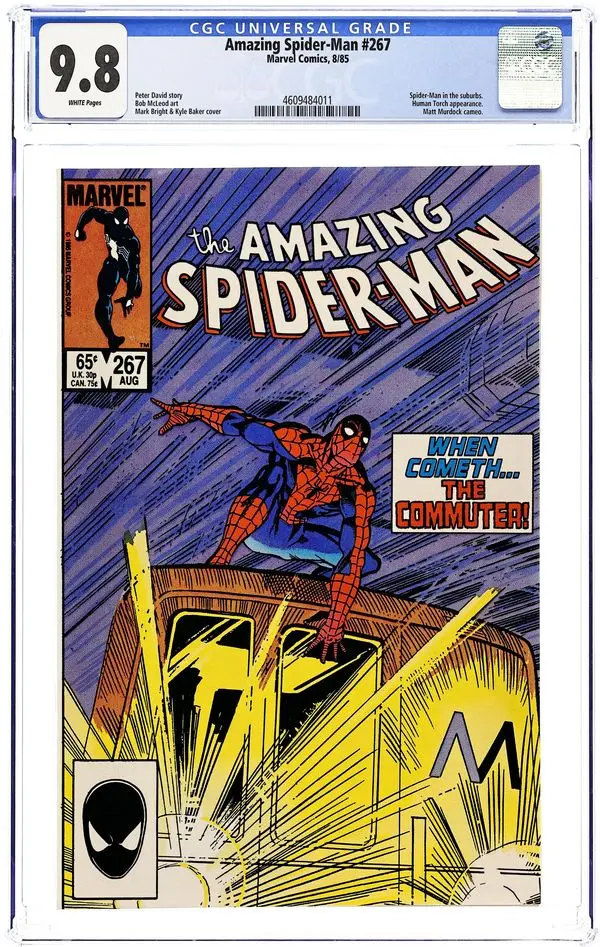
Amazing Spider-Man (1963 1st Series) 267 CGC 9.8
12/02/2025
SEK 488.21
Uppsk.: SEK 491.57

4 D.C.M.'s to the East Yorkshire Regiment. An outstanding Second World
11/28/2025
SEK 35,067.32
Uppsk.: SEK 37,416.44

‡ A PAIR OF GEORGE III GILTWOOD ARMCHAIRS, ATTRIBUTED TO JOHN LINNELL
11/18/2025

SEK 237,274.05
Uppsk.: SEK 99,353.75

CIRCLE OF RAFFAELLO SANZIO, CALLED RAPHAEL (ITALIAN 1483-1520), PORTRAIT
11/04/2025
SEK 374,572.65
Uppsk.: SEK 373,796.1
Nå samlare över hela världen med din auktion!
Lista er auktionGenom att prenumerera godkänner du integritetspolicyn. Avprenumerera när som helst.
Barnebys HQ
Brahegatan 10
BOX 5038
114 37 Stockholm
