






Alla auktioner / Böcker, Kartor och Texter / Erasmo - D. Caecilii Cypriani - 1558

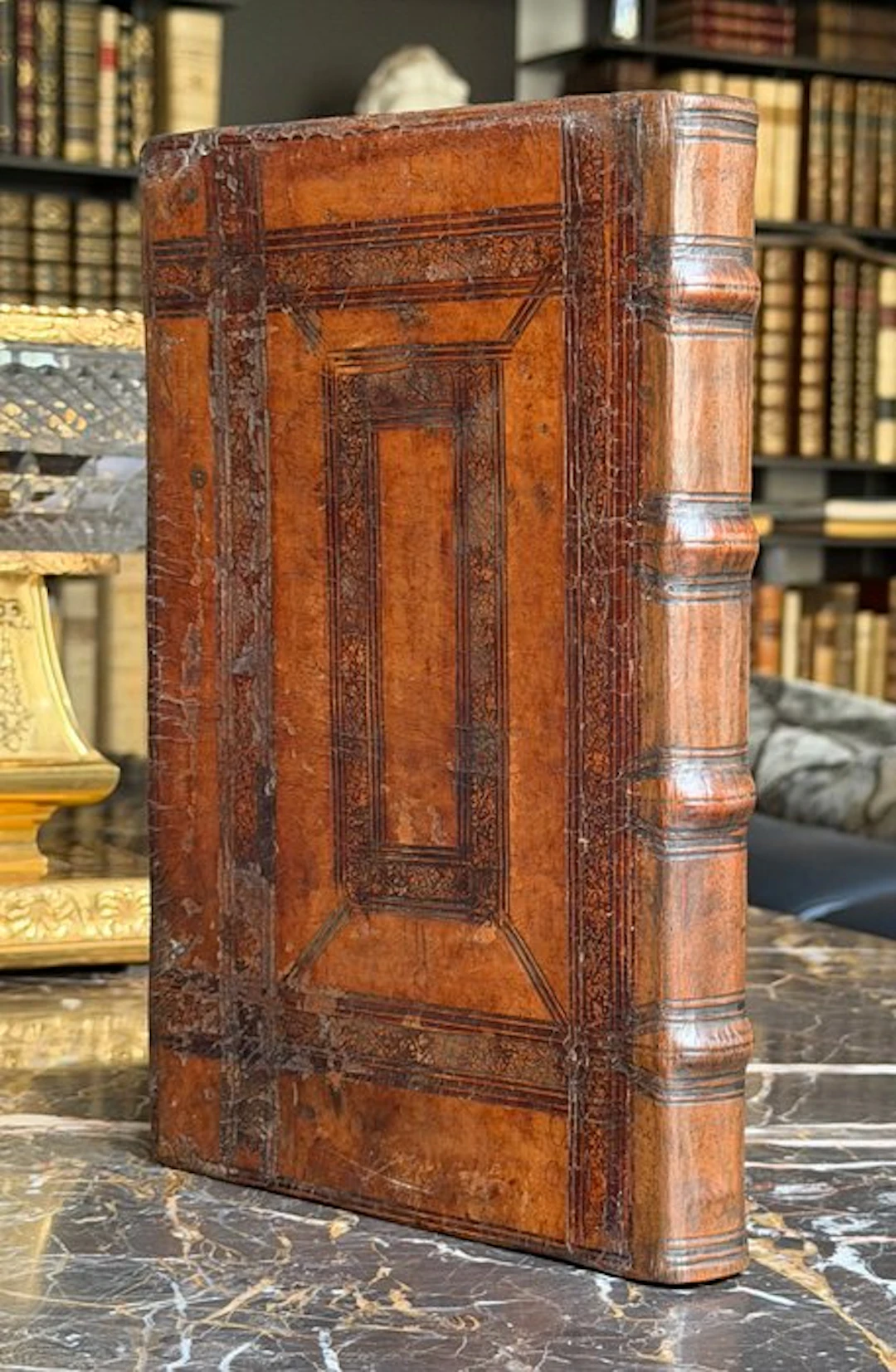
Erasmus (Cyprianus) D. Caecilii Cypriani Episcopi Carthaginensis Basel - 1558 - Ioannem Hervagium et Bernardum Brand (14 of 16), 368, (6) p. In folio - 31 X 21 cm. - SCRIPTS AND LETTERS OF SAINT CYPRIAN, CURATED AND CORRECTED BY ERASMUS, KEPT IN A WONDERFUL RENAISSANCE-ERA BINDING. The critical text on which the work rests is the fruit of Erasmus of Rotterdam’s labor, who devoted himself with energy to the translation and correction of the Church Fathers’ texts (the Patristics), convinced that to reform Christianity it was necessary to purge the ancient texts of the errors accumulated over centuries by medieval copyists. The inclusion of the treatise “De duplici martyrio” within this edition represents one of the most fascinating literary “mysteries” of the Humanism. The text was originally presented by Erasmus as an ancient manuscript of Saint Cyprian, which he fortuitously discovered. However modern criticism (beginning with twentieth-century studies) has shown that the true author of the text was Erasmus himself, who wrote it in his own hand, presenting it as a patristic text. Erasmus used the pseudonym of Saint Cyprian to spread his ideas on tolerance and the concept of spiritual martyrdom without incurring the censures of the Catholic Church or the ire of the Protestants. The printers, still in 1558, printed the work believing firmly that it belonged to Saint Cyprian. 1558 was a year of strong religious tensions in Europe: the Protestant Reformation was consolidating and the Catholic Counter-Reformation was tightening its lines and soon, in 1559, many of Erasmus’s works would end up in the first Index of Forbidden Books of Pope Paul IV. Printing Saint Cyprian in Basel, a Swiss city that had passed to the Reformation, meant asserting the roots of ancient Christianity outside Rome’s control. Erasmus did not commit this forgery out of literary vanity or economic gain, but for a precise theological and political strategy, promoting his idea of interior, spiritual, and tolerant Christianity. He knew that his personal theses were attacked by conservative Catholics and ignored by radical Protestants. Having these ideas spoken by Saint Cyprian, an authoritative and untouchable Father of the Church of the 3rd century, as well as a martyr in flesh and blood, gave his thought an absolute and undisputed historical authority. Using Saint Cyprian’s authority as a human shield allowed Erasmus to spread doctrines critical of corrupt ecclesiastical institutions without being directly accused of heresy. The forgery was so perfect that for centuries no one doubted it, until the historian and philologist Anthony Grafton and twentieth-century studies definitively demonstrated its erasmian paternity. However this copy was purged and censored by the Inquisition of Coimbra, as attested by the precious manuscript note (see photo) signed by the Inquisitor Fra Carlos do Desterro, representing the Holy Office, on the title page. The leaf of the license relating to the first sheet after the title page is missing, while the upper part of the second sheet (recto) is erased (censored). Moreover, at the outer margin of the title page there appears the important manuscript in another hand, probably contemporary: - Auctorem damnatum cujus opus cum expurgatione permissum et cause legendum (author condemned whose work is admitted, provided it is expurgated, and may be read). Fascinating and precious contemporary binding, in splendid cognac leather, blind-stamped, with multiple floral frames impressed on the boards. Professional restoration of the spine, preserving the original boards. Excellent internal preservation, despite a gutter-like notch along the lower margin, more or less pronounced but never troublesome, crossing the text without preventing regular consultation. Significant inquisitorial notes written by hand (see photo) on the title page. Professional restorations to the title page and to the last leaf, along with some small marginal tears without loss of text. Colophon on the last leaf. Publisher’s mark freshly glued to the verso blank. A good copy in splendid closely contemporary binding. The second leaf removed for censorship. The rest of the text complete.
Utropspris:SEK 11,125.94
Till auktionenVisa alla föremål frånCatawikiellerBöcker, Kartor och Texter
Utropspris:
SEK 11,125.94
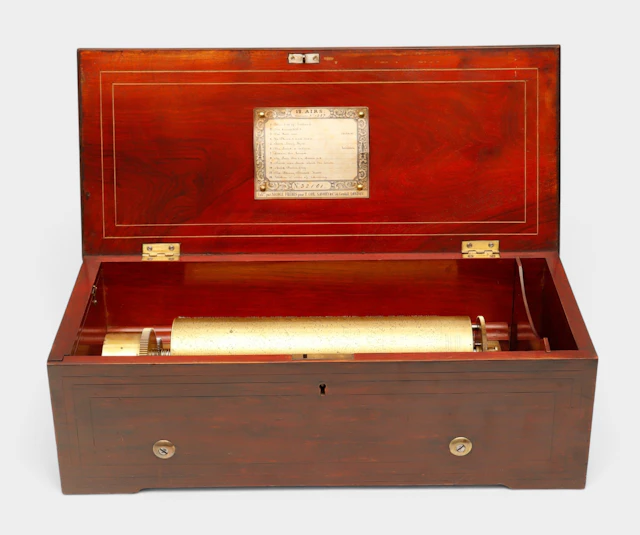
Caja de música suiza de doce canciones de Nicole Frères, hacia 1848-1852.
10/22/2026
SEK 15,020.02
Uppsk.: SEK 14,445.99
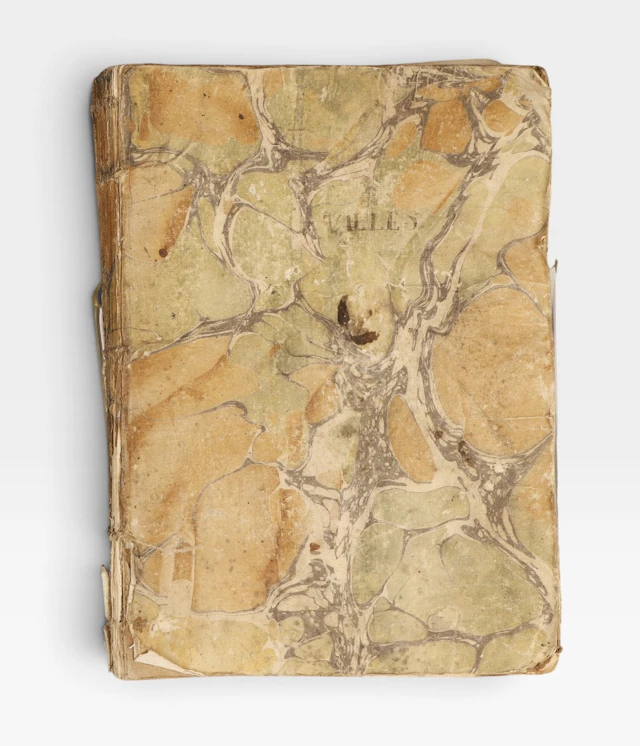
Guerra de la Independencia, Cataluña, 1808-1809.
10/22/2026
SEK 1,446.37
Uppsk.: SEK 1,582.63
Nå samlare över hela världen med din auktion!
Lista er auktionGenom att prenumerera godkänner du integritetspolicyn. Avprenumerera när som helst.
Barnebys HQ
Brahegatan 10
BOX 5038
114 37 Stockholm
