objekt/hiroshige ii jCDDQVo 633094226 / Till salu
objekt/hiroshige ii jCDDQVo 633094226
Till saluSlutpriser
objekt/hiroshige ii jCDDQVo 633094226
Till saluSlutpriser
Nå samlare över hela världen med din auktion!
Lista er auktionNå samlare över hela världen med din auktion!
Lista er auktionGenom att prenumerera godkänner du integritetspolicyn. Avprenumerera när som helst.
Barnebys HQ
Brahegatan 10
BOX 5038
114 37 Stockholm
Alla auktioner / Förhistorisk Konst / HIROSHIGE II

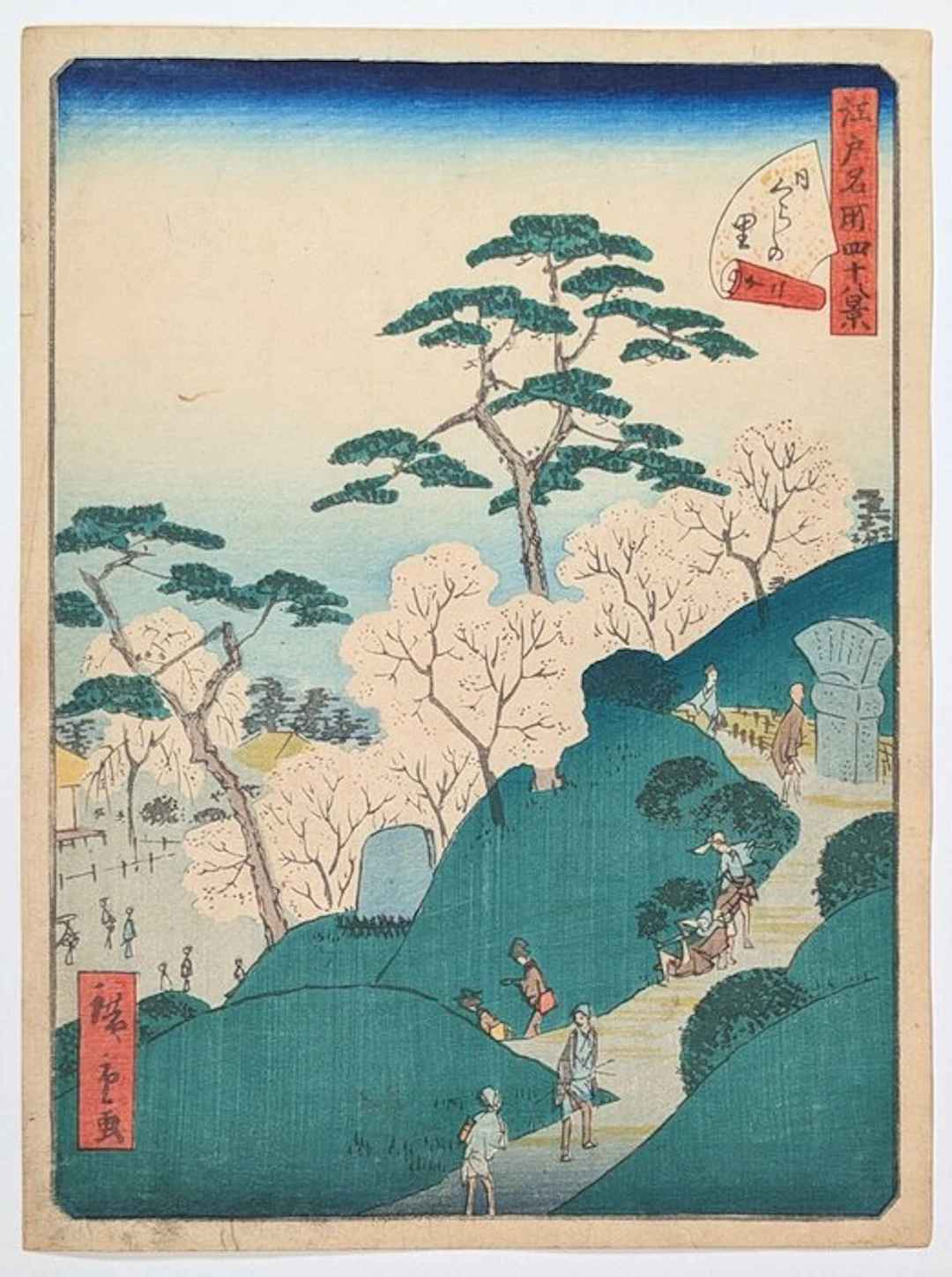
** "HIGURASHI NO SATO" — THE VILLAGE WHERE THE DAY GOES UNNOTICED · CHERRY-BLOSSOM VIEW · 48 VIEWS OF EDO ** Artist: Utagawa Hiroshige II 二代歌川広重 (1826–1869) Title: Higurashi no Sato 日ぐらしの里 (Nippori) Series: Edo meisho shijūhakkei 江戸名所四十八景 — Forty-eight Famous Views of Edo Publisher: Tsutaya Kichizō 蔦屋吉蔵 (Tsutakichi seal, right margin) Date: 1861 (Bunkyū 1 / Man'en 2) Format: Chūban tate-e, 25 × 17 cm Technique: Woodblock print (nishiki-e), ink and colour on paper Signature: Hiroshige ga 廣重画, in a blue tanzaku cartouche at lower right CONDITION Good impression and condition, minor trimming on the margins. The paper is firm and subtle. Please check the images! ABOUT THE PRINT Higurashi no Sato is the ridge on the western side of what is now Nippori, between Ueno and Dōkanyama. The area had long been called Nippori, written with characters meaning "new moat," but in the first half of the eighteenth century, under the eighth shōgun Yoshimune, the scenic western slope came to be called Higurashi no Sato — "the village where you can enjoy yourself until dusk," or "where you forget the day is ending" — and the place name began to be written with characters carrying that sense. Poets, popular writers and print artists liked to go there, so the name most likely came from one of them. The high ground was rich in nature: nightingales in spring, cuckoos in summer, bell crickets in autumn, with Mount Fuji to the west, the Nikkō range to the north and Mount Tsukuba to the northeast. From the mid-eighteenth century the temples on the slope planted artificial hills and quantities of flowering trees, which earned them the collective nickname "the blossom-viewing temples" (hanamidera). Seiun-ji, Shūshōin and Honnkgyō-ji became a recognised excursion district, grouped in Edo parlance as the blossom temple, the moon temple and the snow temple. Edo's great cherry sites were Kan'ei-ji at Ueno, Gotenyama at Shinagawa, the Sumida embankment and Asukayama at Ōji — and from the later eighteenth century Nippori's cherries drew crowds to rival them. Hiroshige I thought the district important enough to give it two separate sheets in his One Hundred Famous Views of Edo, and his successor returned to it here. ABOUT THE SERIES Edo Meisho Shijūhakkei is a complete set of forty-eight chūban sheets, each pairing one of Edo's famous places with the seasonal feature it was known for; the publisher's seal and the censor's seal alternate from sheet to sheet, and two printing dates are documented — the twelfth month of Man'en 1 (1860) and the first month of Bunkyū 1 (1861). The publisher was Kōeidō, Tsutaya Kichizō. Hiroshige II — born Suzuki Chinpei, pupil and adopted son-in-law of the first Hiroshige — inherited the name in 1858 and, with it, the obligation to keep the studio's famous-places line running. This set belongs to the very last years of Edo: within seven years of its publication the city had a new name and a new government, and the pleasure districts it records were about to change beyond recognition. The chūban format made them affordable souvenirs at the time, which is precisely why they now read as an unusually candid record of where townspeople actually went.
Utropspris:SEK 1,700.62
Till auktionenVisa alla föremål frånCatawikiellerFörhistorisk Konst
Utropspris:
SEK 1,700.62
Nå samlare över hela världen med din auktion!
Lista er auktion
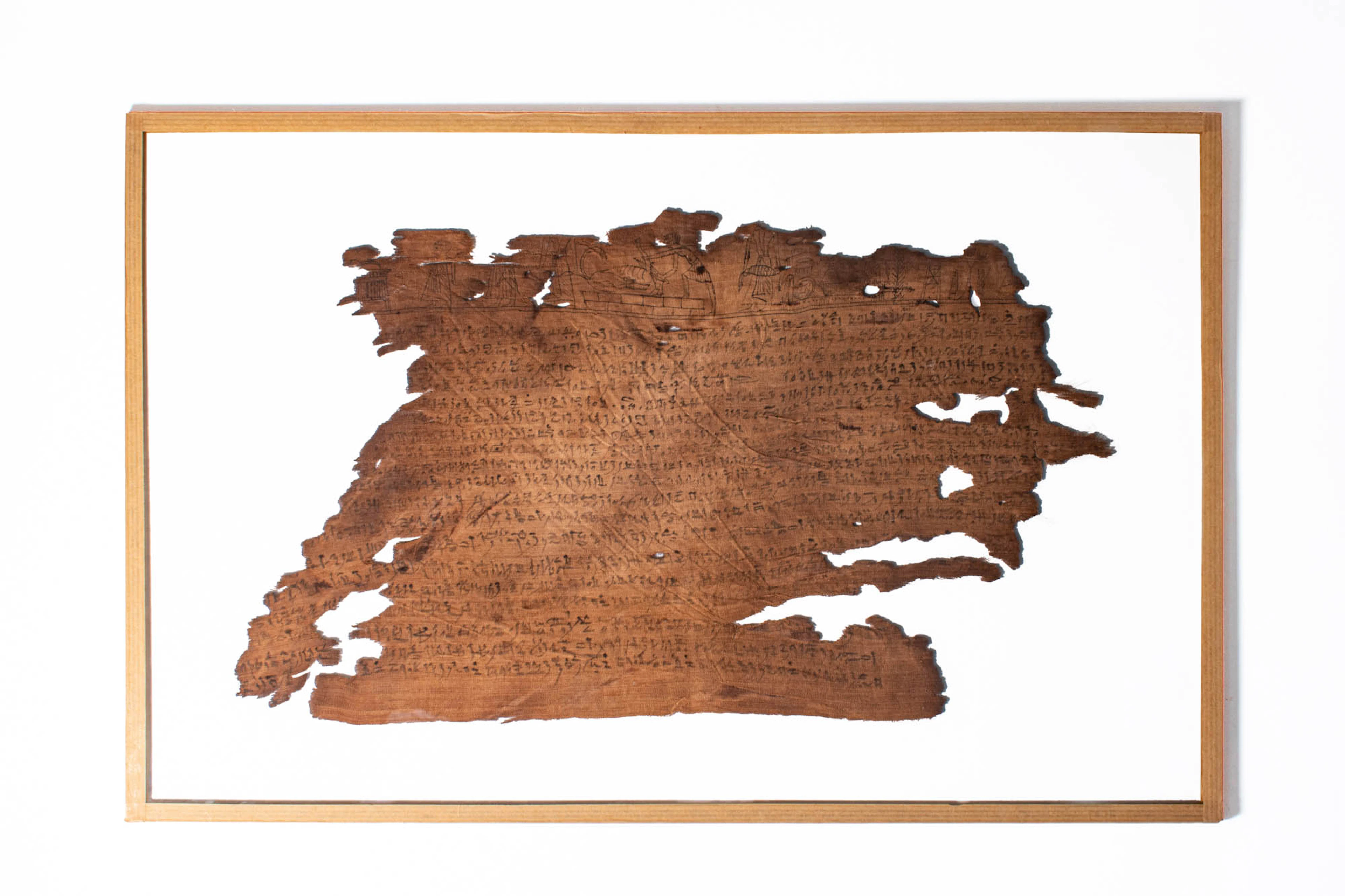
RARE EGYPTIAN MUMMY BANDAGE OF DJEDHOR - BOOK OF THE DEAD
06/21/2026

SEK 38,248.6
Uppsk.: SEK 37,454.41