






Alla auktioner / Böcker, Kartor och Texter / Jean Lombard / A. Leroux - Byzance [ ex. de tête sur Chine] [décadence] - 1901

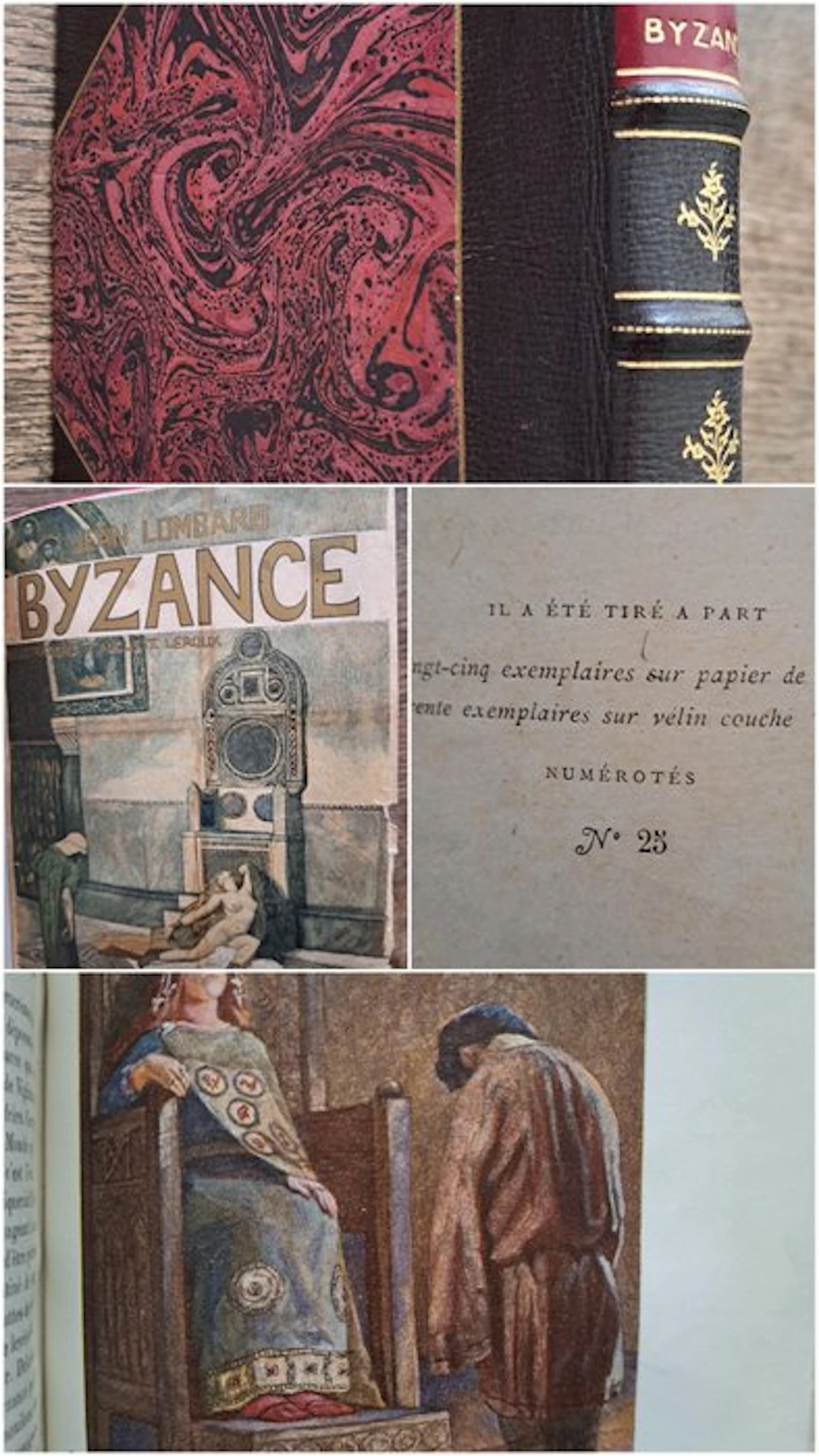
One of the 25 China-paper copies of the first illustrated edition of Byzance, one of the most singular novels of French decadent literature, illustrated by Auguste Leroux, prefaced by Paul Margueritte, in a beautiful half-dark red morocco binding with corners of the period. Author: Jean Lombard (1854–1891) Title: Byzance Preface: Paul Margueritte Illustrations: Auguste Leroux (A. Leroux) Publisher: Société d'Éditions Littéraires et Artistiques — Librairie Paul Ollendorff, Paris Date: 1901 Format: In-8° (about 18.5 × 15 cm) Pagination: [4]-VIII-403 pages. Unglazed Illustration: Frontispiece in color and 6 color plates + 52 in-text black-and-white illustrations by Auguste Leroux, several full-page Print run: Copy No. 25, last of the 25 China-paper copies, printed separately before the 30 copies on laid vellum (note printed on the justification page) Publisher covers: Preserved, in color illustrated by A. Leroux for the first cover. Black half-morocco with red and black marbled paper boards featuring swirling motifs. Spine with 4 raised bands adorned with pearl gilding and floral motifs in the compartments. Title piece in burgundy morocco, lettered in gold: Jean Lombard — Byzance. Red-tinted head. Red ribbon bookmark. Bindings of the period, of fine quality. Byzance appeared for the first time in 1890 at Paul Ollendorff. This 1901 edition is the first illustrated edition, produced eleven years after the original publication, initiated by Ollendorff who reissued simultaneously the two major Lombard novels (L’Agonie and Byzance), giving them illustrations for the first time. It thus constitutes the bibliophile reference for the work. The luxe edition includes 25 copies on China paper and 30 on laid vellum, i.e., 55 head copies in total. The offered copy is No. 25, last of the China-paper copies. Byzance unfolds in the 8th century, under the reign of Constantine V Copronymus, at the heart of the iconoclastic crisis — the Image Controversy — that rends the Byzantine Empire. The novel pits the Blue and Green factions at the Hippodrome in a world of violence,plots, and Eastern mysticism. The central character, the child Oupravda, destined for the throne, sees the conspiracy contrived in his favor discovered by the Basileus, who condemns him to blindness. Throughout the narrative, seven blind princes wander, candidates for power, groping in the dark of the waning Empire. Lombard deploys his vertiginous erudition: architecture, liturgy, costumes, rites — a hallucinatory reconstruction of the Byzantine world, traversed by a political and anarchic vision of power. Jean Lombard (1854–1891) was a French writer, born in Toulon, a self-made proletarian and anarchist syndicalist, who began as a jewelry worker before dedicating himself entirely to literature. He died prematurely in inexpressible misery at 37, leaving a brief but ambitiously grand body of work. His work, with its themes of orientalism, androgyny, and paganism, sits firmly within the decadent literary movement. Although today almost entirely forgotten, he influenced contemporaries such as Rachilde and Jean Lorrain. Octave Mirbeau, who prefaced L’Agonie, summed up his style as: “a barbaric, polychrome style, forged of technical words drawn from antique glossaries — great momentum, magnificent sounds, a clash of clashing armors, and like the very smell of the ages he recounts.” Lombard belongs to the vein of the decadent historical novel — the one that, in the 1880s–1900s, explores decaying civilizations (Rome, Byzantium) to project a disenchanted view of the contemporary world. In the scholar who revives an entire plastic era, there is a profound thinker who observes and explains human passions in the distance of history, and who can contemporize them under the golden armor of Byzantine soldiers. Related to Flaubert (Salammbô), to Huysmans (À rebours), and to Gustave Moreau in painting, Byzance is a world-spanning, sensuous and violent novel, of almost maniacal erudition. First illustrated edition of the novel (1901), a reference for collectors Head copy No. 25/25 on China paper — the rarest print run Illustrated with 6 color plates and numerous in-text black-and-white illustrations, sometimes full-page, by Auguste Leroux (1871–1954), a major illustrator of the Belle Époque Publisher’s illustrated color cover preserved and bound — a rare piece in itself Beautiful half-morocco binding from the period Extremely rare author on the market: although now a rare book, Byzance is almost forgotten in literary studies, which makes fine copies all the more sought after Careful sending, reinforced packaging suitable for old books.
Utropspris:SEK 1,668.89
Till auktionenVisa alla föremål frånCatawikiellerBöcker, Kartor och Texter
Utropspris:
SEK 1,668.89
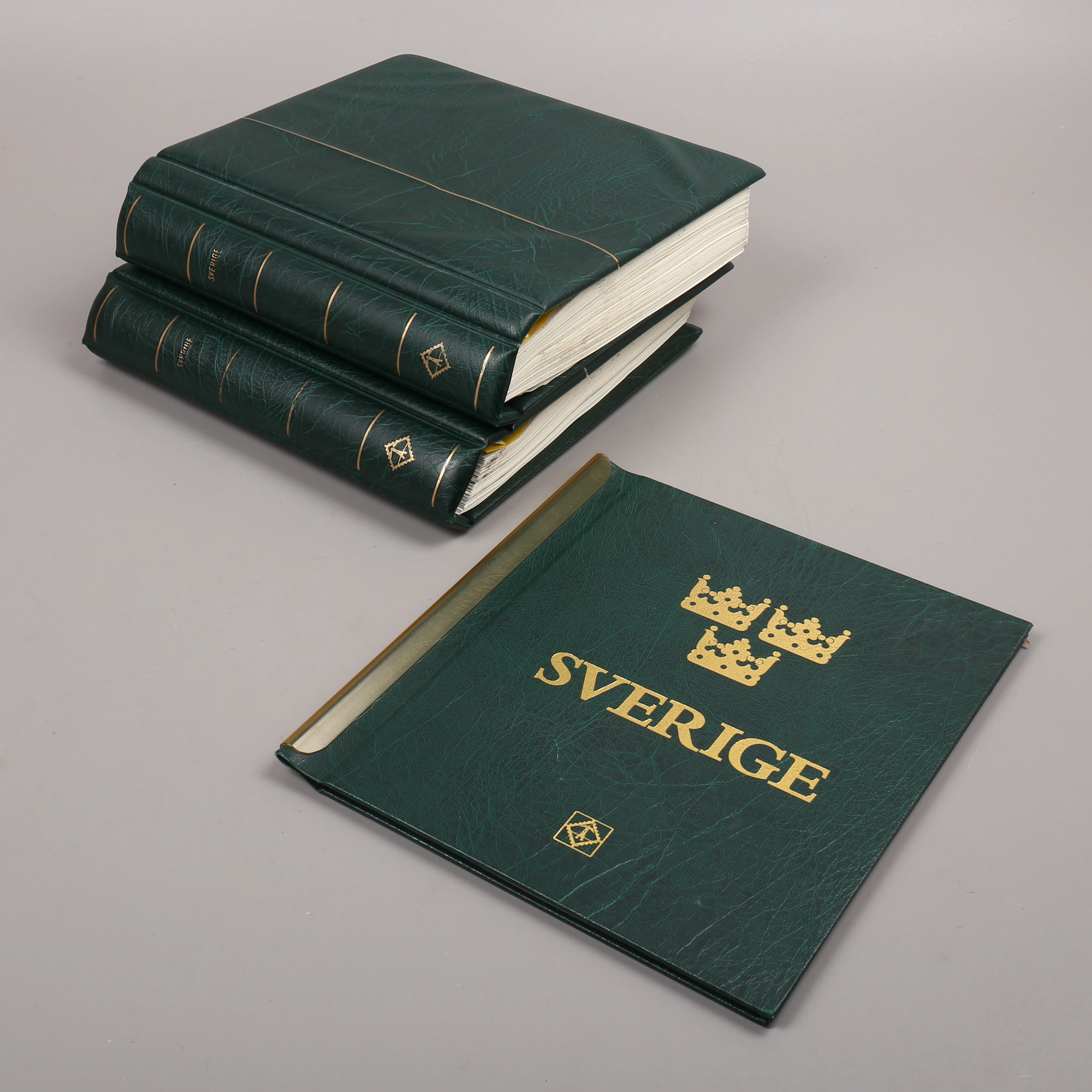
FRIMÄRKSSAMLING, 3 st album, Sverige, 1976-2010.
10/21/2026
SEK 1,015
Uppsk.: SEK 1,000

CARL CHRISTIAN ERHARD SCHMID. "Empirische Psychologie“, Erfter Theil
10/21/2026
SEK 500
Uppsk.: SEK 1,500
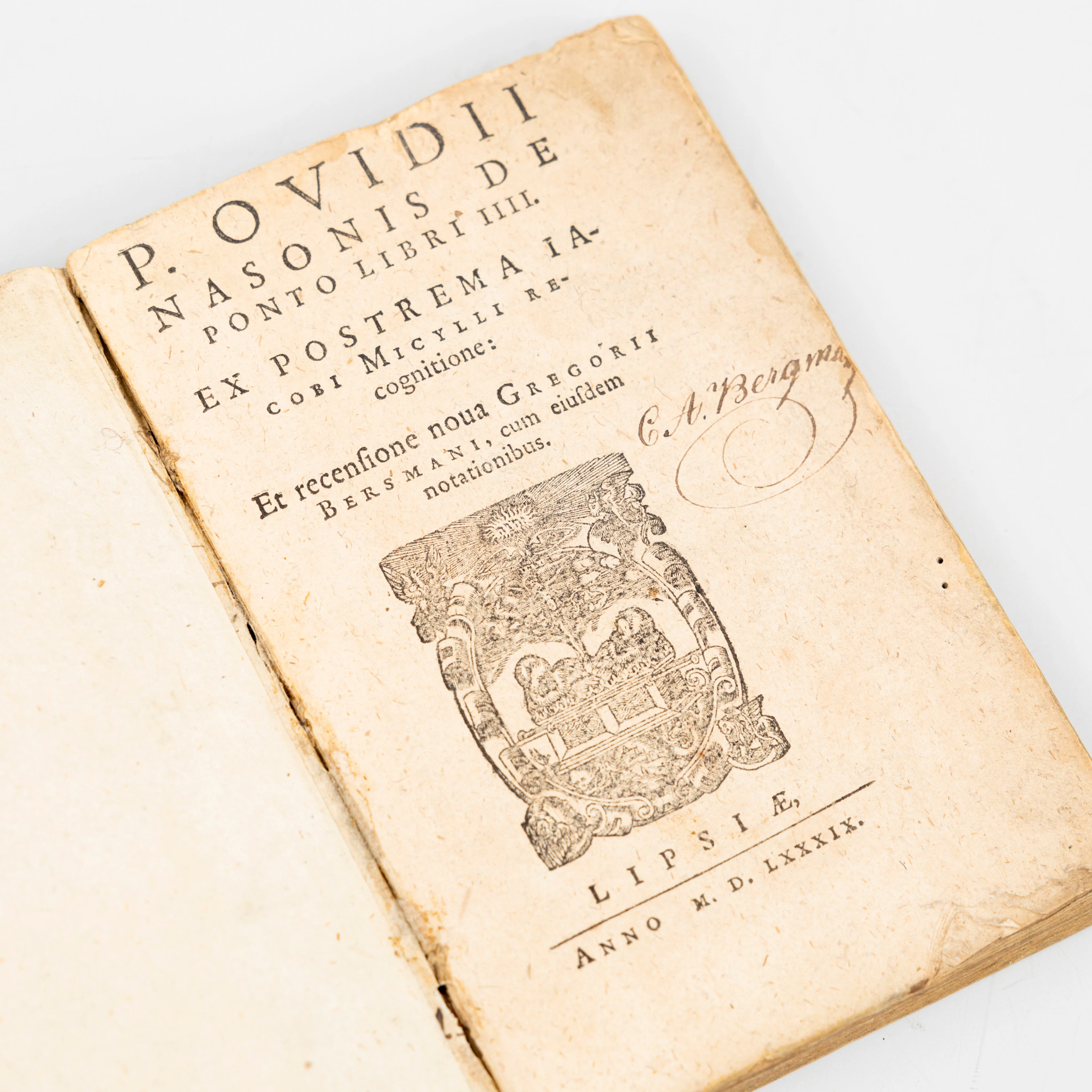
PUBLII OVIDII NASONIS. "De Ponto libri IIII", Ex postrema Iacobi Micylli
10/21/2026
SEK 800
Uppsk.: SEK 2,500
Nå samlare över hela världen med din auktion!
Lista er auktionGenom att prenumerera godkänner du integritetspolicyn. Avprenumerera när som helst.
Barnebys HQ
Brahegatan 10
BOX 5038
114 37 Stockholm
