

OCT 8 | 3:00 PM

Nå samlare över hela världen med din auktion!
Lista er auktionGenom att prenumerera godkänner du integritetspolicyn. Avprenumerera när som helst.
Barnebys HQ
Brahegatan 10
BOX 5038
114 37 Stockholm
Alla auktioner / Förhistorisk Konst / Medieval Islamic carved steatite oil lamp – geometric decoration

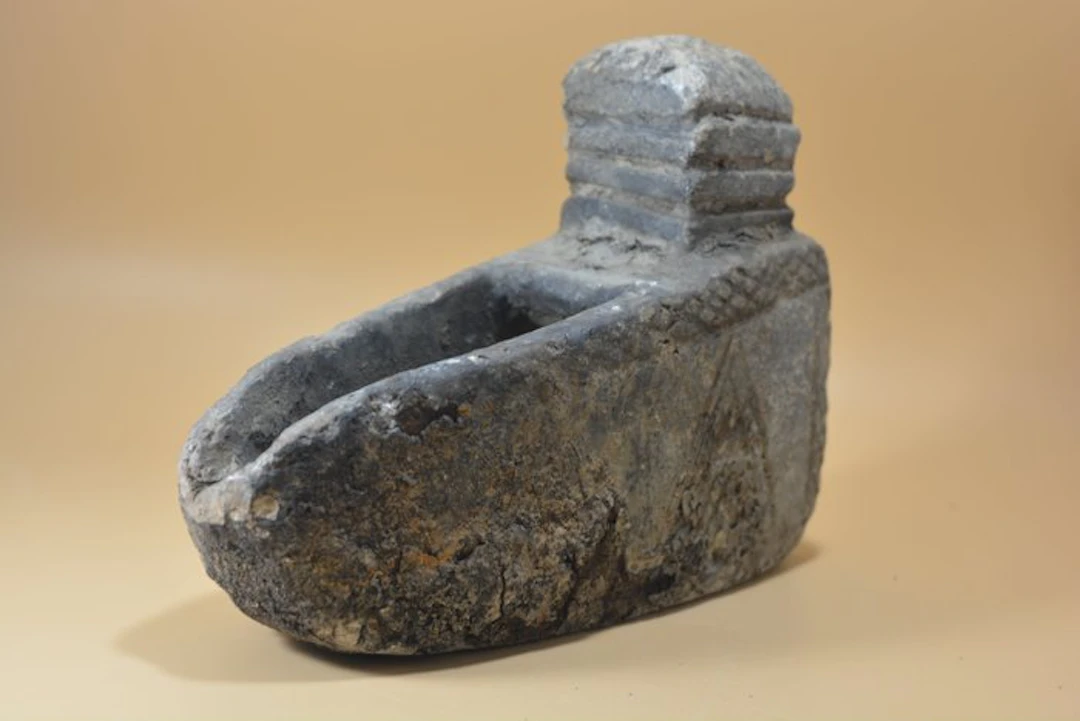
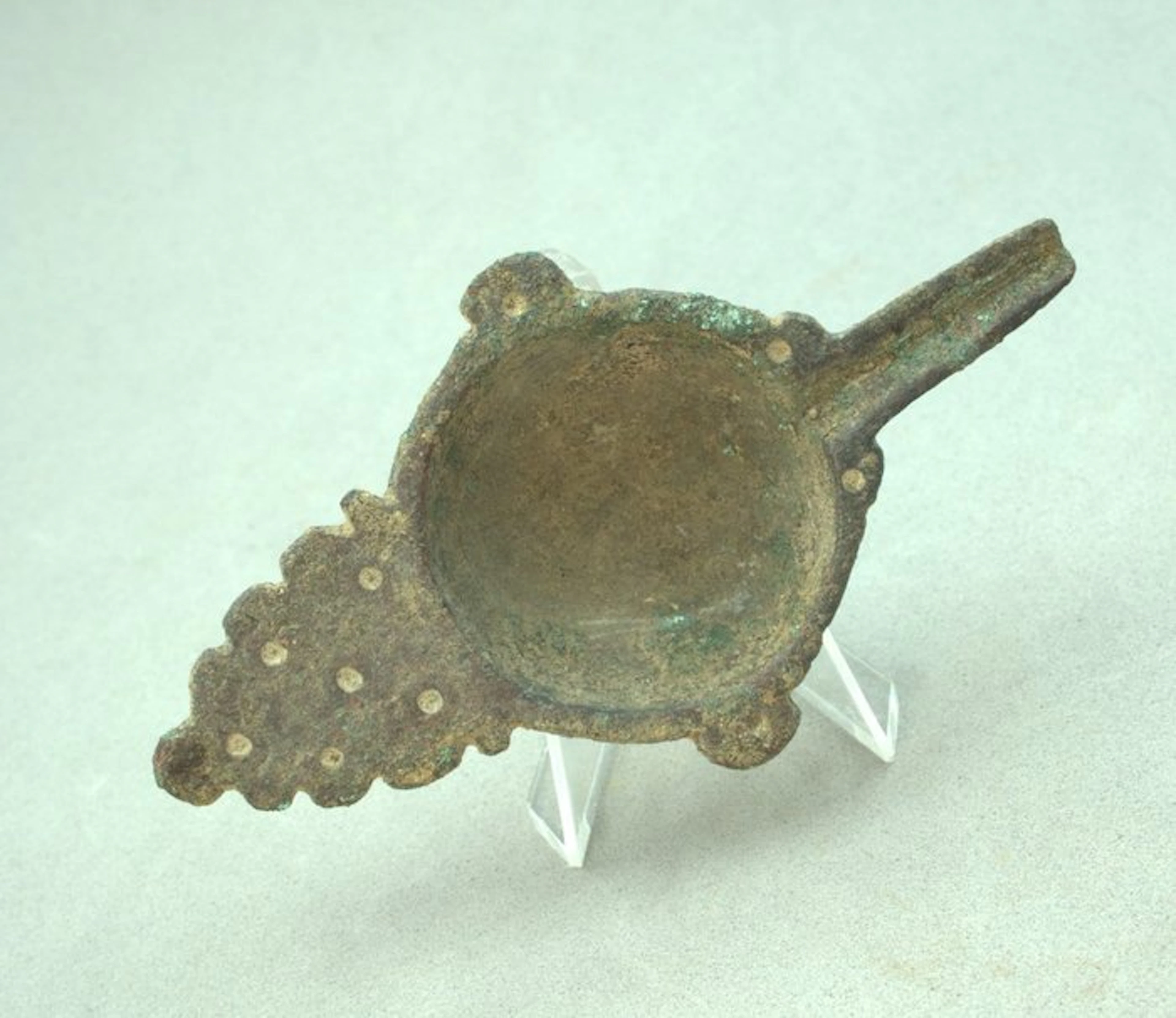
Arabian Peninsula / Southern Levant – Medieval Islamic carved steatite oil lamp – geometric decoration – ca. 10th–12th century AD Islamic World – Arabian Peninsula / Southern Levant Medieval Islamic period, circa 10th–12th century AD Large and unusually heavy oil lamp carved from a single block of dark stone, probably steatite (soapstone/chlorite), belonging to the tradition of stone lighting vessels produced in the Arabian Peninsula and circulated throughout the medieval Islamic Near East. The lamp has a massive elongated, boat-shaped body with a deep longitudinal oil reservoir, narrowing towards the front to form the wick area. At the rear rises a prominent solid vertical handle, architecturally shaped and decorated with several horizontal mouldings. Both sides preserve an elaborate incised geometric decoration, arranged in framed panels. The ornament consists of intersecting diagonal lines, cross-hatching, lozenges and triangular fields. Further incised decoration survives on the upper part of the handle. The combination of a carved stone body, deep reservoir, monumental vertical handle and geometric decoration belongs to a well-documented tradition of medieval Islamic steatite lamps. Steatite lamps excavated in Jerusalem have been interpreted as imports from the southern Arabian Peninsula, where this class of objects was manufactured. Archaeological literature cited for those finds places production between the 10th and 14th centuries AD, while related finds from Khirbat Ka‘kul and Ramla have been dated more specifically to the 10th–11th centuries AD. The broader tradition is considerably older. Excavated steatite lamps from Ayla (Aqaba) are securely dated to the 8th century AD / Umayyad period and are considered probable imports from Yemen or western Arabia. Steatite lamps excavated at Nishapur provide further archaeological evidence for the widespread use of carved soft-stone lamps during the 9th–11th centuries AD. The Metropolitan Museum of Art On typological grounds, the present example may reasonably be placed within the medieval phase of this tradition, approximately 10th–12th century AD, although in the absence of an archaeological find context a more precise dating cannot be established. Material: dark stone, probably steatite / soapstone (chlorite) Technique: carved from a single block; incised geometric decoration Length: approx. 16 cm Height: approx. 12 cm Weight: approx. 1.269 kg Condition: Complete overall form with substantial signs of age and use. Extensive surface wear, deposits, encrustations and areas of darkening. Local losses and weathering are visible, particularly around the lower edges and front. The incised geometric decoration remains clearly visible on both sides. The interior reservoir shows extensive darkening consistent with prolonged use as a lamp. Please refer carefully to the photographs for the condition. For comparable archaeological evidence, see the Israel Antiquities Authority publication concerning the steatite lamps excavated in Jerusalem. The report associates these lamps with production in southern Arabia and records parallels from Ramla and Khirbat Ka‘kul. Further comparative material: Aqaba Archaeological Museum, Umayyad steatite lamps excavated at Ayla, 8th century AD. The Metropolitan Museum of Art also preserves several excavated medieval steatite lamps from Nishapur dated between the 9th and 11th centuries.
Utropspris:SEK 3,096.55
Till auktionenVisa alla föremål frånCatawikiellerFörhistorisk Konst
Utropspris:
SEK 3,096.55
OCT 8 | 3:00 PM
Nå samlare över hela världen med din auktion!
Lista er auktionSEK 3,094.3
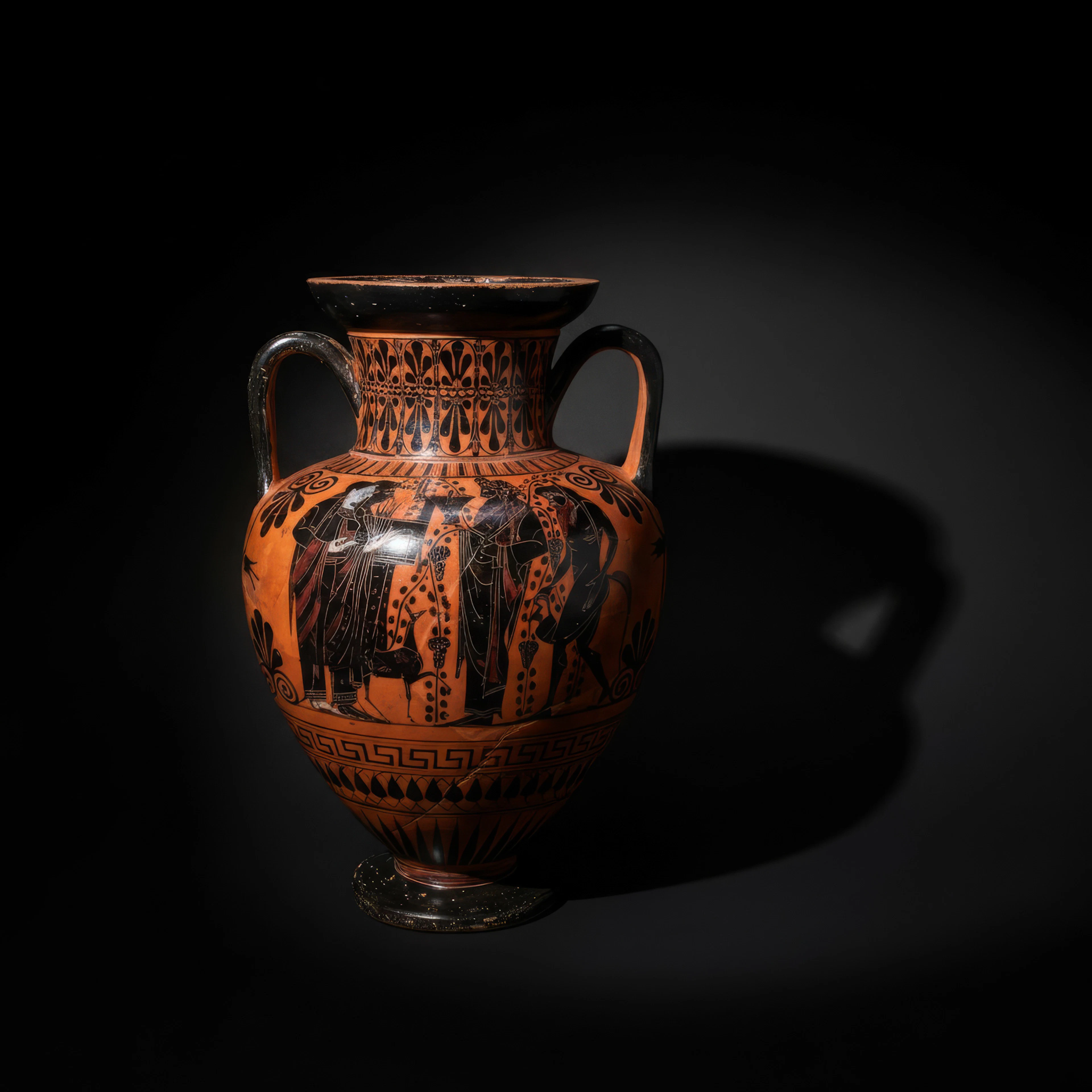
RARE ATTIC BLACK-FIGURE NECK AMPHORA ATTRIBUTED TO THE LYSIPPIDES
06/21/2026

SEK 509,981.44
Uppsk.: SEK 177,500.05
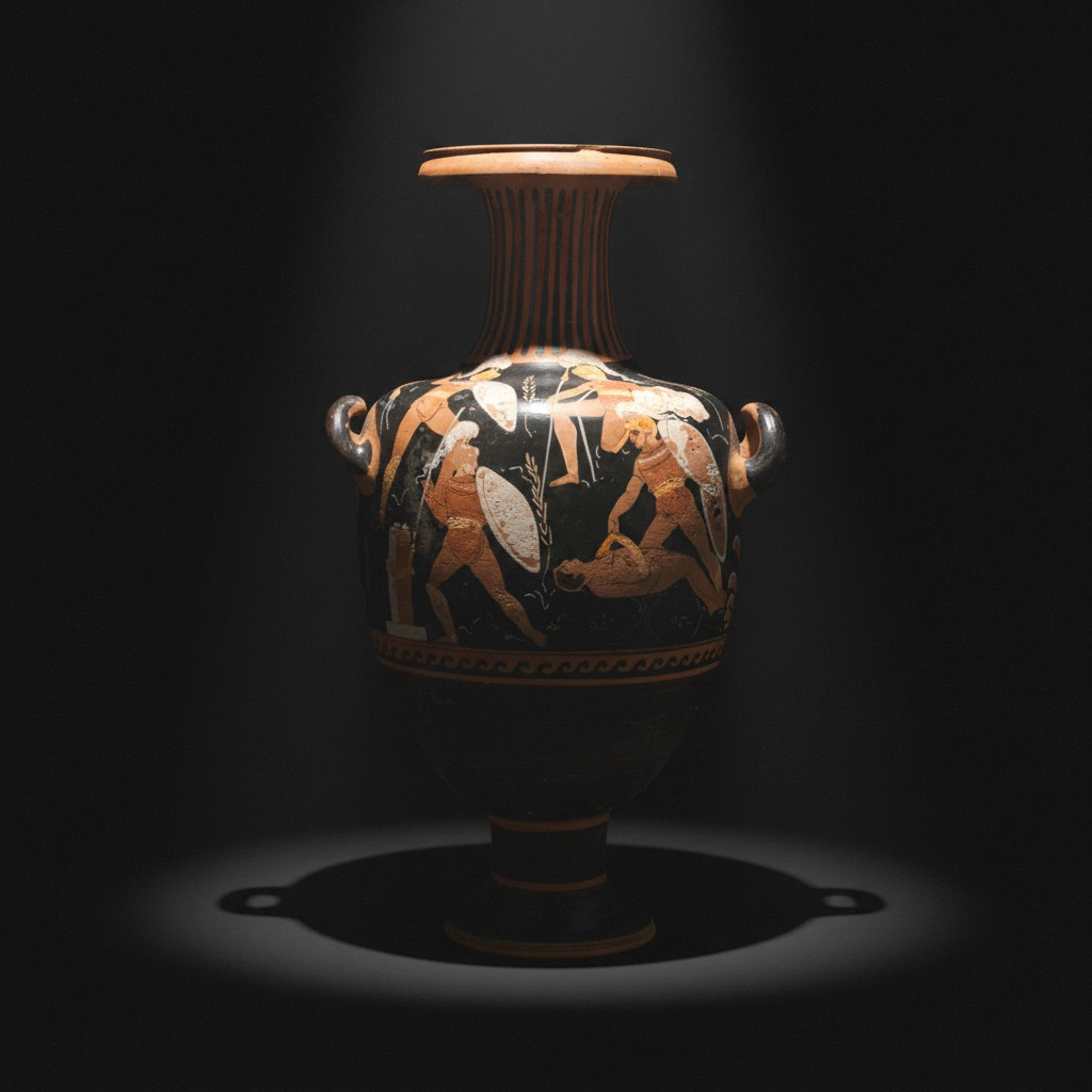
TL TESTED - LARGE GREEK APULIAN RED-FIGURE HYDRIA WITH HOPLITES COMBAT SCENE
06/21/2026
SEK 114,745.82
Uppsk.: SEK 76,071.45