
Alla auktioner / Asiatisk keramik & konsthantverk / Six Egyptian Faience Bead Amulets

Six Egyptian Faience Bead Amulets
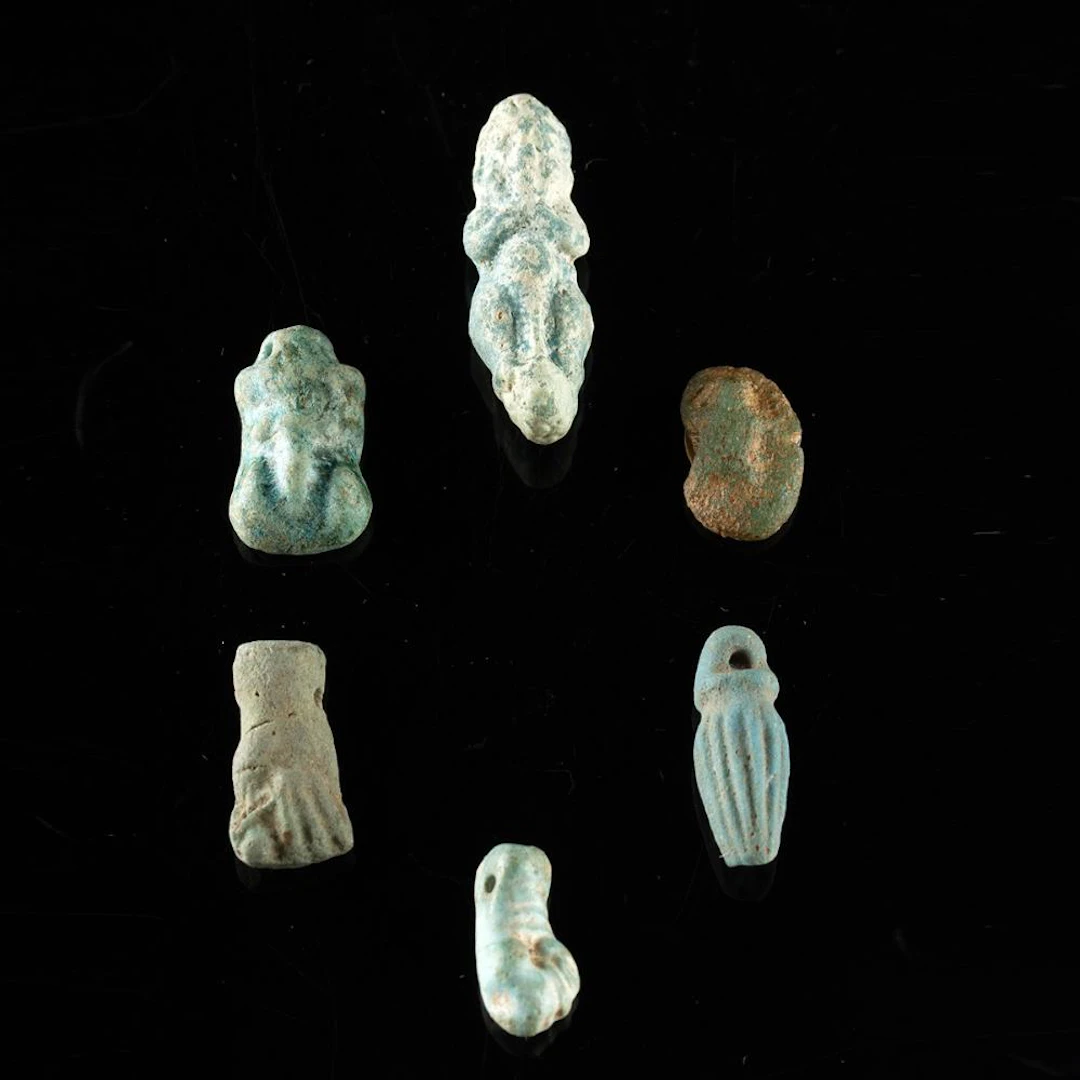
North Africa, Egypt, Late Dynastic to Roman period. A pocketful of protective magic in glazed silica: six miniature faience amulets, their surfaces ranging from pale blue-green to a mottled, earth-stained celadon. The largest is figural, a squat, big-headed dwarf deity likely representing Pataikos, the apotropaic child-form of Ptah invoked against snakes, scorpions, and misfortune. Two take the form of a hand clenched into a fist with the thumb thrust between the fingers, the fica gesture, an ancient charm against the evil eye that persisted around the Mediterranean for millennia. Another is phallic, a fertility and potency talisman; a fifth is a ribbed, teardrop fruit form with an intact suspension loop; the sixth is abstract and perhaps zoomorphic. Each was pierced or looped for stringing, worn on the body in life and wrapped among the linens in death. Egyptian faience is not clay at all but a self-glazing paste of ground quartz, lime, and alkali; the copper salts within migrate to the surface during firing and bloom into the blue-green skin the Egyptians called tjehenet, "that which is dazzling." Its color deliberately echoed turquoise and lapis, materials associated with rebirth and the gleam of the divine. Pataikos, named by Herodotus after the figureheads he saw on Phoenician ships, is the dwarf manifestation of Ptah the craftsman god. Amulets of this type often show him standing on crocodiles or grasping serpents, a compact bodyguard against venomous things. The fica or "fig" gesture belongs to a different, wider current: attested in Egypt, Etruria, and Rome alike, the obscene thumb-in-fist was thought to deflect the envious gaze, and phallic amulets served the same warding function through frank display rather than concealment. Their presence in a single group suggests the mixed magical vocabulary of the later periods, when Egyptian and Greco-Roman apotropaia circulated side by side. Item # 204576
Utropspris:SEK 2,999.62
Till auktionenVisa alla föremål frånArtemis Fine ArtsellerAsiatisk keramik & konsthantverk
Utropspris:
SEK 2,999.62
Liknande föremål

![[NATURALIA] - Lot 1](https://bbys.imgix.net/3903/b5cef90fa42ce586c3709fcec250fa509409822ad24004c021ddb3d6214554ca.webp?auto=format&w=3840&q=75)

Slutpriser för liknande föremål
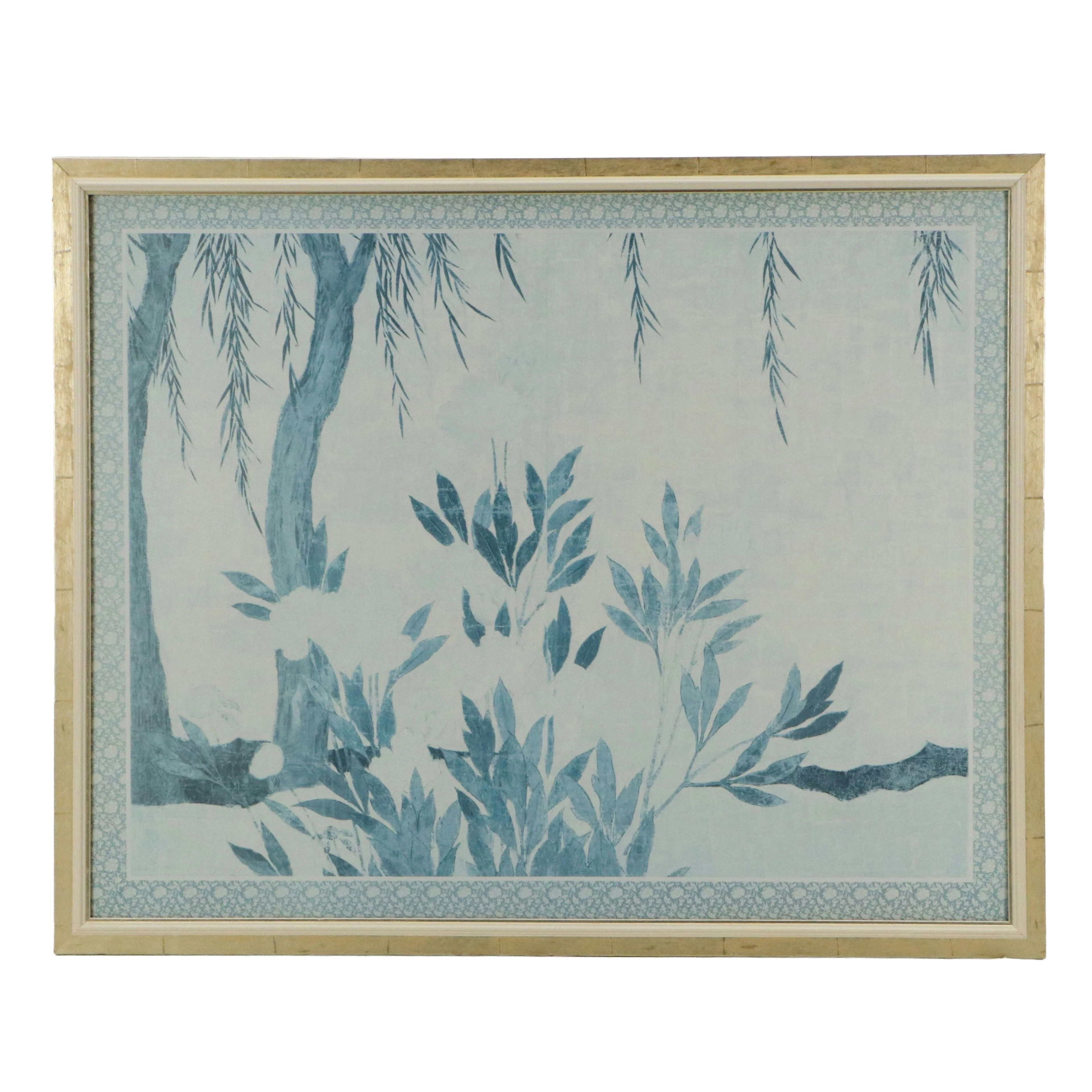
Stylized Halftone Print of Abstracted Botanical Landscape
10/08/2026
SEK 9.99
Uppsk.: SEK 9.99
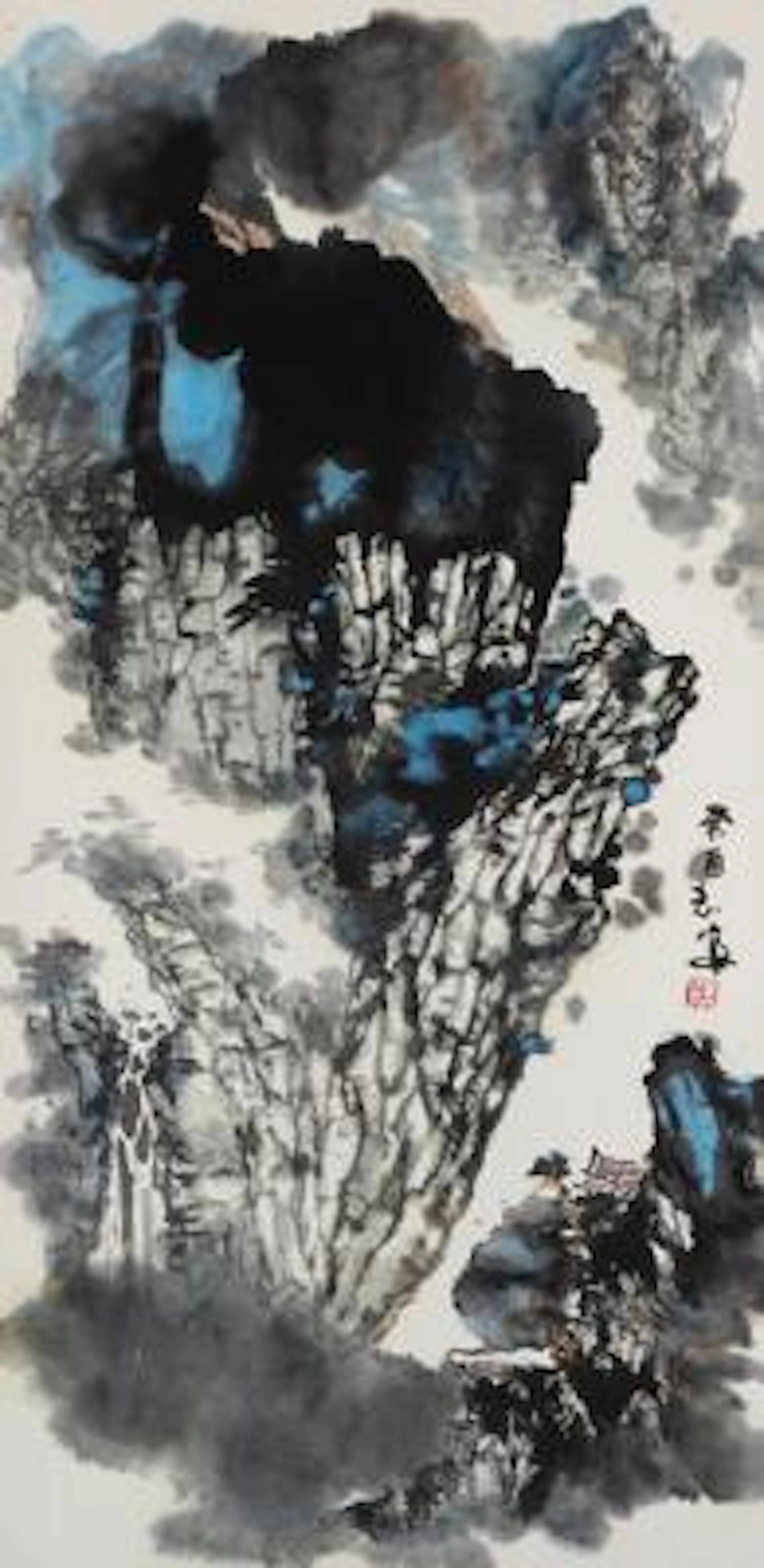
Li Jianhua: Scroll depicting a semi-abstract mountainous landscape.
10/05/2026

SEK 752.9
Uppsk.: SEK 3,011.77
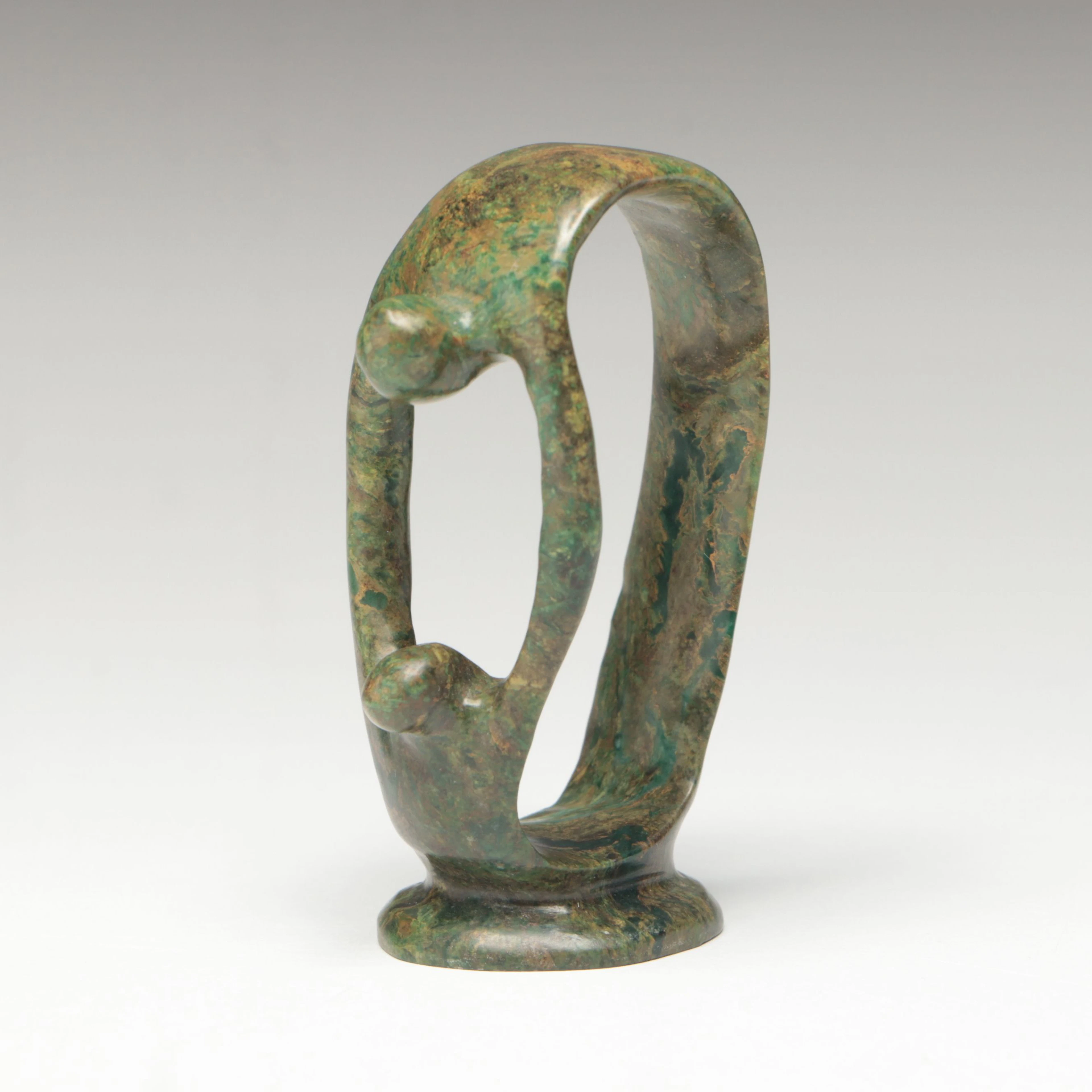
Shona Abstracted Figural Carved Green Soapstone Carving of Mother and Child
10/01/2026
SEK 240.96
Uppsk.: SEK 9.93
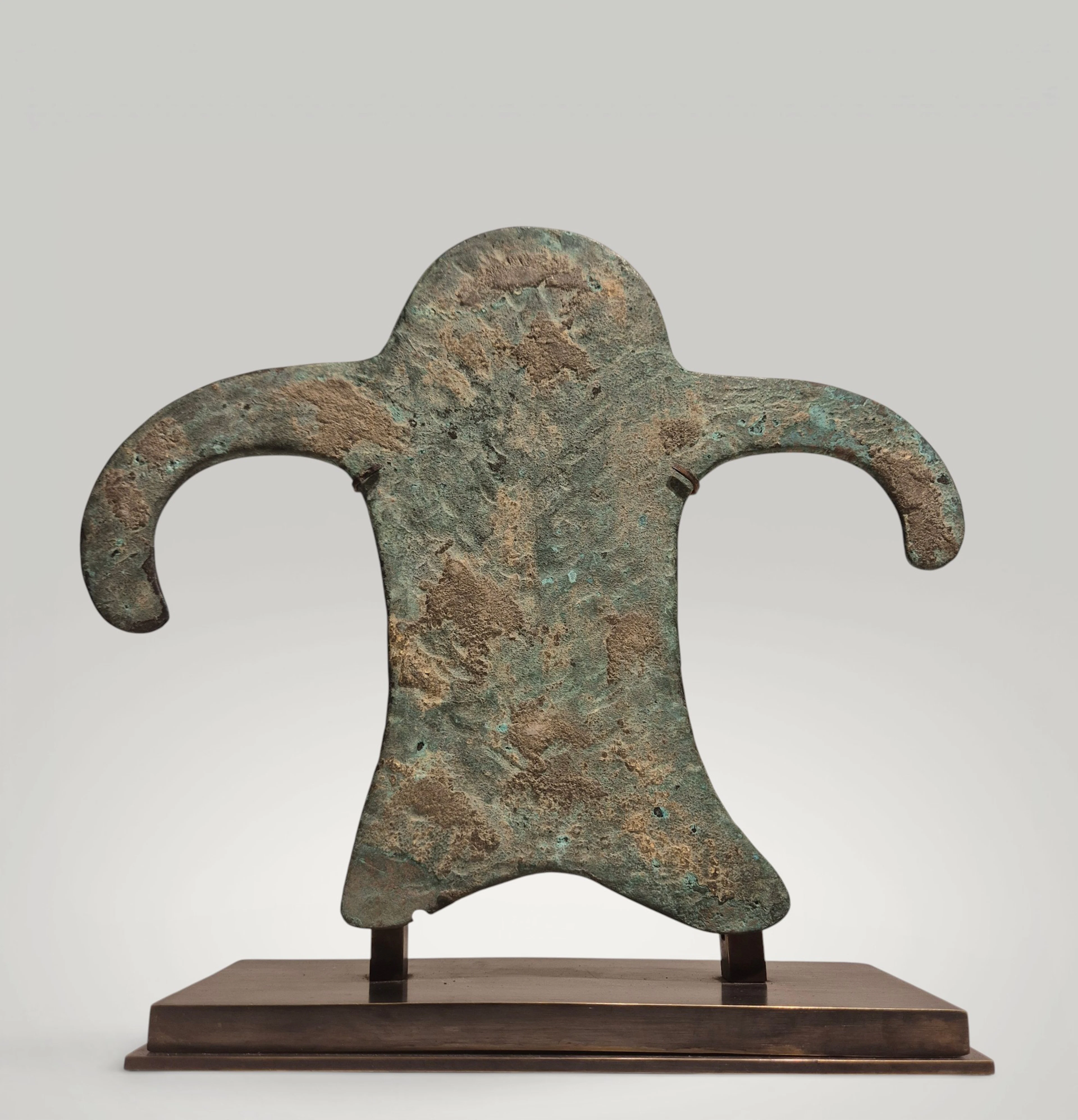
Ganges Copper Deposits Culture (Uttar Pradesh, India) - Ritual anthropomorphic
09/29/2026

SEK 45,040.76
Uppsk.: SEK 67,553.56
Nå samlare över hela världen med din auktion!
Lista er auktion