THOMAS DANIELL (BRITISH 1749-1840), SCENE IN THE MOUNTAINS NEARCAPE
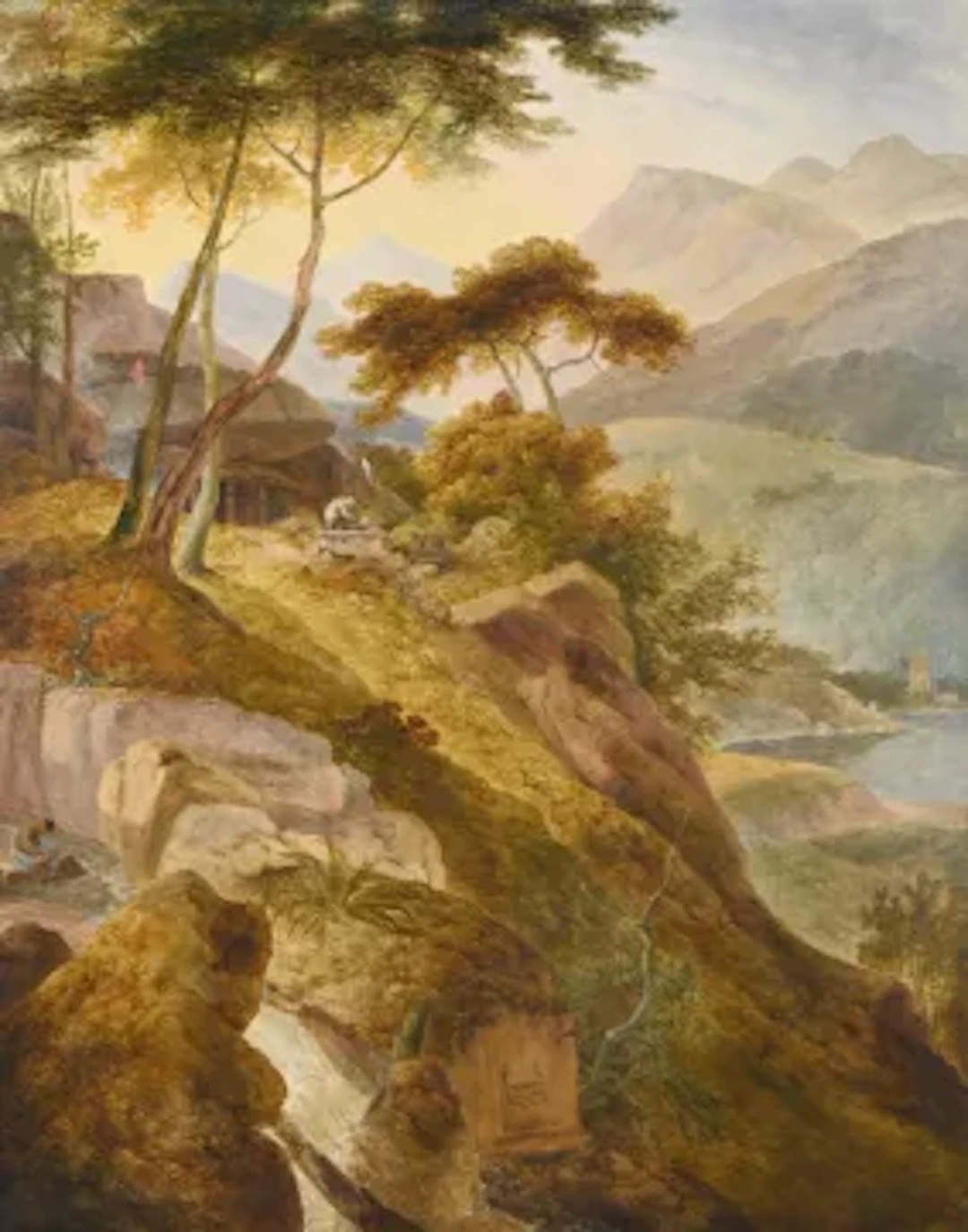
THOMAS DANIELL (BRITISH 1749-1840) SCENE IN THE MOUNTAINS NEAR CAPE COMORIN, TAMIL NADU Oil on canvas Signed and dated '1823' (to tomb lower left) 184 x 142cm (72¼ x 55¾in.) Provenance: With Spink & Sons, London Sale, Christie's, Important English Pictures, 24 November 1978, lot 150 Exhibited: London, Royal Academy, 1823, no. 310 London, Colnaghi, English Drawings, Watercolours and Paintings, 14 November - 7 December 1973, no. 126 Literature: M. Shellim, Oil Paintings of India and the East by Thomas Daniell RA (1749-1840) and William Daniell RA (1769-1837), London, 1979, p. 95, no. TD107 For many aspiring individuals, including young artists, the lure of India by the last quarter of the 18th century was formidable; British expansion allowed for new opportunities where fortunes could be made. Political affairs in the region were closely followed in England, by contrast very little was known of India’s culture and history. In 1779, Thomas Daniell’s brother died leaving behind a wife, Mary, and son, William. Inspired by fellow artist William Hodges, who had journeyed to India between 1780-83, the uncle and nephew saw an opportunity to capitalise on this lack of aesthetic knowledge and in 1785, set sail for India. The journey was a long one, with the Daniell’s finally arriving in Calcutta early in 1786, where they stayed for two years, building up funds and perfecting the relatively new technique of aquatinting. By 1788, they were financially secure enough to embark on their first tour, which took them along the Ganges from Bengal and Bihar, Kanpur, and along to Delhi to the foot of the Himalayas, returning by the end of 1791. By March 1792, they were ready to set off again, this time sailing down the East Coast to Madras, and on to Bombay. It was during this second voyage that the uncle and nephew duo visited Comorin that August. In their diaries they note: To the southernmost point of the peninsula of India has been given the name of Cape Comorin, and this appellation navigators have transferred to the lofty mountain situated not far distant from its extremity, which is a well known and conspicuous landmark to those that navigate the Eastern coast of the peninsula. (p. 177, Archer). Unfortunately, not long after their trip to Comorin, war broke out between France and England and the Daniells were forced back to London via Peking, eventually returning in September 1794. Once back in London, the Daniells used the hundreds of watercolours which they had produced over the last eight years to produce, initially, two series of aquatints. In total, 144 plates were produced for the Oriental Scenery series between 1795 and 1808. At first, these were issued in pairs or groups, with the intention that they could be collected into six volumes with 24 plates each. In addition, the artists’ more considered views on Indian architecture and scenery are expressed in the letterpress which accompanied the plates, making those volumes even more valuable to contemporary audiences as a source of information about India’s cultural history. As demand grew, and with a reputation for being unrivalled leaders in their field, Thomas and William’s work was highly sought after. As well as aquatints Thomas Daniell produced twelve oil paintings between 1795 and 1798, which were subsequently exhibited at the Royal Academy. He was elected a Royal Academician a year later in 1799. William joined him in 1822, his election frustrating John Constable’s application for the same year. The result was that both Oriental Scenery and any associated works by the Daniells greatly contributed to the popularisation of the Indian style; in his book Household Furniture (1087), Thomas Hope referenced the ‘Daniells’ Indian Views’ when designing his Indian or Blue Drawing Room at his Duchess Street mansion in London. Among their early patrons was the 3rd Earl of Egremont who commissioned six ‘subline’ and ‘picturesque’ subjects for Petworth, Richard Colt Hoare of Stourhead in Wiltshire who purchased three oils between 1804-1815, and Sir Charles Cockerell who, as well as commissioning a set of six oils, also employed Thomas Daniell to design the farm buildings and dairy for his new Indian-style house Sezincote in the Cotswolds. Further sets of aquatints followed and more oils were exhibited by Thomas at the Royal Academy from 1821, including lot 130 Scene in the mountains near Cape Comorin, Tamul Nadu offered here (Royal Academy, 1823, no.300 as Scene in the mountains near Cape Comorin, East Indies). Although the exact number is not known, it is thought that between them Thomas and William must have produced around 450 oil paintings. Of which only around 150 have been identified and located with the vast majority being by Thomas (Shellim, p.25). As such there is continued potential for rediscoveries, as is the case with lot 131, Hilly Landscape in India with a Tiger chasing a Sarow Deer Across a Pool, which has recently been fully authenticated by Charles Greig who notes that the subject matter of wild animals in India is typical of several works by the artist (see Shellim, WD12, WD23 and WD24). In addition, the handling of the paint, the colouring, the small size of the canvas and the clever composition are each consistent with the artist’s work of the 1820s. Lot 130 depicts two local figures in the hills of the Tinnevelly district which form part of the Western Ghats which extend down almost to Cape Comorin itself. The first figure to the left of the foreground is shown calmly washing in a stream behind a moss-covered tomb, whilst the second is depicted kneeling at a shrine before a white flag and a carving of Nandi, the sacred bull. Cape Cormorin is in the province of Tamil Nadu. As the southernmost point of India, from here it is possible to see the Bay of Bengal, the Indian Ocean and the Arabian Sea. Both paintings were executed in England from the sketches and watercolours made whilst the Daniells were abroad. Condition Report: Condition Report Disclaimer, THOMAS DANIELL (BRITISH 1749-1840), SCENE IN THE MOUNTAINS NEAR CAPE COMORIN, TAMIL NADU, THOMAS DANIELL (BRITISH 1749-1840) SCENE IN THE MOUNTAINS NEAR CAPE COMORIN, TAMIL NADU Oil on canvas Signed and dated '1823' (to tomb lower left) 184 x 142cm (72¼ x 55¾in.) Provenance: With Spink & Sons, London Sale, Christie's, Important English Pictures, 24 November 1978, lot 150 Exhibited: London, Royal Academy, 1823, no. 310 London, Colnaghi, English Drawings, Watercolours and Paintings, 14 November - 7 December 1973, no. 126 Literature: M. Shellim, Oil Paintings of India and the East by Thomas Daniell RA (1749-1840) and William Daniell RA (1769-1837), London, 1979, p. 95, no. TD107 For many aspiring individuals, including young artists, the lure of India by the last quarter of the 18th century was formidable; British expansion allowed for new opportunities where fortunes could be made. Political affairs in the region were closely followed in England, by contrast very little was known of India’s culture and history. In 1779, Thomas Daniell’s brother died leaving behind a wife, Mary, and son, William. Inspired by fellow artist William Hodges, who had journeyed to India between 1780-83, the uncle and nephew saw an opportunity to capitalise on this lack of aesthetic knowledge and in 1785, set sail for India. The journey was a long one, with the Daniell’s finally arriving in Calcutta early in 1786, where they stayed for two years, building up funds and perfecting the relatively new technique of aquatinting. By 1788, they were financially secure enough to embark on their first tour, which took them along the Ganges from Bengal and Bihar, Kanpur, and along to Delhi to the foot of the Himalayas, returning by the end of 1791. By March 1792, they were ready to set off again, this time sailing down the East Coast to Madras, and on to Bombay. It was during this second voyage that the uncle and nephew duo visited Comorin that August. In their diaries they note: To the southernmost point of the peninsula of India has been given the name of Cape Comorin, and this appellation navigators have transferred to the lofty mountain situated not far distant from its extremity, which is a well known and conspicuous landmark to those that navigate the Eastern coast of the peninsula. (p. 177, Archer). Unfortunately, not long after their trip to Comorin, war broke out between France and England and the Daniells were forced back to London via Peking, eventually returning in September 1794. Once back in London, the Daniells used the hundreds of watercolours which they had produced over the last eight years to produce, initially, two series of aquatints. In total, 144 plates were produced for the Oriental Scenery series between 1795 and 1808. At first, these were issued in pairs or groups, with the intention that they could be collected into six volumes with 24 plates each. In addition, the artists’ more considered views on Indian architecture and scenery are expressed in the letterpress which accompanied the plates, making those volumes even more valuable to contemporary audiences as a source of information about India’s cultural history. As demand grew, and with a reputation for being unrivalled leaders in their field, Thomas and William’s work was highly sought after. As well as aquatints Thomas Daniell produced twelve oil paintings between 1795 and 1798, which were subsequently exhibited at the Royal Academy. He was elected a Royal Academician a year later in 1799. William joined him in 1822, his election frustrating John Constable’s application for the same year. The result was that both Oriental Scenery and any associated works by the Daniells greatly contributed to the popularisation of the Indian style; in his book Household Furniture (1087), Thomas Hope referenced the ‘Daniells’ Indian Views’ when designing his Indian or Blue Drawing Room at his Duchess Street mansion in London. Among their early patrons was the 3rd Earl of Egremont who commissioned six ‘subline’ and ‘picturesque’ subjects for Petworth, Richard Colt Hoare of Stourhead in Wiltshire who purchased three oils between 1804-1815, and Sir Charles Cockerell who, as well as commissioning a set of six oils, also employed Thomas Daniell to design the farm buildings and dairy for his new Indian-style house Sezincote in the Cotswolds. Further sets of aquatints followed and more oils were exhibited by Thomas at the Royal Academy from 1821, including lot 130 Scene in the mountains near Cape Comorin, Tamul Nadu offered here (Royal Academy, 1823, no.300 as Scene in the mountains near Cape Comorin, East Indies). Although the exact number is not known, it is thought that between them Thomas and William must have produced around 450 oil paintings. Of which only around 150 have been identified and located with the vast majority being by Thomas (Shellim, p.25). As such there is continued potential for rediscoveries, as is the case with lot 131, Hilly Landscape in India with a Tiger chasing a Sarow Deer Across a Pool, which has recently been fully authenticated by Charles Greig who notes that the subject matter of wild animals in India is typical of several works by the artist (see Shellim, WD12, WD23 and WD24). In addition, the handling of the paint, the colouring, the small size of the canvas and the clever composition are each consistent with the artist’s work of the 1820s. Lot 130 depicts two local figures in the hills of the Tinnevelly district which form part of the Western Ghats which extend down almost to Cape Comorin itself. The first figure to the left of the foreground is shown calmly washing in a stream behind a moss-covered tomb, whilst the second is depicted kneeling at a shrine before a white flag and a carving of Nandi, the sacred bull. Cape Cormorin is in the province of Tamil Nadu. As the southernmost point of India, from here it is possible to see the Bay of Bengal, the Indian Ocean and the Arabian Sea. Both paintings were executed in England from the sketches and watercolours made whilst the Daniells were abroad. Provenance:, Important English Pictures, Exhibited:, English Drawings, Watercolours and Paintings, Literature:, Oil Paintings of India and the East by Thomas Daniell RA (1749-1840) and William Daniell RA (1769-1837), To the southernmost point of the peninsula of India has been given the name of Cape Comorin, and this appellation navigators have transferred to the lofty mountain situated not far distant from its extremity, which is a well known and conspicuous landmark to those that navigate the Eastern coast of the peninsula. Oriental Scenery, Oriental Scenery, Household Furniture, Sezincote, Scene in the mountains near Cape Comorin, Tamul Nadu, Scene in the mountains near Cape Comorin, East Indies, Hilly Landscape in India with a Tiger chasing a Sarow Deer Across a Pool, Condition Report:, Condition Report Disclaimer
Utropspris:SEK 792,771.18
Till auktionenVisa alla föremål frånDreweattsellerKonst & Grafik