
Alla auktioner / Konst & Grafik / Tiziano Vecellio (1510 – 1511), Follower of - Il Concerto

Tiziano Vecellio (1510 – 1511), Follower of - Il Concerto
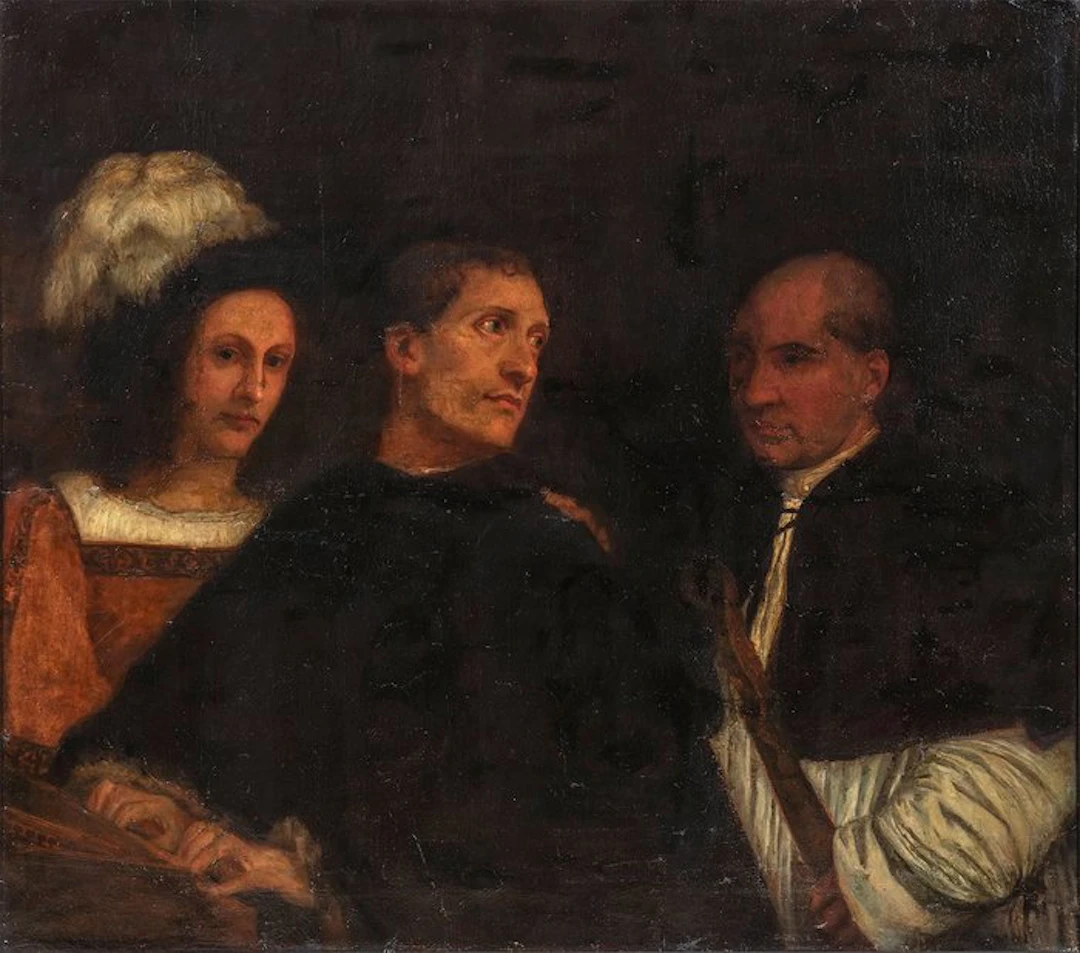
Follower of TIZIANO VECELLIO (Pieve di Cadore, 1488/1490 – Venice, 1576) The Concert Oil on canvas, cm 108 x 122.5 Frame size, cm 122 x 137 x 6 approx. NOTE: Publication catalog of Intermidiart collection works. Certificate of Guarantee and Legitimate Provenance. Artwork with a molded Renaissance-inspired tray frame (19th – early 20th century), conceived in a historicist style to enhance high-era Venetian paintings (defects): We thank Dr. Federica Spadotto for suggesting the attribution. We present in the catalog a splendid work realized in the second half of the 17th century, of Venetian scope, which, despite evident alterations to the historical patinas and the widespread restorations layered over time, preserves notable historical and artistic interest. The examined work constitutes an interesting and valuable 17th-century derivative of the famous Concert by Titian Vecellio (1510–1511), a masterpiece from the master’s youth preserved in the Palatine Gallery of the Pitti Palace in Florence. The canvas faithfully reproduces the well-known three-figure half-length composition captured in an intense moment of musical interaction. Compared with the vibrant fluidity of the original 16th-century work, this piece shows a matte, tight, and at times abbreviated painterly handling, elements that unmistakably indicate the hand of a follower active in the second half of the 17th century. In that period, Baroque collecting generated a strong demand for replicas of the great masters of Renaissance Venice; the anonymous copyist demonstrates solid technical skill in orchestrating the scene, interpreting Titian’s tonalism through the sensibility and execution models of mature the 17th century. The composition fits within the successful vein of music-themed painting in the Veneto area, a genre that blends the celebration of courtly pastime with deep philosophical and moral stratifications. Beyond the apparent immediacy of execution, the painting encloses an intense allegory of time passing and the various stages of human life, symbolized by the three ages of the protagonists. The young singer on the left (Youth), elegantly dressed and looking outward, embodies a superficial or instinctive approach to existence. On the opposite side, the Dominican monk on the right (Old Age or Advanced Maturity), bald and with a stern profile, holds the neck of a viol and represents the wisdom of gained experience. In the center, the clavichord player (Adult) serves as the true dramatic and spiritual hinge of the entire composition: his complex physical twist expresses the tension of choice, the fleeting moment, and full awareness of the present. Music thus becomes the archetype of the harmony of souls and concord (cum-certare, i.e., dialoguing while contending), where the act of playing and tuning the instruments recalls the moral necessity to harmonize different human passions. Direct comparison with the epochal autograph prototype in Palazzo Pitti allows comprehension of the qualitative and execution gap between early 16th-century tonalism and this later Baroque re-interpretation. While the original Titian is built for soft and fine overlays of glazes—where color creates form without a sharp contour and light bleed inwards into the flesh tones—this canvas reveals a markedly more material handling and clearer chiaroscuro transitions. The 17th-century author makes a true stylistic translation influenced by the Baroque taste for heightened light contrasts, partially hardening the transition between figures and the dark background. This trend toward graphic normalization becomes clear in anatomical details and drapery. In the central singer’s face, the intense, almost carved features from which Titian drew an extraordinary melancholic psychological vibration appear slightly more marked and graphic in this version, losing some of the original poetic subtlety. Similarly, the rendering of fabrics shows a simplification of volumes: where Titian resolved the friar’s white shirt and the young man’s hat feather with a loose, soft, virtuosic touch, the 17th-century follower lays down color with more decisive patches, translating the soft 16th-century folds into more rigid and defined geometries. Finally, the perception of space also reflects the era shift. The Florentine prototype’s background, conceived as a dense and vibrant atmosphere with Giorgionesque roots, appears in this canvas flatter and uniformly dark. This spatial flattening, however, is not solely due to the copyist’s hand but is greatly accentuated by alterations suffered by the pictorial film due to subsequent conservation events. FACILY REPORT Visually analyzing the physical details of the painting, a general assessment of the canvas’ condition can be formulated: Investigation methodology: Visual examination under natural light, raking light (for surface morphology) and preliminary Wood lamp examination (UV fluorescence). 1. CANVAS SUPPORT • Original structure: The 17th-century support canvas presents a medium-dense weave weakened by natural aging and thermo-hygrometric processes. • Linings/overstretcher: The work underwent a lining in the 19th century. The backing canvas, visible upon direct examination, is light beige with diffuse historical damp stains and adhesive migration stains (likely starch paste). Structurally it appears stable but has partly lost elasticity, causing slight asymmetric tension at the corners. • Structural criticalities: Due to strong pressure endured during the 19th-century ironing, the original canvas structure appears slightly “flattened.” Mild undulating deformations are localized along the lower edge, likely caused by past exposures to inconsistent relative humidity. 2. PREPARATORY LAYERS AND PAINT FILM • Adhesion: Adherence of the paint film to the support and primer is generally fair thanks to the consolidating effect of the old lining. However, localized “tent-like” micro-peelings are found where there is greater material thickness. • Cracking (Craquelure): Widespread and uniform aging craquelure is present, physiological for a 17th-century canvas. Some more pronounced and early fractures are seen in the shadow areas of the background and on the dark drapery of the central singer, partially stabilized by past restorations but monitorable. • Gaps and abrasions: Widespread micro-surface abrasions from historical rubbing are evident, especially along the frame’s beveling perimeter. The original thin glazes, particularly in the chiaroscuro transitions of the flesh tones and in the friar’s white shirt, appear partly impoverished due to overly aggressive historical cleanings (19th century). 3. SURFACE LAYER AND HISTORIC RESTORATIONS (PATINA AND VERNISH) • Protective varnish: The superficial varnish layer (partly synthetic, applied in the 20th century) is markedly yellowed, altered, and opaque due to atmospheric deposits. This dramatically alters the correct color reading of the work, dulling the natural warmth of the tones. • Overpaintings and Integrations: UV examination reveals a complex stratification of restorations: • Large areas of blotchy repainting on the dark backgrounds, aimed at leveling the original background gaps. • Dated micro-retouches localized on the central singer’s face and the friar’s forehead. These interventions now appear as unpleasing dark splotches or inhomogeneous compared to the original painting material. 4. ACCESSORY ELEMENTS (FRAME AND SUPPORT) • Support frame: Replaced wooden frame (18th-19th century) with open joinery, featuring a system of adjustable corner wedges (battes) inserted internally in the corners. The canvas tension can thus be manually adjusted to correct any loosening of the support. • Frame: The molded tray frame (19th-20th century) in black lacquered wood is structurally solid. The painting is affixed to it with screwed metal brackets. The frame shows small chips and losses of black lacquer at the outer edges and superficial wear of the inner gilding from contact. A consistent dust accumulation is noted in the grooves of the moldings. 5. CONSERVATION SUMMARY AND DIAGNOSTIC Overall conservation status is rated as poor. Although the painting does not present an immediate danger of color loss or structural collapse of the support, its legibility is severely compromised by varnish oxidation and chromatic alteration from past cosmetic restorations. PRESCRIPTIONS AND RECOMMENDATIONS: 1. Immediate: Light, controlled surface dusting of the frame and back of the canvas with soft-bristled brushes. It is advised not to intervene personally on the frame wedges to avoid creating abnormal tension on the already fragile paint film. 2. For exhibitions/movements: The work can travel only inside a climate-controlled case that dampens vibrations, considering the fragility of the paint film and the presence of deep craquelure. 3. Long-term: Highly recommended to incorporate the painting into a conservative and aesthetic restoration program (selective cleaning to remove yellowed varnish and aged-tinted retouches, after solvency testing). The work is adorned with a molded tray frame, a Renaissance-inspired model but of later manufacture (19th – early 20th century), designed in a historicist style to enhance high-era Venetian paintings (frame size 122 x 137 x 6 approx., with defects). "The frame shown in the photos above was added to the artwork by the seller or by a third party. The frame is provided to you at no additional cost so that it is ready for display upon arrival. The frame is provided as a courtesy and is not considered an integral part of the artwork. Therefore, any potential damage to the frame that does not affect the artwork itself will not be accepted as grounds for opening a claim or requesting order cancellation." Provenance: Private collection Publication: - The Myths and the Territory in Sicily Across a Thousand Cultures. UNPUBLISHED QUADRERIA catalog general of the collection of the cycle “The Myths and the Territory,” 2026 (Pdf). The work will be shipped—being of medium size—with a wooden crate and polystyrene. In the case of sale outside Italian territory, the purchaser must wait for export procedures to be completed.
Utropspris:SEK 56,017.69
Till auktionenVisa alla föremål frånCatawikiellerKonst & Grafik
Utropspris:
SEK 56,017.69
Liknande föremål

Auktionsresultat för liknande föremål
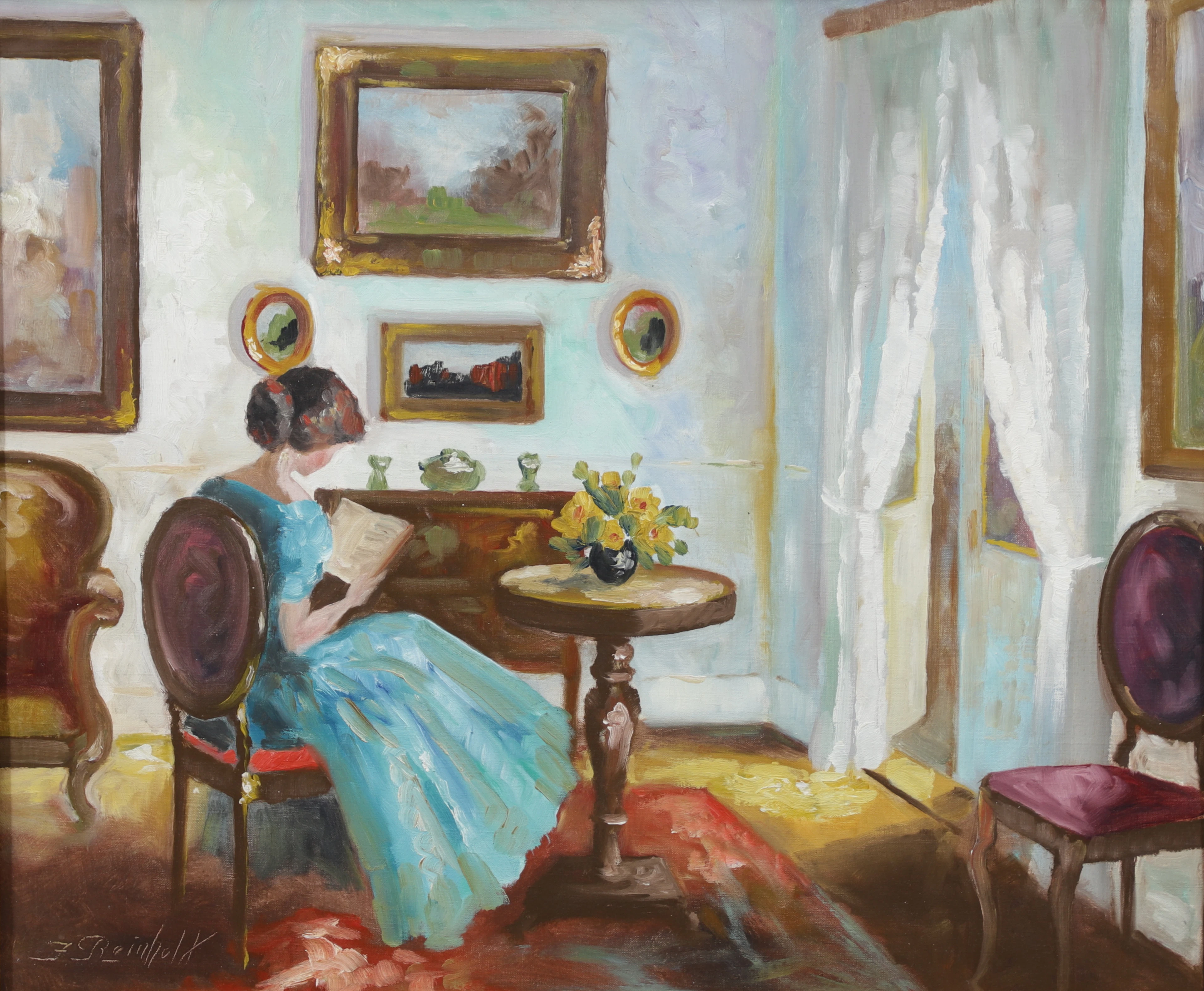
OIDENTIFIERAD KONSTNÄR. Interiör mad kvinna, olja på duk, signerad Reinholt.
10/08/2026
SEK 400
Uppsk.: SEK 500
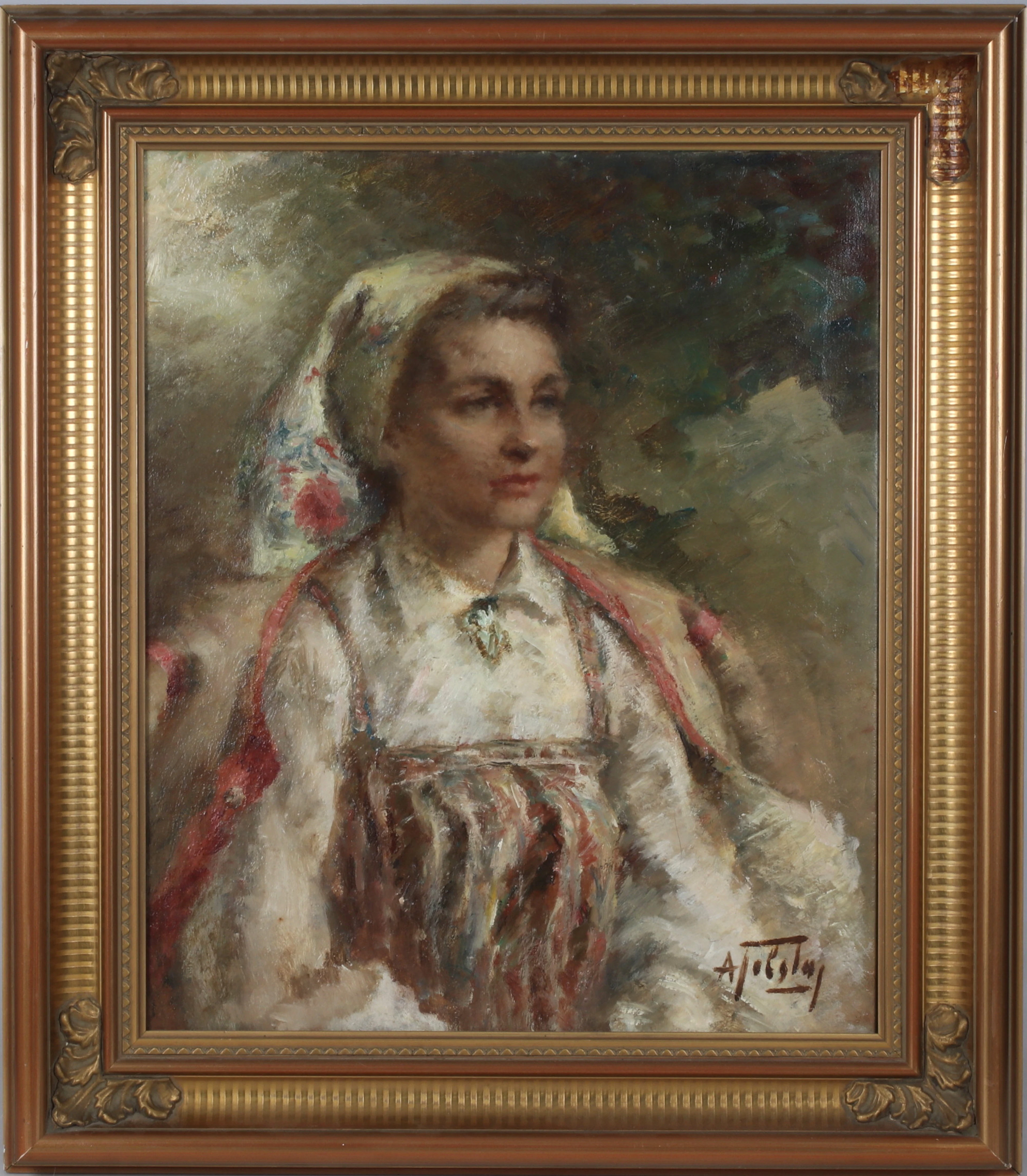
ALEXANDER TOLSTOY. Porträtt, olja på duk, signerad.
10/08/2026
SEK 1,000
Uppsk.: SEK 2,000
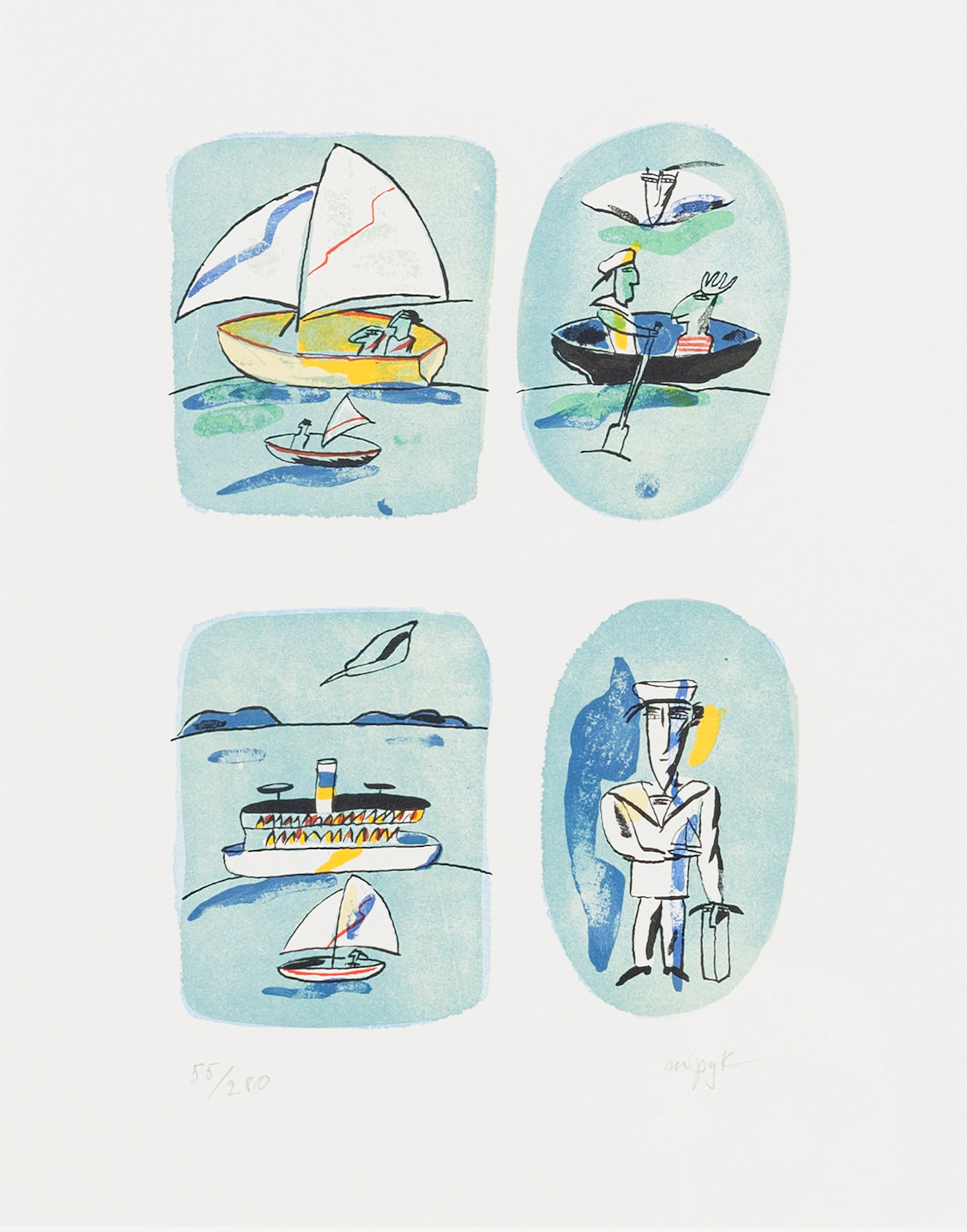
MADELEINE PYK. Komposition med segelbåtar, färglitografi, signerad
10/08/2026
SEK 1,410
Uppsk.: SEK 1,200
Nå samlare över hela världen med din auktion!
Lista er auktion