


Alla auktioner / Förhistorisk Konst / Western Asiatic Bronze Bronze Spearhead with Strong Central Midrib - 31 cm

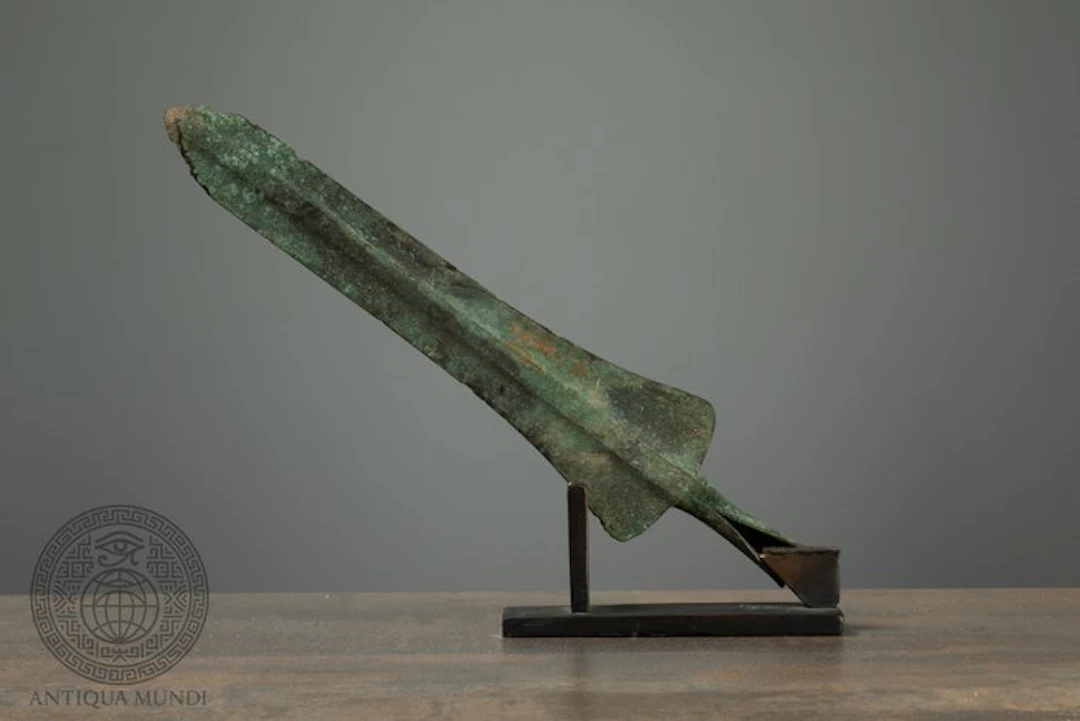
A large and impressive Luristan bronze spearhead with an unusually elongated blade, pronounced central midrib and socket for attachment to a wooden shaft. Measuring approximately 31 cm in length, the spearhead is characterised by its distinctive proportions. The long and relatively narrow upper blade expands considerably towards the lower section, forming two broad, almost triangular lateral shoulders before merging into the socket. A powerful axial midrib rises from the socket and extends almost the entire length of the blade. This pronounced central reinforcement provided structural rigidity to the long bronze blade while allowing the lateral sections to remain comparatively thin. On either side of the midrib, the blade surfaces slope towards the cutting edges. The combination of the narrow elongated upper blade, broad shoulder section and strongly projecting central rib gives the weapon a particularly distinctive profile. The point remains preserved, although it is somewhat rounded and shows age-related loss. Socket and Hafting The central midrib continues directly into the hollow socket, which originally received a wooden spear shaft. The socket is now partially preserved and has opened longitudinally in places, clearly revealing its original hollow construction. Despite these losses, the transition between blade, central rib and socket remains clearly visible and illustrates the original construction of the weapon. Typology and Dating Bronze spearheads and lance heads formed an important part of the weapon repertoire traditionally associated with the Luristan bronze tradition of Western Iran. A wide variety of forms is known, ranging from relatively simple leaf-shaped spearheads to larger and more elaborate examples with pronounced central ribs, elongated sockets and strongly articulated blade profiles. The present example, with its long narrow blade, broad angular shoulders, pronounced axial midrib and socketed construction, can be compared typologically with bronze weapons associated with Western Iran during the early 1st millennium BC. On typological grounds, an attribution to Luristan / Western Iran during the Early Iron Age, circa 10th–8th century BC, appears appropriate. In the absence of a documented archaeological find context, both the regional attribution and dating should be understood as typological. Function and Manufacture The spearhead was cast in bronze and subsequently finished by working the surface and blade edges. The pronounced central midrib served an important structural purpose, reinforcing the long blade without requiring the entire weapon to be cast at the same thickness. The hollow socket allowed the bronze head to be mounted securely onto a wooden shaft. Weapons of this general type formed part of the extensive bronze weapon tradition of the Zagros region during the late 2nd and early 1st millennium BC. Surface and Patina The bronze displays an attractive and varied green to dark-green ancient patina, with areas of lighter green oxidation, brown and reddish-brown tones and mineral deposits. The surface shows naturally irregular areas of corrosion, small pits and localised encrustations consistent with considerable age. Darker areas remain visible particularly along portions of the central midrib, emphasising the strongly modelled profile of the weapon. Condition Good archaeological condition considering its age, with losses as shown. The blade is substantially preserved and retains its characteristic overall profile and pronounced central midrib. The cutting edges display a number of age-related chips, notches and localised losses. The original point shows some loss and rounding. The surface exhibits corrosion, oxidation, mineral deposits and areas of wear. The socket is incomplete and partially split/open along its length, with associated ancient material loss. Its hollow construction nevertheless remains clearly recognisable. Despite these age-related losses, the strong central rib, broad shoulder section and characteristic elongated form remain clearly defined. Please examine all photographs carefully, as they form an integral part of the condition description. The modern display stand is used solely for presentation and is not included in the sale. Provenance Formerly in the Madeleine & Erich Dammann Collection, Germany. Acquired during the collectors’ extensive travels between 1950 and 1970. The collection is documented in Germany by 1970 through historical photographs of the family residence and subsequently remained in continuous family ownership. The objects were acquired privately during the collectors’ travels. As was customary for private purchases made at local markets during the 1950s and 1960s, purchase receipts or invoices were generally neither issued nor requested. Historical photographs and biographical documentation relating to the Dammann Collection are available and support the long-standing provenance of the collection.
Utropspris:SEK 10,013.35
Till auktionenVisa alla föremål frånCatawikiellerFörhistorisk Konst
Utropspris:
SEK 10,013.35
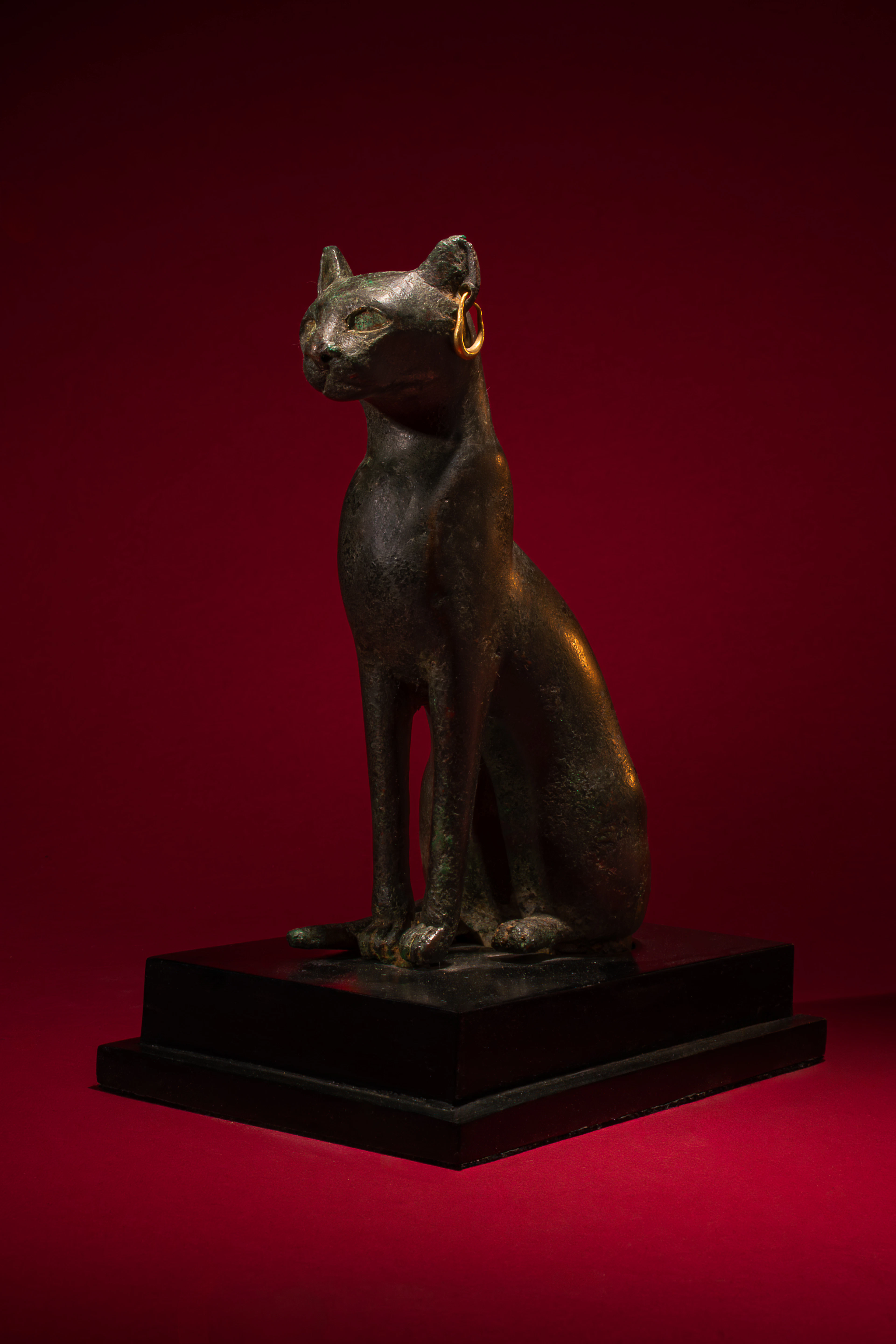
RARE EGYPTIAN BRONZE CAT STATUETTE WITH GOLD EARRINGS - LARGE SIZE
06/21/2026

SEK 280,489.79
Uppsk.: SEK 249,696.08
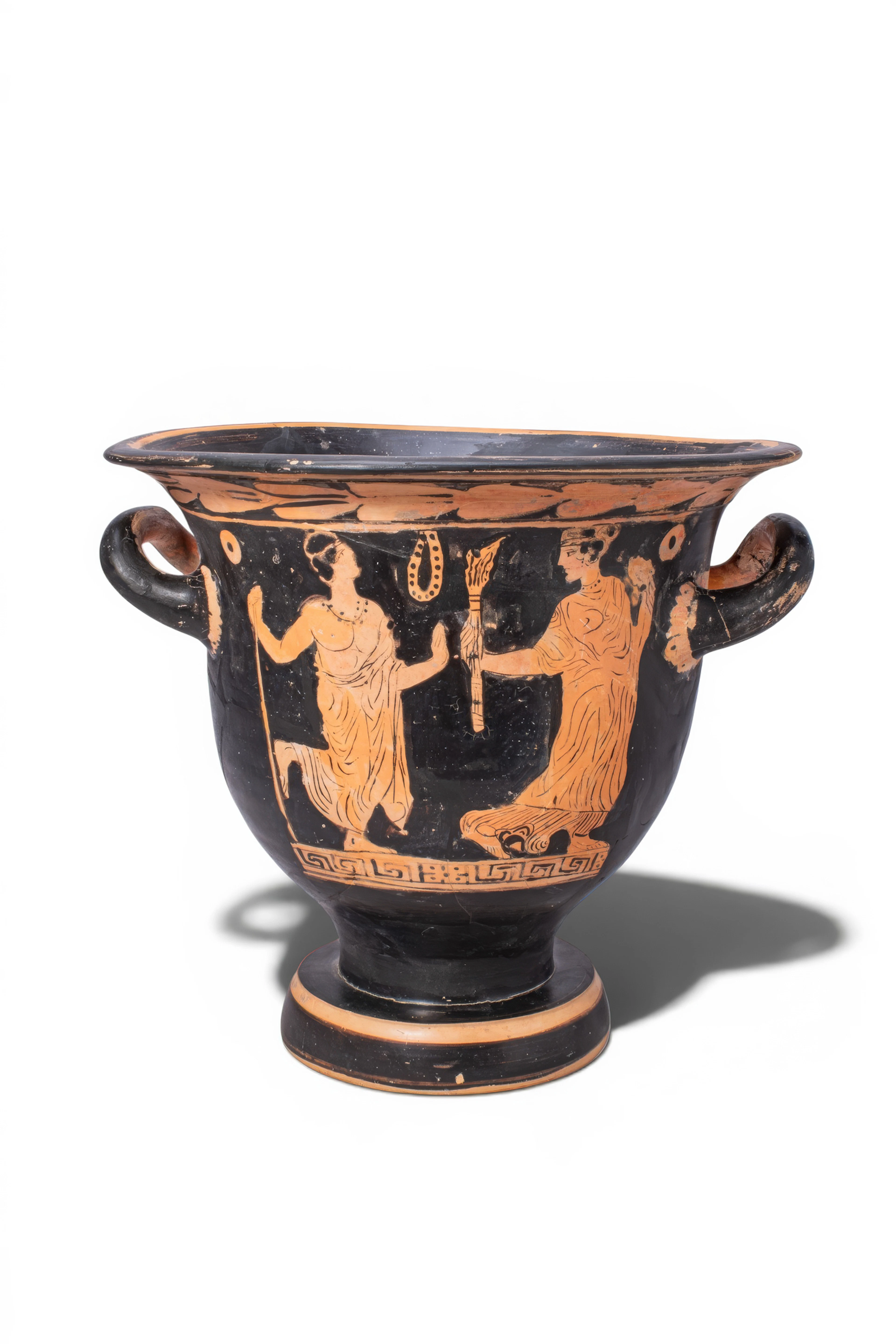
APULIAN RED-FIGURE BELL KRATER WITH KOMASTOS AND MAENAD - TL TESTED
06/21/2026
SEK 33,148.79
Uppsk.: SEK 25,309.77
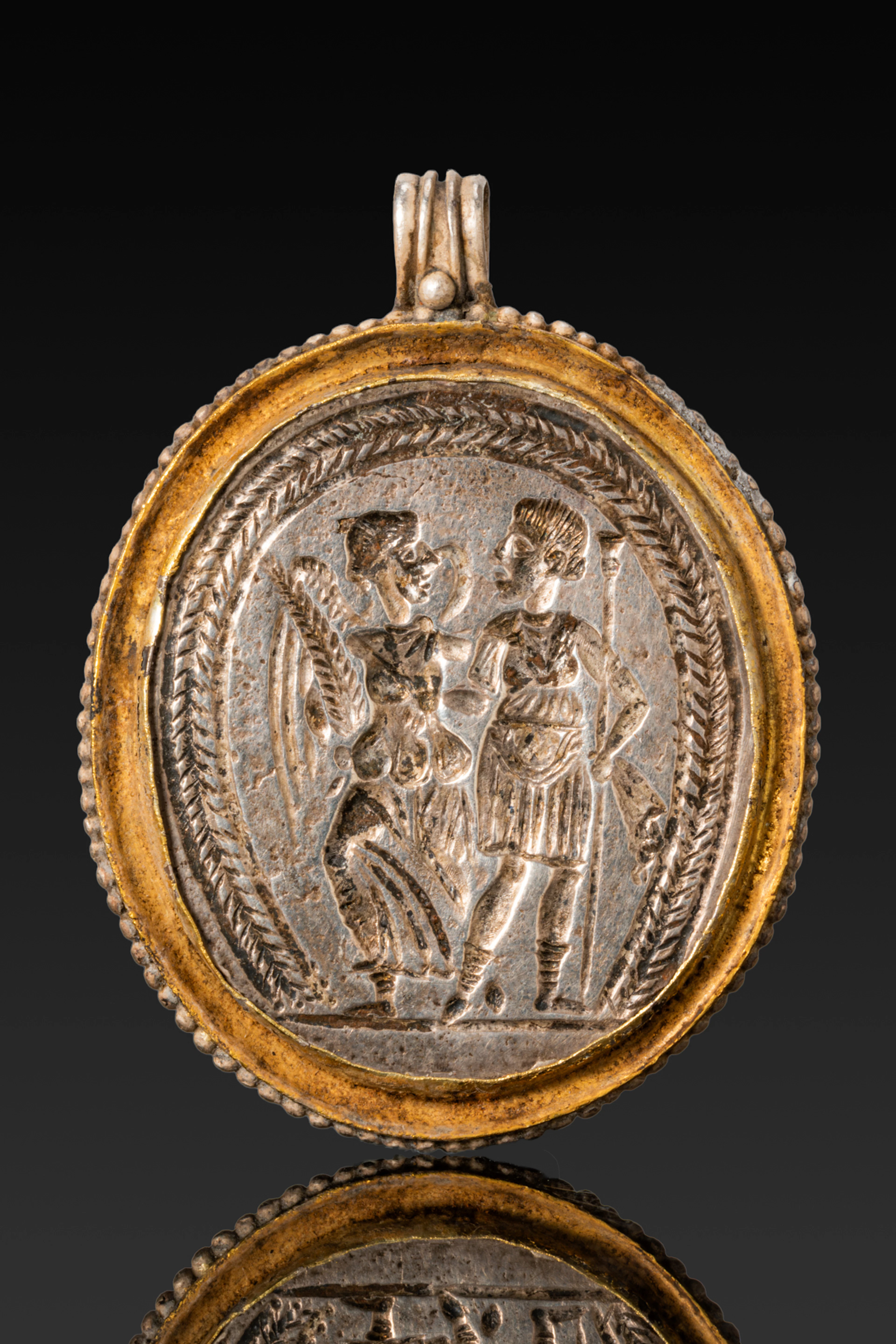
ROMAN SILVER-GILT MEDALLION WITH CERES AND ISIS
06/21/2026
SEK 30,598.88
Uppsk.: SEK 31,212.01
Nå samlare över hela världen med din auktion!
Lista er auktionGenom att prenumerera godkänner du integritetspolicyn. Avprenumerera när som helst.
Barnebys HQ
Brahegatan 10
BOX 5038
114 37 Stockholm
