
Alla auktioner / Asiatisk keramik & konsthantverk / Y A fine Chinese Imperial bronze caparisoned 'elephant and vase'
Y A fine Chinese Imperial bronze caparisoned 'elephant and vase'
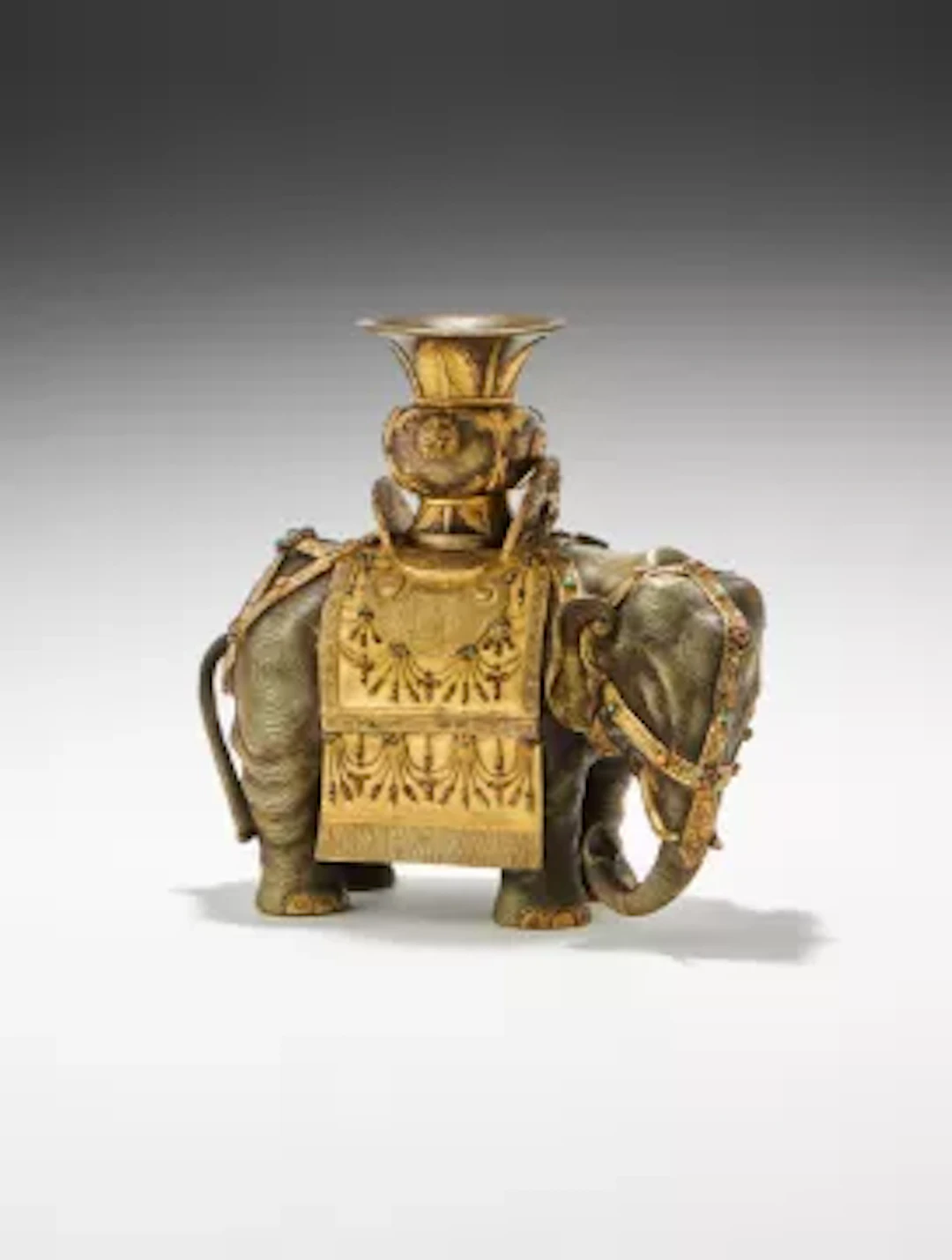
Y A fine Chinese Imperial bronze caparisoned 'elephant and vase' Qianlong Period (1736-1795) the well cast and chased elephant with head turned to the side, the richly gilded body arrayed in rich trappings inset coral and turquoise beads, and with a fringed blanket decorated with pendant hangings inlaid in turquoise and coral from a pendant lotus leaf, the saddle from which rises a detachable bronze baluster vase decorated with Buddhist lion masks and shou symbols 28.5cm high x 30cm long x 11cm deep, 8804 grams Particularly noteworthy is the finely rendered hide with an intricate network of delicately chased circular wrinkles. The Chinese word for elephant (xiang) sounds like the word for happiness, and when paired with a vase (ping) sounding like peace, forms the visual pun taiping youxiang, meaning 'great peace in the world' or 'great peace is manifested by the elephant'. In this fine object, the pun is brought to life through exquisite craftsmanship, Buddhist reverence, and courtly spectacle. The elephant occupies a particularly auspicious place in the visual language of the Qing Court. Long associated with strength, wisdom and stability, it was regarded as a noble beast worthy of Imperial ceremony. Elephants carrying vases were placed near the imperial throne to signify that the Mandate of Heaven rested securely on the Emperor. Live elephants were regular participants in formal palace rituals and state processions within the Forbidden City, serving as a physical extension of the emperor’s grand reach and domestication of the natural world. Ranked like an official within the Qing administrative system, live elephants (along with horses) were uniquely graded and promoted through official ranks based on age and obedience, mimicking the bureaucratic hierarchy of human officials. Foreign nations, such as Nepal (the Gorkha empire) sent live elephants to the Qing court as tributary gifts to mark military victories, political alliances, or dynastic transitions; although Emperor Qianlong famously limited offerings from Southeast Asian delegations later in his reign, because maintaining the imperial elephant stables was extraordinarily expensive. Provenance: Formerly in the collection of an English family believed to have been acquired in China prior to 1930. 清乾隆 御製銅鎏金太平有象(克重8804克) 拍品來源:英國私人家族舊藏,據信於1930年以前購藏於中國 Condition Report: one leg repaired and some inlay missing and some wear largely commensurate with age Condition Report Disclaimer, Y, Y A fine Chinese Imperial bronze caparisoned 'elephant and vase' Qianlong Period (1736-1795) the well cast and chased elephant with head turned to the side, the richly gilded body arrayed in rich trappings inset coral and turquoise beads, and with a fringed blanket decorated with pendant hangings inlaid in turquoise and coral from a pendant lotus leaf, the saddle from which rises a detachable bronze baluster vase decorated with Buddhist lion masks and shou symbols 28.5cm high x 30cm long x 11cm deep, 8804 grams Particularly noteworthy is the finely rendered hide with an intricate network of delicately chased circular wrinkles. The Chinese word for elephant (xiang) sounds like the word for happiness, and when paired with a vase (ping) sounding like peace, forms the visual pun taiping youxiang, meaning 'great peace in the world' or 'great peace is manifested by the elephant'. In this fine object, the pun is brought to life through exquisite craftsmanship, Buddhist reverence, and courtly spectacle. The elephant occupies a particularly auspicious place in the visual language of the Qing Court. Long associated with strength, wisdom and stability, it was regarded as a noble beast worthy of Imperial ceremony. Elephants carrying vases were placed near the imperial throne to signify that the Mandate of Heaven rested securely on the Emperor. Live elephants were regular participants in formal palace rituals and state processions within the Forbidden City, serving as a physical extension of the emperor’s grand reach and domestication of the natural world. Ranked like an official within the Qing administrative system, live elephants (along with horses) were uniquely graded and promoted through official ranks based on age and obedience, mimicking the bureaucratic hierarchy of human officials. Foreign nations, such as Nepal (the Gorkha empire) sent live elephants to the Qing court as tributary gifts to mark military victories, political alliances, or dynastic transitions; although Emperor Qianlong famously limited offerings from Southeast Asian delegations later in his reign, because maintaining the imperial elephant stables was extraordinarily expensive. Provenance: Formerly in the collection of an English family believed to have been acquired in China prior to 1930. 清乾隆 御製銅鎏金太平有象(克重8804克) 拍品來源:英國私人家族舊藏,據信於1930年以前購藏於中國, A fine Chinese Imperial bronze caparisoned 'elephant and vase', taiping youxiang, Provenance:, Condition Report:, one leg repaired and some inlay missing and some wear largely commensurate with age, Condition Report Disclaimer
Utropspris:SEK 530,347.68
Till auktionenVisa alla föremål frånDreweattsellerAsiatisk keramik & konsthantverk
Utropspris:
SEK 530,347.68
Liknande föremål

Slutpriser för liknande föremål
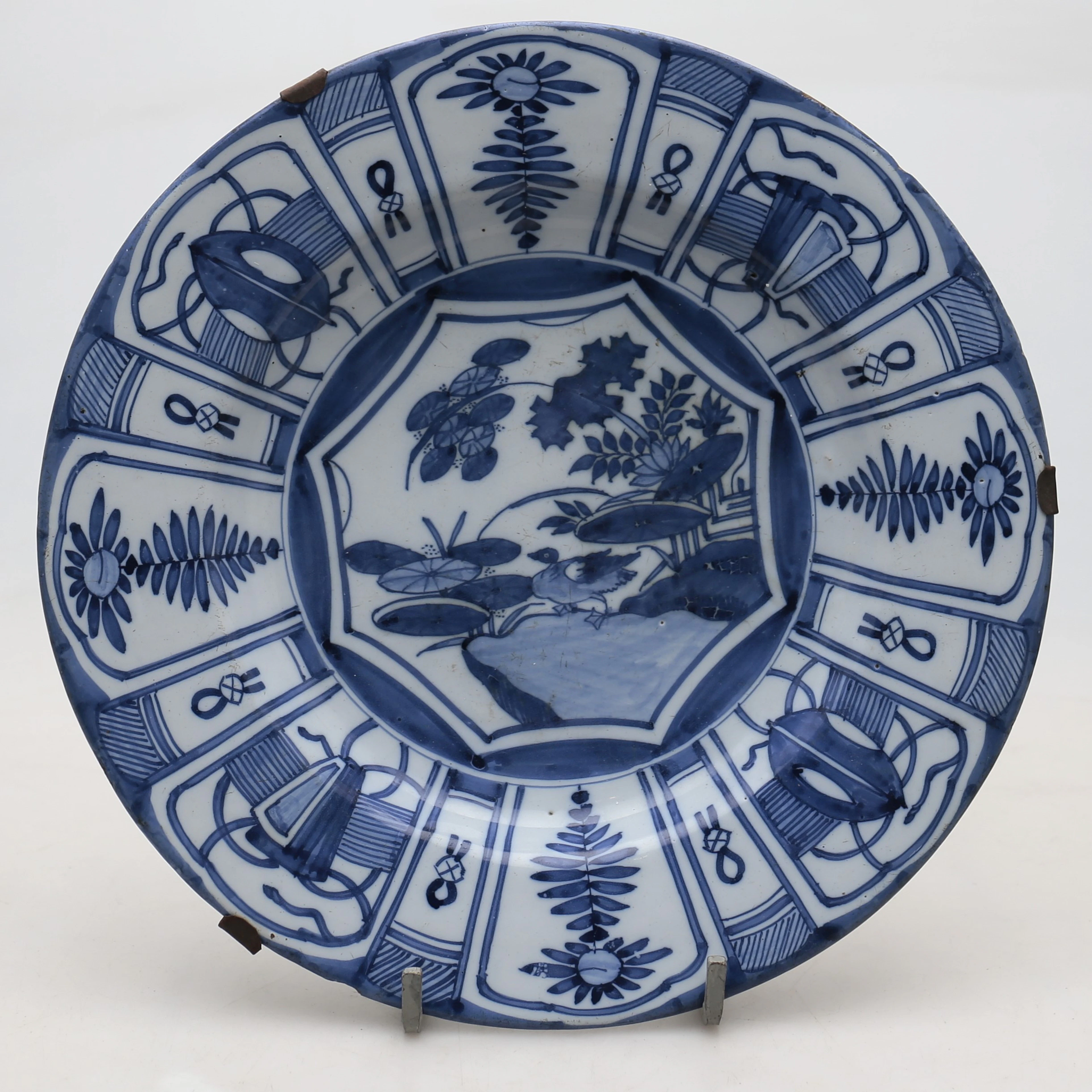
Delft earthenware dish in kraak style, 18th Century.
10/12/2026
SEK 892.87
Uppsk.: SEK 1,237.72
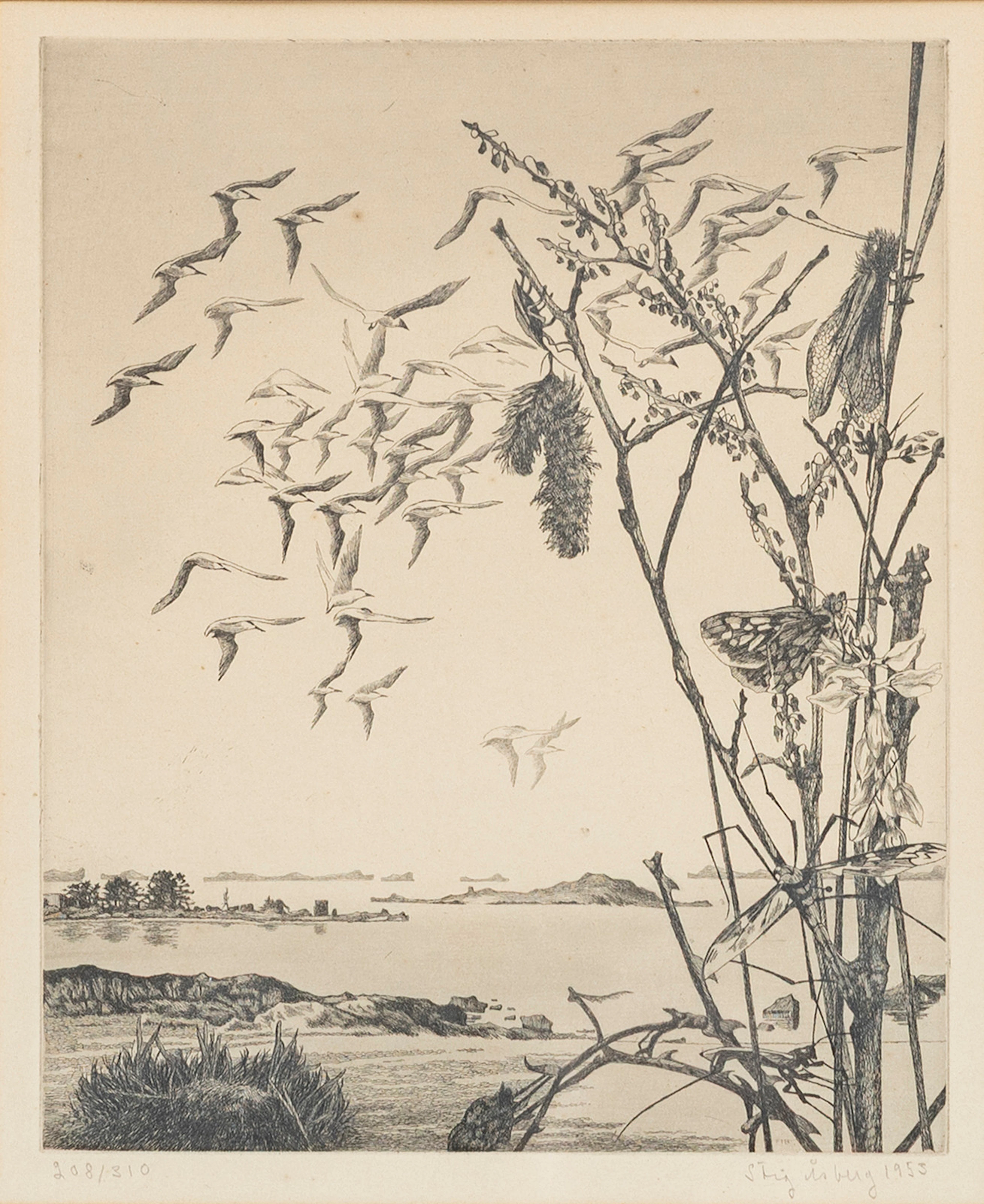
STIG ÅSBERG. motiv med fåglar, etsning, signerad, 1953.
10/12/2026
SEK 800
Uppsk.: SEK 1,500

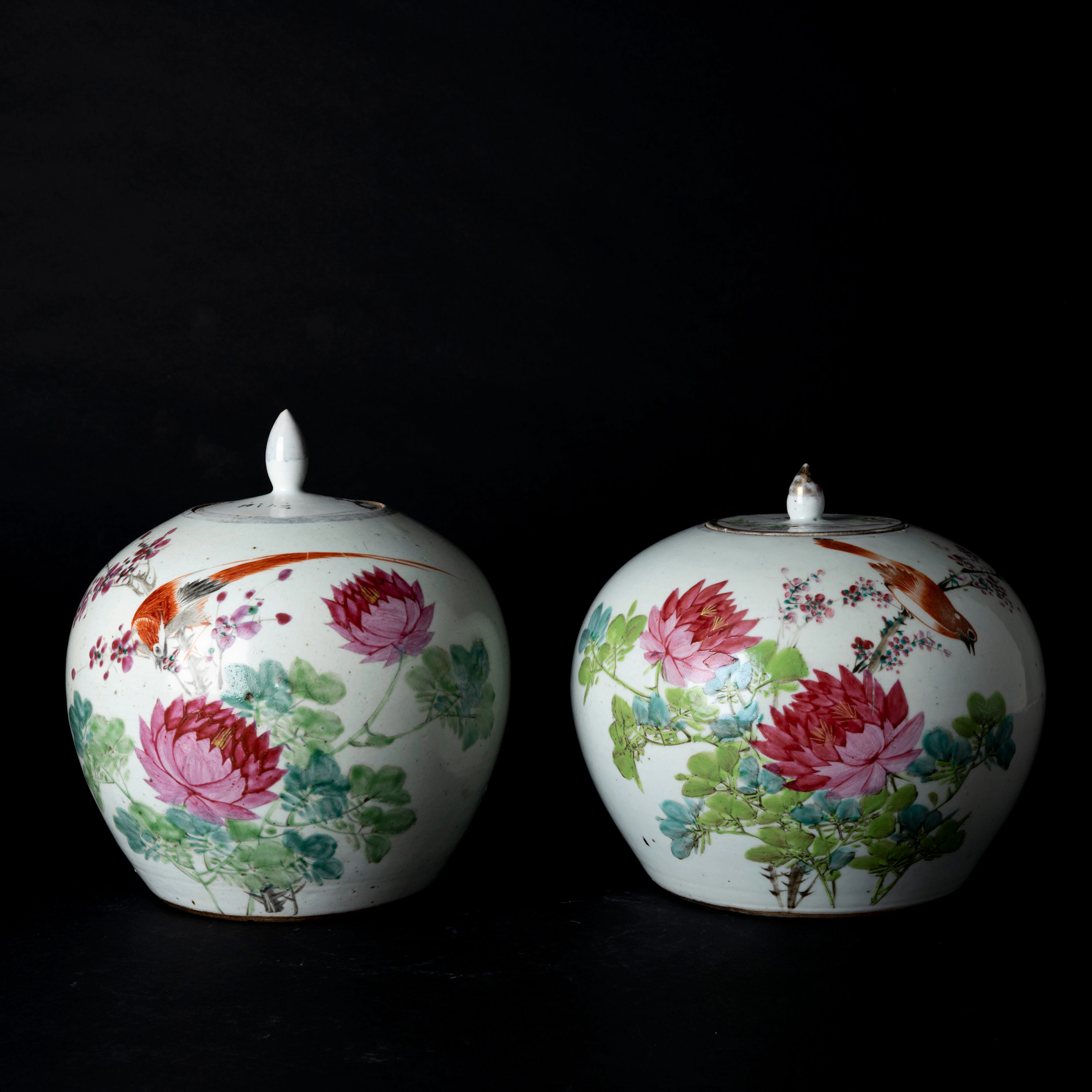
LOCKURNOR, 2 st, porslin, Kina, 1800/1900-tal.
10/12/2026
SEK 600
Uppsk.: SEK 1,200
Nå samlare över hela världen med din auktion!
Lista er auktion